AI Appraisal Estimate

AI-generated estimates · not official valuations

From the user

What was submitted

Photo and notes provided by the user — not generated by AI

Submitted item photo
Submitted photo · June 25, 2026

User's notes

No additional notes provided.

AI analysis below

AI appraisal

AI analysis & estimate

AI-Generated · Verify before acting

Everything below is generated by AI for informational purposes only. AI can make mistakes — the AI may misidentify items or misattribute them (artist, maker, brand, designer, origin, era). This is not an official valuation and should not be used for insurance, sale, tax, estate, legal, or lending purposes — or any decision requiring a certified appraisal. It is not an authoritative claim about any person, brand, or rights holder — do not share or rely on it as a factual statement about a third party. Always consult qualified professionals before making financial decisions.

Read the full disclaimer

AI Identification

·Not independently authenticated·Verify before acting

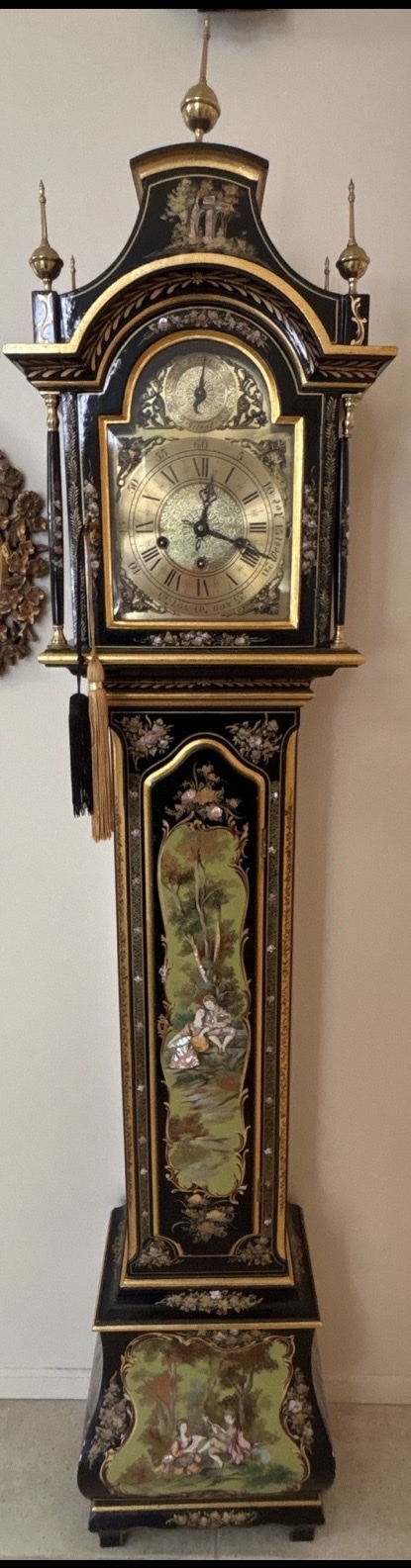
Italian Hand-Painted Black Lacquer Chinoiserie Grandfather Clock

Antique Furniture and Clocks

AI Estimated Value

·Not an official valuation·Verify before acting

$4,500 - $6,500

As of June 25, 2026

AI Item Analysis

·AI can make mistakes·Verify before acting
This is a decorative Venetian-style longcase clock, likely dating from the mid-20th century, executed in the elegant Chinoiserie taste. The piece features a tall, slender silhouette with a distinctive black lacquer finish, heavily accented by hand-painted gilt scrolling, floral motifs, and scenic vignettes. The hood is topped with three brass finials and a broken arch pediment, while the trunk and base display intricate cartouches depicting pastoral or romantic figures in a landscape, reminiscent of the Rococo revival style. The face of the clock features a dual-dial arrangement with a polished brass and silvered finish, likely housing a modern mechanical movement. Notably, the lacquer is embellished with mother-of-pearl or abalone shell inlays within the floral patterns, adding a reflective depth to the surface. The construction appears to be a combination of wood and gesso, with heavy gold leafing on the structural moldings. While the clock presents well, there are minor chips in the lacquer along the bottom edge of the base and a light patina on the brass finials. The overall craftsmanship suggests a high-end decorative piece intended for luxury interiors, blending traditional clockmaking with Italian artisanal furniture techniques.

AI Appraisal Report

·AI can make mistakes·Verify before acting
I have conducted a visual examination of this Venetian-style Chinoiserie grandfather clock. The piece reflects the mid-20th-century Italian revival of the 18th-century lacca povera and Chinoiserie traditions. The application of hand-painted gilt, raised gesso scrollwork, and mother-of-pearl inlays indicates a high level of artisanal labor typical of luxury firms like those found in Venice or Florence during the 1950s. The condition is generally excellent; however, the minor lacquer chips at the base and patina on the brass finials are consistent with age and typical of gesso-on-wood construction, which is susceptible to environmental shifts. The market for high-end decorative clocks remains steady, particularly for 'statement' furniture that bridges the gap between horology and fine cabinetry. Comparables from Italian makers such as Francesco Molon or similar Venetian workshops have recently realized prices in the mid-four to low-five figures at specialized furniture auctions. The inclusion of the shell inlay significantly enhances its desirability over standard painted examples. Limitations of this appraisal include the inability to inspect the movement; the value assumes a functional, high-quality German or Italian mechanical movement. To definitively authenticate the age and origin, I would require an in-person inspection of the interior joinery (to check for machine vs. hand-saw marks), the clockwork's maker's mark, and any provenance documentation or original retail labels. Scientific testing of the lacquer's chemical composition could further distinguish an authentic mid-century piece from a modern reproduction.

Get your items appraised

Instant estimates of your treasures with AI-powered appraisals

Browse More Appraisals