Tribal Kilim Saddle Bag (Khorjin)
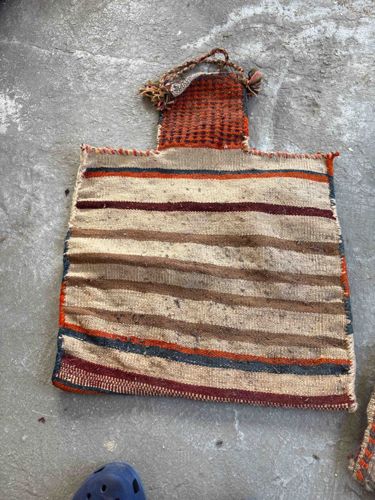
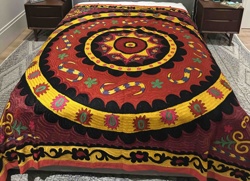
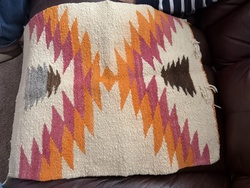
This is a hand-woven tribal khorjin or saddle bag, traditionally used for transport by nomadic groups in segments of the Middle Eastern or Central Asian highlands. The item is constructed from wool using a flat-weave kilim technique. It features a horizontal striped design in a palette of earthy tones including beige, charcoal grey, deep mahogany brown, and vibrant burnt orange. The upper portion includes a decorative flap with a geometric pattern and a braided handle/closure mechanism. In terms of condition, the piece shows significant signs of age and utilitarian use, including scattered surface stains, uneven fading of the natural and vegetable dyes, and visible fraying along the selvedges and decorative tassels. The coarse texture of the wool and the irregularity of the stripes indicate an authentic nomadic craft origin rather than commercial production. Based on the oxidation of the darkest fibers and the specific wear patterns, this piece likely dates to the mid-20th century. While it shows wear, the structural integrity remains largely intact, representing a fine example of functional textile folk art.
AI-Generated Appraisal Disclaimer
Estimated Value
$450 - $650
Basic Information
Category
Antique Textiles and Rugs
Appraised On
March 14, 2026
Estimated Value
$450 - $650
Item Description
This is a hand-woven tribal khorjin or saddle bag, traditionally used for transport by nomadic groups in segments of the Middle Eastern or Central Asian highlands. The item is constructed from wool using a flat-weave kilim technique. It features a horizontal striped design in a palette of earthy tones including beige, charcoal grey, deep mahogany brown, and vibrant burnt orange. The upper portion includes a decorative flap with a geometric pattern and a braided handle/closure mechanism. In terms of condition, the piece shows significant signs of age and utilitarian use, including scattered surface stains, uneven fading of the natural and vegetable dyes, and visible fraying along the selvedges and decorative tassels. The coarse texture of the wool and the irregularity of the stripes indicate an authentic nomadic craft origin rather than commercial production. Based on the oxidation of the darkest fibers and the specific wear patterns, this piece likely dates to the mid-20th century. While it shows wear, the structural integrity remains largely intact, representing a fine example of functional textile folk art.
Related Tags
Get Your Items Appraised
Instant estimates of your treasures with AI-powered instant appraisals