AI estimate as of August 2, 2025 · verify with a professional before acting
AI-Generated · Verify before acting
Everything on this page is generated by AI for informational purposes only. AI can make mistakes — the AI may misidentify items or misattribute them (artist, maker, brand, designer, origin, era). This is not an official valuation and should not be used for insurance, sale, tax, estate, legal, or lending purposes — or any decision requiring a certified appraisal. It is not an authoritative claim about any person, brand, or rights holder — do not share or rely on it as a factual statement about a third party. Always consult qualified professionals before making financial decisions.
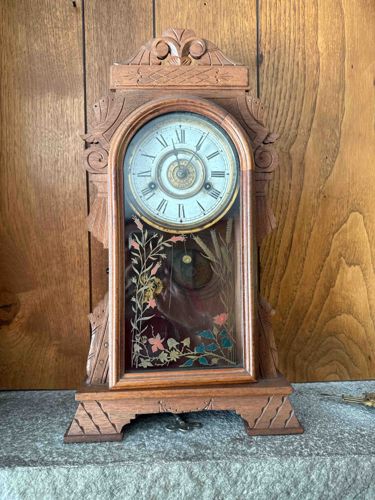
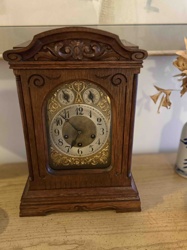
This is an antique or vintage mantel clock, likely dating from the late 19th or early 20th century, possibly in the American Arts and Crafts or Aesthetic movement style due to its visible oak construction and decorative elements. The clock case is made of a light to medium-toned wood, most likely quarter-sawn oak, evident from the prominent grain patterns. The case features decorative carving, including scrollwork and possibly stylized foliage on the pediment at the top, and carved relief patterns on the side columns and the base. The front of the clock has two glazed sections. The upper section is an arched glass panel that protects the clock face. The face is white or cream-colored with bold black Roman numerals and two ornate, possibly blued steel, hands. The center of the dial features intricate gold-toned filigree around the central arbor. Below the clock face, there is a lower rectangular glass panel with reverse painted or decoupaged decoration depicting a floral motif. This decoration includes various flowers and foliage in shades of pink, teal, yellow, and green, set against a dark background, likely obscuring the pendulum view. The overall condition appears good for its age, though minor surface wear, scratches, or possible fading of the finish are expected. The wood shows a natural patina characteristic of age. There are no obvious signs of significant damage such as cracks or chips in the wood from the visible angles. The presence of a winding key resting on the surface in front of the clock suggests that it is a mechanical, key-wound movement, though its functionality cannot be determined from the image. The craftsmanship reveals attention to detail in the carving and joinery, typical of furniture and clock making during its probable period.
AI Appraisal Report
I have examined the provided image of this Antique Carved Oak Mantel Clock with Reverse Painted Glass. Based on my visual assessment, this is a charming late 19th or early 20th-century timepiece, likely American. The quarter-sawn oak case, elaborate carving, and specific design elements, particularly the reverse-painted glass panel, strongly suggest an Arts and Crafts or Aesthetic Movement influence. The overall condition appears good for its age, showing a natural patina, consistent with expected minor surface wear and aging. I see no obvious cracks, chips, or significant structural damage from this vantage point. The presence of the winding key is a positive indicator that it's a mechanical, key-wound movement.
From the image alone, certain aspects of authenticity and functionality remain unverified. I cannot confirm the originality of all components, particularly the movement itself, or its working condition. A physical inspection would be crucial to assess the movement's integrity, determine if it's original to the case, and evaluate its running condition and accuracy. I would also need to examine the reverse-painted panel closely for originality versus a later replacement or decoupage. Provenance documentation, if available, would significantly enhance authentication.
The market for antique mantel clocks has seen some fluctuation. While demand for quality, aesthetically pleasing examples like this remains, it's not as robust as for certain other categories of antiques. The decorative oak case and unique reverse-painted panel are desirable features that add to its appeal. Comparables would include similar oak mantel clocks from the period, especially those with decorative glass panels. Functionality is a key value driver; a fully operational and original clock will command a higher price. Rarity is moderate; while many mantel clocks were produced, examples with this specific combination of detailed carving and well-preserved reverse-painted glass are less common. My valuation assumes the clock's movement is complete and potentially functional, or at least repairable.