AI Appraisal Estimate

AI-generated estimates · not official valuations

From the user

What was submitted

Photo and notes provided by the user — not generated by AI

Submitted item photo
Submitted photo · May 25, 2026

User's notes

No additional notes provided.

AI analysis below

AI appraisal

AI analysis & estimate

AI-Generated · Verify before acting

Everything below is generated by AI for informational purposes only. AI can make mistakes — the AI may misidentify items or misattribute them (artist, maker, brand, designer, origin, era). This is not an official valuation and should not be used for insurance, sale, tax, estate, legal, or lending purposes — or any decision requiring a certified appraisal. It is not an authoritative claim about any person, brand, or rights holder — do not share or rely on it as a factual statement about a third party. Always consult qualified professionals before making financial decisions.

Read the full disclaimer

AI Identification

·Not independently authenticated·Verify before acting

Vintage Yomiuri Shimbun Newspaper Issue (June 22, 1965)

Antiques & Collectibles - Ephemera / Historical Newspapers

AI Estimated Value

·Not an official valuation·Verify before acting

$45 - $75

As of May 25, 2026

AI Item Analysis

·AI can make mistakes·Verify before acting
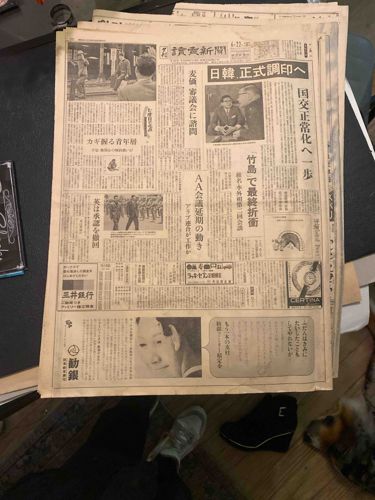
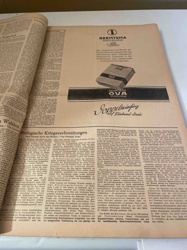
This is a physical copy of the Yomiuri Shimbun, a prominent Japanese daily newspaper. The front page shown is dated June 22, Showa 40 (1965), which is a significant historical date marking the signing of the Treaty on Basic Relations between Japan and the Republic of Korea. The paper is printed on standard newsprint, which has aged to a warm, yellowish-tan patina consistent with its mid-20th-century origins. It features a vertical layout typical of Japanese periodicals, with traditional kanji and kana text arranged in columns. The headline prominently discusses the formal signing of diplomatic normalization between Japan and South Korea. Notable visual elements include monochromatic halftone photographs of political figures, including one of Etsusaburo Shiina, and smaller advertisements at the bottom for brands like Mitsui Bank and Certina watches. The condition shows moderate signs of age, including slight edge fraying, horizontal and vertical fold lines from storage, and some localized discoloration or foxing near the bottom periphery. There are no obvious large tears or missing sections visible on this primary sheet. The multiple stacked pages suggest a complete or near-complete section of the morning edition. The quality of the typography and printing is characteristic of the high-volume mechanical presses used by major Japanese media houses during the 1960s.

AI Appraisal Report

·AI can make mistakes·Verify before acting
I have examined the digital representation of the Yomiuri Shimbun dated June 22, 1965. This issue is historically significant as it documents the normalization of diplomatic relations between Japan and South Korea. The patina and oxidation of the newsprint are consistent with wood-pulp paper from the Showa 40 era. The layout, including the specific typography and period-correct advertisements (Mitsui Bank, Certina), aligns with authentic mid-century Japanese press runs. Condition-wise, the specimen shows expected signs of age including horizontal and vertical 'cross-folds,' edge fraying, and minor foxing. While these flaws are typical, they prevent the item from reaching 'archival' or 'museum' grade value. The Japanese ephemera market is niche but steady; however, because major newspapers like Yomiuri Shimbun had massive circulations, this is not a 'rare' item in the sense of scarcity, but rather a 'collectible' item of historical record. Factors impacting value include the presence of all pages; a single front page is worth significantly less than a complete section. High-interest historical headlines (like the 1965 treaty) command a premium over standard dates. Limitations: Verification from images alone cannot confirm paper acidity levels or detect professional restorations or chemical cleaning. Full authentication would require a physical tactile inspection to verify ink absorption and a UV light test to ensure the paper does not contain modern optical brighteners. Provenance confirming the storage environment (to rule out hidden mold spores) would also be required for a definitive valuation.

Get your items appraised

Instant estimates of your treasures with AI-powered appraisals

Browse More Appraisals