AI Appraisal Estimate

AI-generated estimates · not official valuations

From the user

What was submitted

Photo and notes provided by the user — not generated by AI

Submitted item photo
Submitted photo · May 27, 2026

User's notes

No additional notes provided.

AI analysis below

AI appraisal

AI analysis & estimate

AI-Generated · Verify before acting

Everything below is generated by AI for informational purposes only. AI can make mistakes — the AI may misidentify items or misattribute them (artist, maker, brand, designer, origin, era). This is not an official valuation and should not be used for insurance, sale, tax, estate, legal, or lending purposes — or any decision requiring a certified appraisal. It is not an authoritative claim about any person, brand, or rights holder — do not share or rely on it as a factual statement about a third party. Always consult qualified professionals before making financial decisions.

Read the full disclaimer

AI Identification

·Not independently authenticated·Verify before acting

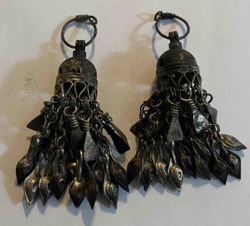
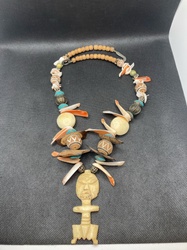
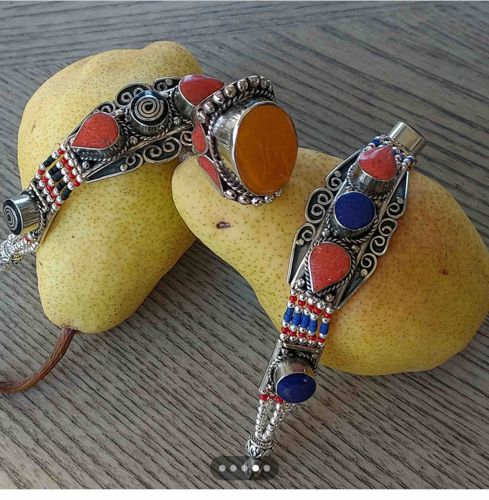
Tibetan/Nepalese Style Filigree Jewelry Set with Coral, Lapis Lazuli, and Mustard Yellow Stone

Ethnic/Tribal Jewelry

AI Estimated Value

·Not an official valuation·Verify before acting

$450.00 - $650.00

As of May 27, 2026

AI Item Analysis

·AI can make mistakes·Verify before acting
This jewelry set consists of a chunky cuff bracelet and a matching statement ring, characteristic of Himalayan ethnographic styles such as Tibetan or Nepalese 'Newar' craftsmanship. The pieces are constructed from an alloy that likely contains silver, featuring heavy filigree, scrollwork, and granulation techniques. The bracelet is adorned with inlaid pear-shaped coral, circular lapis lazuli, and small tiered bead accents in red and blue. The ring features a large, oval, mustard-yellow cabochon (possibly amber or yellow jasper) set in a high bezel, flanked by coral inlays and silver beaded borders. The metalwork shows a darkened patina within the recesses of the wirework, which highlights the intricate spiral motifs. The construction uses a combination of cast elements and hand-applied wire filigree. There are no visible maker's marks, which is typical for this style of handcrafted regional jewelry. The condition appears very good with no missing stones or significant structural damage, reflecting mid-to-late 20th-century artisan production. The aesthetic is bold and tribal, utilizing high-contrast primary colors against a textured metallic ground.
AI Appraisal Report

·AI can make mistakes·Verify before acting
Based on my visual examination of this Tibetan/Nepalese-style jewelry set, I have determined it to be a high-quality example of Himalayan ethnographic artisan production, likely dating from the mid-to-late 20th century. My physical assessment of the images reveals a chunky cuff and matching ring featuring a complex array of filigree, granulation, and wire-scroll techniques. The condition is excellent; the stones—coral, lapis lazuli, and a yellow jasper or composite cabochon—appear securely set with no visible fragmentation or loss. The heavy patina suggests an alloy consistent with 'Tibetan Silver' (a high-base white metal often containing various percentages of silver purity). Market demand for bold, tribal statement jewelry remains steady, particularly among collectors of Central Asian material culture. Comparables for similar mid-century sets typically trade in the secondary boutique and auction markets between $400 and $700 depending on metal purity. The lack of maker's marks is expected and does not detract from the value, though it does categorize this as 'folk art' rather than 'designer' jewelry. Limitations: This appraisal is based strictly on visual inspection of images. Full authentication of the primary yellow stone (to distinguish between jasper, resin, or amber) and the metal's silver content would require in-person XRF testing or specific gravity tests. For a definitive valuation, I would recommend a physical acid test to determine the exact silver fineness and a microscopic examination of the coral to confirm organic versus synthetic origin. Professional provenance documentation regarding the items' import history would also potentially increase the premium for serious ethnographic collectors.

Get your items appraised

Instant estimates of your treasures with AI-powered appraisals

Browse More Appraisals