AI estimate as of October 25, 2025 · verify with a professional before acting
AI-Generated · Verify before acting
Everything on this page is generated by AI for informational purposes only. AI can make mistakes — the AI may misidentify items or misattribute them (artist, maker, brand, designer, origin, era). This is not an official valuation and should not be used for insurance, sale, tax, estate, legal, or lending purposes — or any decision requiring a certified appraisal. It is not an authoritative claim about any person, brand, or rights holder — do not share or rely on it as a factual statement about a third party. Always consult qualified professionals before making financial decisions.
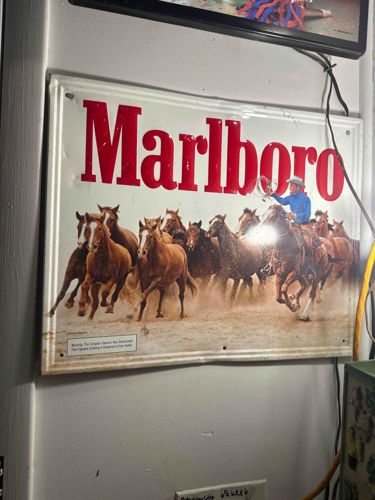
This item is a vintage-style rectangular tin sign featuring a prominent Marlboro logo and a dynamic Wild West scene. The sign measures approximately 20-24 inches in width by 12-16 inches in height, though exact dimensions are not discernible without a reference object. The primary colors are a stark white background for the upper portion, featuring the iconic 'Marlboro' name in large, bold red capital letters. Below the logo, a vibrant image depicts a herd of brown and tan horses galloping across a dusty landscape, led by a cowboy on horseback wearing a blue shirt and a cowboy hat, actively wrangling with a lasso. The image conveys movement through the dust kicked up by the horses' hooves. The sign appears to be made of embossed or flat tin, giving it a somewhat rustic or nostalgic feel characteristic of advertising signs from the mid to late 20th century. There are visible signs of wear and age, including minor dents and scuffs, particularly around the edges and corners, and some discoloration or patina. There are also distinct holes drilled in each of the four corners, indicating it was designed for mounting, and one or two nails are visible in the upper corners currently holding it to the wall. A small rectangular white box in the bottom left corner contains legible text that appears to be a warning or disclaimer, common on tobacco related advertising, further suggesting an advertising piece. The craftsmanship is consistent with mass-produced promotional signage, focusing on visual appeal and brand recognition. The overall condition suggests it has been displayed for an extended period, contributing to its aged aesthetic.
AI Appraisal Report
Based on my visual examination of the Marlboro Horses and Cowboy Tin Sign, I assess its condition to be good, considering its age and intended use as an advertising piece. There are clear signs of wear, including minor dents, scuffs, and some patination, particularly around the edges and corners, consistent with prolonged display. The visible mounting holes and present nails further support its history of use. Authenticity, based solely on the image, appears to be that of a vintage-style or reproduction advertising sign rather than an extremely rare, original vintage piece. The craftsmanship is typical for mass-produced promotional signage.
Market conditions for vintage tobacco advertising signs vary greatly. While original, period-correct signs in pristine condition can fetch high prices, the visible wear and the prevalence of reproductions for popular brands like Marlboro suggest this example falls into a more accessible price range. Comparables would include other vintage-style Marlboro tin signs, often found at antique malls or online marketplaces.
Demand for tobacco advertising, especially Marlboro, remains steady among collectors of automobilia, Americana, and advertising memorabilia. However, rarity is not a significant factor here; given its likely vintage-style nature or mass production, this sign is not exceptionally rare. Factors impacting value include the overall good visual appeal despite the wear, the iconic brand, and the classic Western imagery. The primary limitation in full authentication is that I cannot physically inspect the item to verify the material composition, printing techniques, or any manufacturer marks that would confirm it as an original period piece versus a later reproduction. An in-person examination, coupled with provenance documentation (if available) or even a magnet test to assess tin thickness, would be essential for a definitive authenticity assessment.