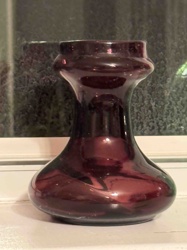
AI identification & appraisal estimate

Mid-Century Modern Art Glass Bowl

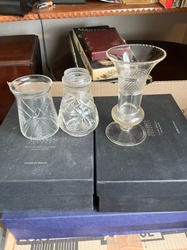
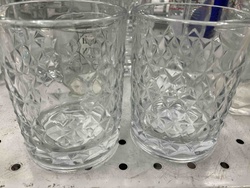
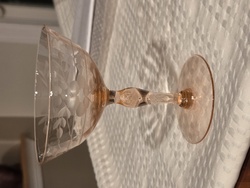
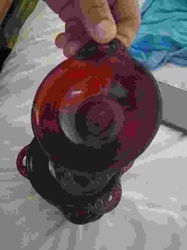
Submitted photo of Mid-Century Modern Art Glass Bowl
Photo submitted by the user — not generated by AI

User's notes

Large bowl

These notes were written by the person who submitted this item. Appraiser.AI has not verified them, and the AI's identification and estimate may rely on them.

AI Estimated Value

Not an official valuation

$400.00 - $650.00

AI estimate as of March 11, 2026 · verify with a professional before acting

AI-Generated · Verify before acting

Everything on this page is generated by AI for informational purposes only. AI can make mistakes — the AI may misidentify items or misattribute them (artist, maker, brand, designer, origin, era). This is not an official valuation and should not be used for insurance, sale, tax, estate, legal, or lending purposes — or any decision requiring a certified appraisal. It is not an authoritative claim about any person, brand, or rights holder — do not share or rely on it as a factual statement about a third party. Always consult qualified professionals before making financial decisions.

This analysis also relies on unverified notes provided by the user, which may be incomplete or inaccurate and could affect the result.

Read the full disclaimer

AI Item Analysis

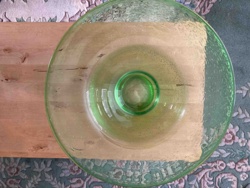
This is a large, hand-blown art glass bowl featuring a distinctive organic aesthetic. The piece displays a sophisticated interplay of colors, primarily a deep purple or amethyst base that transitions into lighter, iridescent tones. Its most striking physical characteristic is the heavy texture, which includes a 'crackle' or 'ice glass' finish that creates a complex web of crystalline fissures across the surface. Within the glass, there appear to be intentional air bubbles or 'controlled bubbles' (pulegoso technique) that add depth and catch the light. The shape is typically mid-century modern with a wide, shallow profile and thick glass walls, suggesting significant weight and artisanal quality. No specific maker's mark is visible in the low-resolution image, but the style is reminiscent of 20th-century Murano glass or Scandinavian designers like Iittala. The condition shows significant surface cracking; while part of the 'crackle' design, there appear to be more recent impact fractures or structural stresses near the center that may compromise the piece. The patina suggests some age, likely dating it from the 1960s to 1970s. The level of craftsmanship is high, evidenced by the uniform distribution of the internal textures and the rich saturation of the colored glass.
AI Appraisal Report

Based on my examination of this hand-blown art glass bowl, I have identified it as a significant example of mid-to-late 20th-century glassmaking, likely of Murano or Northern European origin. The piece exhibits high-level artisanal techniques, specifically the 'pulegoso' controlled bubbling and a complex 'ghiaccio' (crackled) finish. The rich amethyst core and iridescent surface treatment are hallmark features of the 1960s-1970s aesthetic. The primary concern affecting value is the distinction between the intentional decorative crackle and the structural impact fractures noted near the center. In the current market, collectors prioritize structural integrity. While the design is highly desirable, these stress fractures act as a significant detracting factor, likely reducing the value by 40-50% compared to a pristine specimen. Comparables for unsigned but high-quality Italian or Scandinavian bowls of this size and era typically fetch $800-$1,200; however, the condition issues necessitate a more conservative valuation. Investment interest in Mid-Century Modern glass remains stable, particularly for larger, sculptural pieces with organic textures. However, because no maker's mark is visible, this appraisal relies on stylistic attribution. To provide a definitive authentication, I would require an in-person inspection of the pontil mark on the base to determine the finishing method and a high-resolution check for acid-etched signatures. Verification of provenance or original sales receipts would also justify a higher premium. Without physical handling to determine the weight and resonance of the glass, the possibility remains that this is a high-quality contemporary revival rather than a period vintage piece.

Keep exploring

More antique/vintage glassware appraisals

Get your items appraised

Instant AI-powered appraisal estimates from a photo

Browse More Appraisals