Vintage Green Depression Glass Serving Bowl
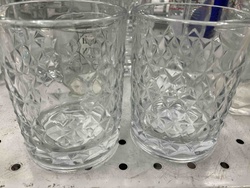
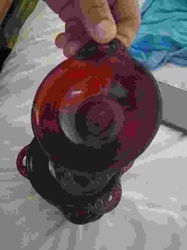
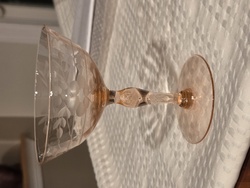
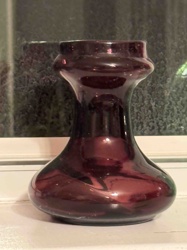
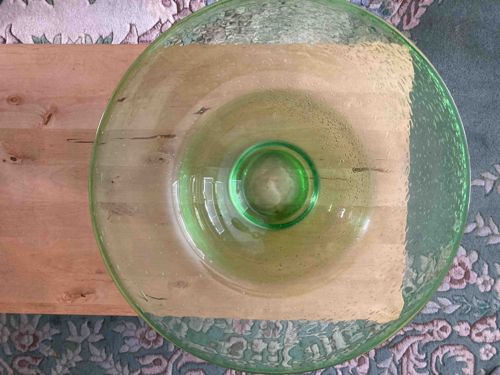
This is a large, circular vintage serving bowl crafted from transparency-grade green glass, famously known as Depression glass. The item displays a vibrant, spring-green 'uranium' hue which was common in early to mid-20th-century glassware. The bowl's construction features a wide, flared rim transitioning into a deep basin with a defined, slightly recessed circular base. A notable physical characteristic is the 'bubbly' or hammered texture visible throughout the glass, often referred to as a seeded or crackle-like effect, which adds significant visual depth and light refraction. From a top-down perspective, the glass appears to be in excellent condition with no visible cracks, chips, or major abrasions on the rim. There is a slight patina of light surface dust, but the clarity remains high. The craftsmanship suggests a machine-molded process typical of the 1930s to 1950s Art Deco or Mid-Century periods. While no maker's mark is immediately visible in this orientation, the color and texture are consistent with manufacturers like Anchor Hocking (Hazel-Atlas) or federal glass companies. The uniformity of the green pigment throughout the glass indicates a high-quality batch production from its era.
AI-Generated Appraisal Disclaimer
Estimated Value
$45.00 - $65.00
Basic Information
Category
Antique & Vintage Glassware
Appraised On
March 25, 2026
Estimated Value
$45.00 - $65.00
Item Description
This is a large, circular vintage serving bowl crafted from transparency-grade green glass, famously known as Depression glass. The item displays a vibrant, spring-green 'uranium' hue which was common in early to mid-20th-century glassware. The bowl's construction features a wide, flared rim transitioning into a deep basin with a defined, slightly recessed circular base. A notable physical characteristic is the 'bubbly' or hammered texture visible throughout the glass, often referred to as a seeded or crackle-like effect, which adds significant visual depth and light refraction. From a top-down perspective, the glass appears to be in excellent condition with no visible cracks, chips, or major abrasions on the rim. There is a slight patina of light surface dust, but the clarity remains high. The craftsmanship suggests a machine-molded process typical of the 1930s to 1950s Art Deco or Mid-Century periods. While no maker's mark is immediately visible in this orientation, the color and texture are consistent with manufacturers like Anchor Hocking (Hazel-Atlas) or federal glass companies. The uniformity of the green pigment throughout the glass indicates a high-quality batch production from its era.
Get Your Items Appraised
Instant estimates of your treasures with AI-powered instant appraisals