AI Appraisal Estimate

AI-generated estimates · not official valuations

From the user

What was submitted

Photo and notes provided by the user — not generated by AI

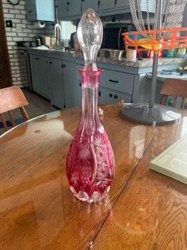
Submitted item photo
Submitted photo · June 4, 2026

User's notes

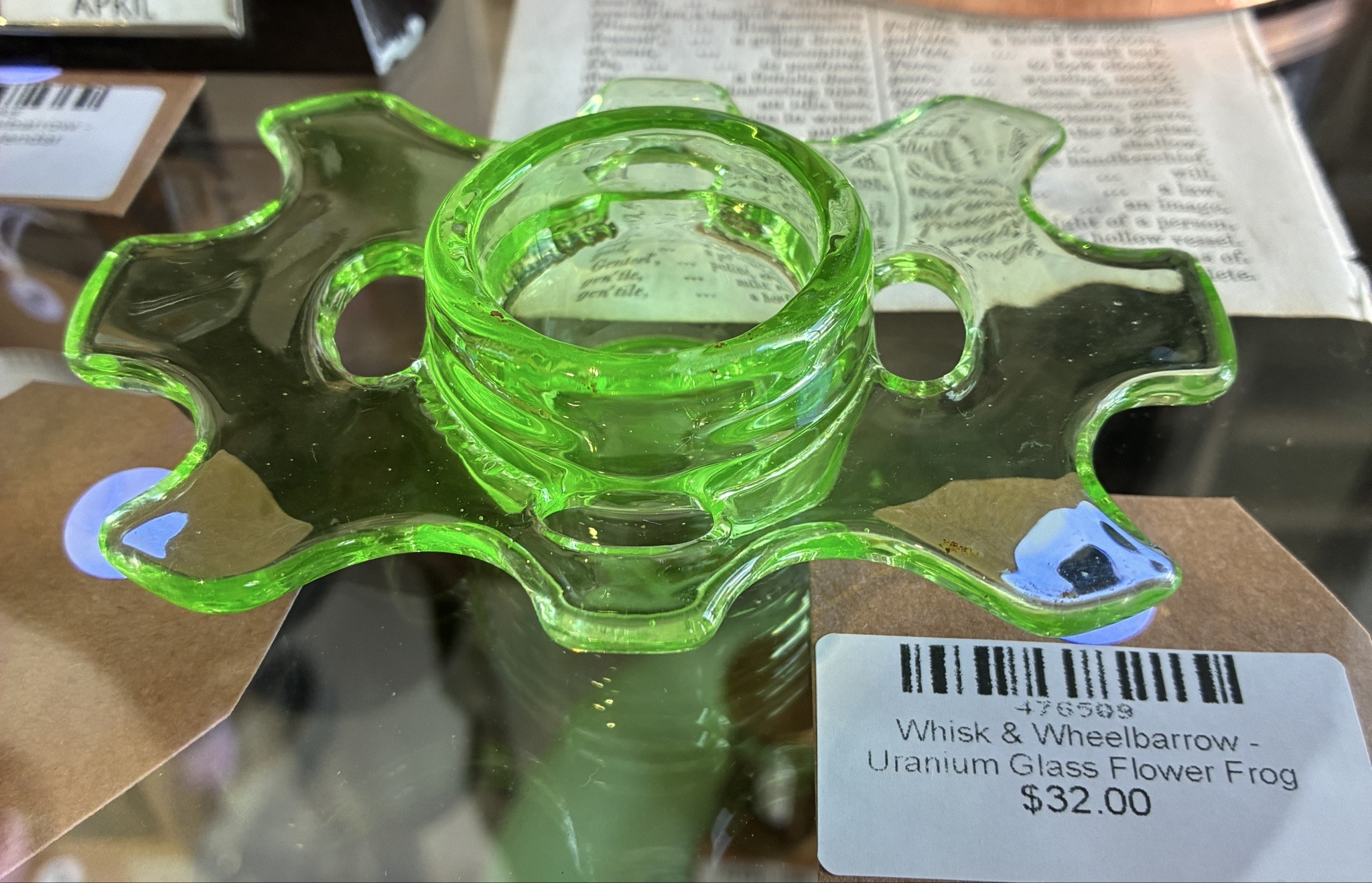
Uranium glass flower frog

AI analysis below

AI appraisal

AI analysis & estimate

AI-Generated · Verify before acting

Everything below is generated by AI for informational purposes only. AI can make mistakes — the AI may misidentify items or misattribute them (artist, maker, brand, designer, origin, era). This is not an official valuation and should not be used for insurance, sale, tax, estate, legal, or lending purposes — or any decision requiring a certified appraisal. It is not an authoritative claim about any person, brand, or rights holder — do not share or rely on it as a factual statement about a third party. Always consult qualified professionals before making financial decisions.

Note

This analysis also relies on unverified notes provided by the user, which may be incomplete or inaccurate and could affect the result.

Read the full disclaimer

AI Identification

·Not independently authenticated·Verify before acting

Cambridge Glass #3011 Green Uranium Glass 2-Hole Figural Flower Frog

Antique/Vintage Glassware

AI Estimated Value

·Not an official valuation·Verify before acting

$45.00 - $65.00

As of June 4, 2026

AI Item Analysis

·AI can make mistakes·Verify before acting
This is a vintage flower frog, manufactured in pressed uranium glass (also known as Vaseline glass), which exhibits its characteristic lime-green hue due to traces of uranium oxide. The piece likely dates to the Depression era, approximately the 1930s to early 1940s. Centrally, it features a raised cylindrical 'well' design designed to support a figural insert, flanked by two circular holes on a flat, clover-style base for stem placement. The glass is thick and transparent with visible mold lines indicative of mass production during the early 20th century. While it lacks a visible maker's mark in the photograph, the silhouette is consistent with designs by major American manufacturers like Cambridge Glass. The condition appears fair to good; there is notable surface grime and small dark debris caught within the crevices and near the base. A small fracture or impact mark is visible on the inner rim of the central cylinder, and there are minor flea bites and shelf wear along the scalloped edges of the base. If exposed to a long-wave ultraviolet light source, this item would emit a strong neon green fluorescence.
AI Appraisal Report

·AI can make mistakes·Verify before acting
I have examined the digital images and description of this Cambridge Glass #3011 green uranium glass flower frog. This specific 'two-hole' design was produced by the Cambridge Glass Company during the early 1930s. The piece exhibits the correct lime-green coloration and mold-line placement characteristic of Depression-era pressed glass. The fluorescence described confirms the presence of uranium oxide, which is consistently sought after by specialized glass collectors. Upon visual inspection, the item exhibits several condition issues that negatively impact its market value. While the mold strikes are crisp, the presence of a fracture on the inner rim of the central cylinder is a significant structural flaw. Combined with visible shelf wear and minor 'flea bites' along the scalloped base, the piece cannot be graded as Mint. These imperfections are common for utility items of this age but do deter premium-tier collectors. The market for Depression glass remains stable, though common flower frogs often see high volume and moderate prices. Comparables for this specific model in perfect condition typically sell between $85 and $110. Due to the identified damage, this specimen sits in a lower bracket. Limitations: This appraisal is based solely on photographic evidence. A definitive authentication would require a physical inspection to check for modern reproductions (though this specific mold is rarely faked) and to confirm that the 'fracture' is not an internal heat crack. I would also verify the glass density and surface texture to ensure it is period-correct. Provenance documentation or original catalog matching would further solidify its history.

Get your items appraised

Instant estimates of your treasures with AI-powered appraisals

Browse More Appraisals