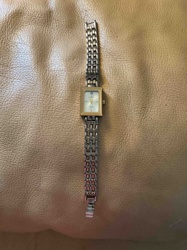
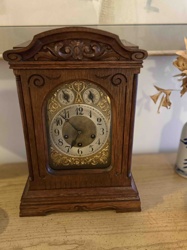
AI estimate as of November 2, 2025 · verify with a professional before acting
AI-Generated · Verify before acting
Everything on this page is generated by AI for informational purposes only. AI can make mistakes — the AI may misidentify items or misattribute them (artist, maker, brand, designer, origin, era). This is not an official valuation and should not be used for insurance, sale, tax, estate, legal, or lending purposes — or any decision requiring a certified appraisal. It is not an authoritative claim about any person, brand, or rights holder — do not share or rely on it as a factual statement about a third party. Always consult qualified professionals before making financial decisions.
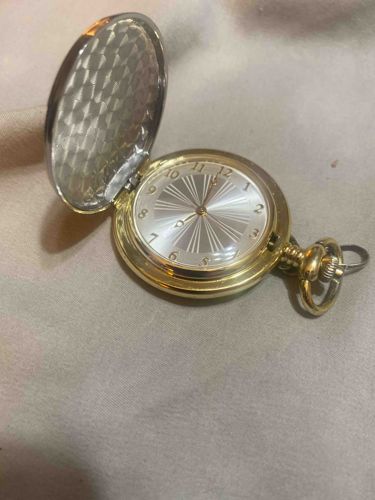
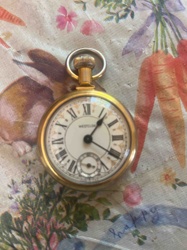
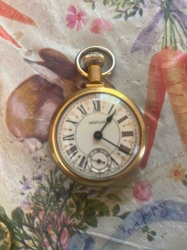
This is a gold-tone pocket watch with a hinged cover. The watch case and bezel appear to be made of polished yellow metal, likely a gold-plated or brass material, giving it a bright, reflective finish. The hinged cover, when open, reveals a silver-toned, possibly polished stainless steel or chrome-plated, interior with a textured, possibly engine-turned or machine-engraved, basketweave or diamond pattern. The watch face features a radially brushed or sunburst silver-colored dial with Arabic numerals (1-12) printed in black, which are clearly legible. There are three gold-tone hands, including an hour, minute, and a slimmer second hand, though the second hand is partially obscured. The center of the dial shows a distinct sunburst texture originating from the center where the hands are pivoted. The watch has a small, fluted crown attached to a decorative bail and a jump ring, indicating it is designed to be attached to a chain. The overall condition appears to be good with minimal visible wear, although some minor surface scratches may be present on close inspection. There are no obvious dents or major damage visible. The style suggests it could be a modern reproduction or a vintage piece from the mid to late 20th century. The craftsmanship appears to be of standard commercial quality, with functional design elements. No specific maker's marks or signatures are discernible from the provided image.
AI Appraisal Report
I have examined the provided image of this gold-tone pocket watch. Visually, the watch appears to be in good condition with a polished gold-plated or brass case and bezel. The silver-toned interior with a basketweave pattern, along with the sunburst silver dial and black Arabic numerals, indicates a standard commercial design. The three gold-tone hands are legible, and the fluted crown with bail and jump ring are functional. Based on the visual evidence, I assess this as a modern reproduction or a vintage piece from the mid to late 20th century, likely mass-produced. There are no discernible maker’s marks, which, combined with the general aesthetic, points to its commercial-grade origin rather than a high-end or collectible piece.
Market conditions for such pocket watches are generally modest. Comparables often include similar gold-tone, quartz, or basic mechanical pocket watches available from a range of online retailers or estate sales. Demand for unbranded or entry-level pocket watches is consistent but not high, and the item's rarity is low due to common manufacturing. Factors significantly impacting its value include the lack of precious metals in the case (it's gold-tone, not solid gold), the absence of a recognized brand or historical significance, and minimal collectibility. The primary value lies in its aesthetic appeal and functionality as a timekeeping device.
It is crucial to note the limitations of authenticity verification from images alone. Without physical inspection, I cannot confirm the exact material composition of the case (e.g., precise gold plating thickness vs. brass), the movement type (quartz vs. mechanical), or the presence of any hidden markings. An in-person examination would allow for tactile inspection, detailed measurement, and movement verification to ascertain its exact construction and functionality. Provenance documentation, if available, could offer insights into its history, and scientific testing, such as XRF analysis, would definitively identify metal content.