AI estimate as of November 14, 2025 · verify with a professional before acting
AI-Generated · Verify before acting
Everything on this page is generated by AI for informational purposes only. AI can make mistakes — the AI may misidentify items or misattribute them (artist, maker, brand, designer, origin, era). This is not an official valuation and should not be used for insurance, sale, tax, estate, legal, or lending purposes — or any decision requiring a certified appraisal. It is not an authoritative claim about any person, brand, or rights holder — do not share or rely on it as a factual statement about a third party. Always consult qualified professionals before making financial decisions.
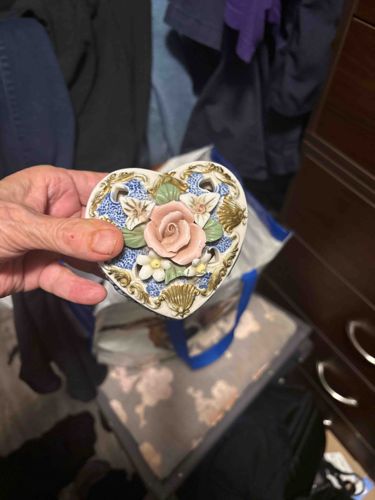
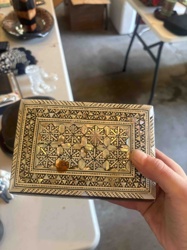
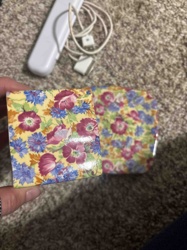
This is a heart-shaped trinket box, possibly made of porcelain or ceramic, featuring intricate applied decorations on its lid. The box is predominantly white or cream-colored, serving as a base for the detailed embellishments. The lid's surface is textured with a central large, pink rose, complete with individually sculpted petals and green leaves. Surrounding the rose are smaller white flowers with yellow centers and additional green foliage. The background of these floral elements is a vibrant blue with a white, somewhat stippled or textured pattern, giving it a slightly aged or ornate appearance. Framing the blue background and floral arrangement are raised, gilded scrolling details, which appear to be either gold-painted or have a metallic luster, adding to its decorative appeal. Small, golden shell-like motifs are also incorporated into the design, particularly around the edges of the heart shape, further enhancing its ornate style. The item appears to be in good condition with no visible chips, cracks, or significant wear on the decorative elements. The craftsmanship suggests a manufactured item, likely mass-produced but with a decorative finish mimicking more expensive, hand-applied designs. The approximate size would be suitable for holding small jewelry or keepsakes. The overall style suggests it could be from the mid to late 20th century, possibly designed for decorative display or as a gift item. The quality of the applied details is consistent, and the colors remain vibrant, indicating good preservation. No maker's marks or signatures are discernible from the provided image.
AI Appraisal Report
Upon visual examination of the provided image, this heart-shaped trinket box exhibits good overall condition. There are no readily apparent chips, cracks, or significant wear to the applied floral and shell motifs or the gilded details. The colors remain vibrant, suggesting careful preservation. The craftsmanship, particularly the consistency of the applied embellishments, points towards a manufactured item from the mid to late 20th century, likely mass-produced to mimic more ornate, hand-decorated pieces.
In terms of market conditions, items of this decorative nature are generally categorized as collectible ceramic or porcelain trinket boxes. Comparables in the retail market, including online platforms and antique malls, for visually similar mass-produced, post-1950s decorative boxes typically range from $20 to $60, depending on condition and specific design appeal. Demand for such items is moderate; while they are attractive decorative pieces, they do not generally command high prices unless they are from a renowned manufacturer or possess unique artistic merit.
Factors impacting value include the non-premium material (likely porcelain or ceramic), the presumed mass-produced origin, and the decorative rather than functional primary purpose. Its rarity is low given the likely manufacturing process.
It is crucial to note the limitations of authentication and precise valuation based solely on images. A physical inspection would be necessary to ascertain the exact material composition, confirm the absence of hairline cracks or any unseen damage, assess the quality and application of the gilding, and search for any hidden maker's marks or signatures that are not visible in the image. Provenance documentation, if available, could also impact value, especially if it linked the item to a known manufacturer or limited edition. Without these, authentication remains visual and presumptive.