AI estimate as of September 28, 2025 · verify with a professional before acting
AI-Generated · Verify before acting
Everything on this page is generated by AI for informational purposes only. AI can make mistakes — the AI may misidentify items or misattribute them (artist, maker, brand, designer, origin, era). This is not an official valuation and should not be used for insurance, sale, tax, estate, legal, or lending purposes — or any decision requiring a certified appraisal. It is not an authoritative claim about any person, brand, or rights holder — do not share or rely on it as a factual statement about a third party. Always consult qualified professionals before making financial decisions.
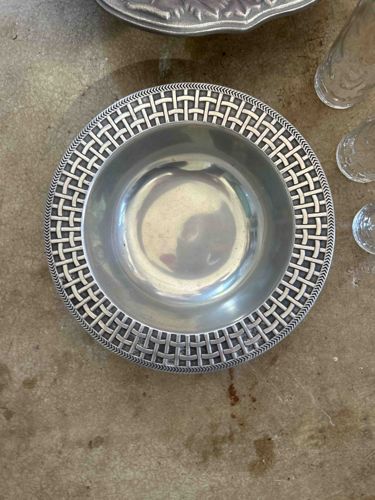
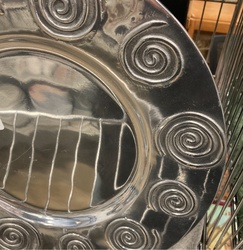
This is a round, shallow bowl, likely made of pewter or a similar silver-toned metal alloy. The primary color is a matte silver-gray, characteristic of pewter, which appears to have a slightly polished but unreflective finish in the center and a darker, antiqued look in the recessed areas of the rim. The construction is solid, suggesting it was cast or pressed from sheet metal. The most striking feature is the wide, intricately decorated rim, which showcases a basket-weave or lattice-work pattern. This pattern is raised and appears to have a darker patina in the lower sections, creating a strong contrast and enhancing the depth of the design. The very outer edge of the rim is further embellished with a delicate, continuous zig-zag or chevron pattern, adding another layer of visual interest and craftsmanship. The interior of the bowl is smooth and largely undecorated, displaying some minor scuffing or surface scratches consistent with use or handling. There are no visible maker's marks or signatures discernible from the image, but the design hints at a traditional or possibly vintage aesthetic. The overall condition appears good, with no obvious dents, cracks, or significant damage, though some light wear and natural metal oxidation are present, contributing to its aged character. The quality of the casting or pressing for the rim pattern indicates a reasonable level of manufacturing expertise.
AI Appraisal Report
Upon visual examination of the provided image, I assess this pewter bowl with a basket-weave rim. The condition appears to be good overall, with no obvious major damage such as dents or cracks. The slight scuffing and surface scratches on the interior, along with the natural oxidation and darker patina in the recessed areas of the rim, are consistent with age and use, adding to its vintage character rather than detracting significantly from its appeal. The quality of the casting for the intricate rim pattern suggests a reasonable level of manufacturing skill. Authenticity, based solely on visual inspection, appears consistent with a genuine pewter or similar metal alloy piece of modest age. However, without handling the item, I cannot definitively confirm the metal composition, which significantly impacts value.
In terms of market conditions, similar vintage pewter bowls, particularly those with decorative rims, generally fall into the affordable collectables category. Comparables often feature detailed craftsmanship but typically aren't rare unless associated with a prominent maker or historical significance. Demand for such items is moderate; they appeal to collectors of vintage dinnerware or those seeking decorative accent pieces. Rarity is low to moderate, depending on the exact design and potential manufacturer, which is currently unknown.
Factors significantly impacting value include the actual metal composition (is it true pewter, Britannia metal, or another alloy?), the precise age, and the identity of the manufacturer, if any. The absence of discernible maker's marks limits its potential for higher value, as provenance is key for premium pricing.
It is crucial to note the limitations of authentication and appraisal from images alone. A physical examination is necessary to confirm the material composition through weight, touch, and possibly spot testing. An in-person inspection would also allow for a thorough search for any faint maker's marks, assessment of the true depth of any wear, and a more accurate determination of manufacturing technique. Documentation of provenance would further enhance value, if available.