AI Appraisal Estimate

AI-generated estimates · not official valuations

From the user

What was submitted

Photo and notes provided by the user — not generated by AI

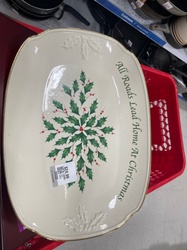
Submitted item photo
Submitted photo · June 17, 2026

User's notes

No additional notes provided.

AI analysis below

AI appraisal

AI analysis & estimate

AI-Generated · Verify before acting

Everything below is generated by AI for informational purposes only. AI can make mistakes — the AI may misidentify items or misattribute them (artist, maker, brand, designer, origin, era). This is not an official valuation and should not be used for insurance, sale, tax, estate, legal, or lending purposes — or any decision requiring a certified appraisal. It is not an authoritative claim about any person, brand, or rights holder — do not share or rely on it as a factual statement about a third party. Always consult qualified professionals before making financial decisions.

Read the full disclaimer

AI Identification

·Not independently authenticated·Verify before acting

Vintage Floral Scalloped Serving Platter

Dinnerware/Serveware

AI Estimated Value

·Not an official valuation·Verify before acting

$25-45

As of June 17, 2026

AI Item Analysis

·AI can make mistakes·Verify before acting
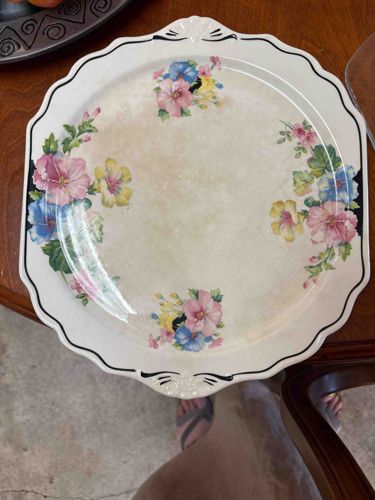
This is a vintage serving platter, likely made of ceramic or porcelain, featuring a decorative floral motif and a distinctive scalloped edge. The primary color of the platter is an off-white or cream, with a subtle mottled or crackle-like texture visible across its surface, suggesting age or a deliberate finish. The rim of the platter is intricately scalloped, creating a wavy border. This scalloped edge is accentuated by a thin, dark line (likely black or dark brown) that follows its contour, providing a crisp outline. At the corners, or wider points of the platter's shape, there are decorative elements resembling stylized scrollwork or small shell-like motifs, also highlighted with dark lines. The central decoration consists of vibrant floral clusters positioned in three corners and on one short side. These clusters include flowers in shades of pink, yellow, and blue, along with green foliage. The colors appear somewhat muted but still distinct, consistent with older ceramic decals or hand-painting. There are no visible chips, cracks, or significant damage, suggesting it has been well-preserved or is in good condition for its age. The glossy finish indicates that it has been glazed, which generally protects the surface and makes it suitable for serving food. The overall aesthetic points to an mid-20th-century style, possibly from the 1940s to 1960s, a period known for such colorful floral china patterns. The craftsmanship appears to be commercially produced, with consistent pattern application, typical of dinnerware from that era.
AI Appraisal Report

·AI can make mistakes·Verify before acting
Upon examining the provided images of this vintage floral serving platter, my assessment is that it is a commercially produced piece of dinnerware, likely dating from the mid-20th century (c. 1940s-1960s). The platter appears to be in very good condition, with no visible chips, cracks, or significant crazing, which is a primary factor in its valuation. The floral decal decoration and scalloped, dark-lined edge are characteristic of patterns popular during that era. The current market for mid-century dinnerware of this type is active but generally modest. Similar individual serving platters from known but not top-tier manufacturers (e.g., Homer Laughlin, Taylor, Smith & Taylor) often trade in the $20 to $50 range, depending on condition and pattern desirability. This piece's value is primarily decorative, as it does not appear to belong to a highly rare or sought-after pattern. Its appeal lies in its charming, classic aesthetic for use or display. It is crucial to note the limitations of this appraisal, as it is based solely on visual analysis of images. Without a physical examination, I cannot definitively identify the manufacturer, which is typically confirmed via a backstamp or maker's mark on the underside. Full authentication would require this in-person inspection to verify the mark, distinguishing it from a modern reproduction or a piece from a more valuable or obscure pottery. Provenance documentation or further research based on a confirmed maker's mark would be necessary for a more precise valuation.

Get your items appraised

Instant estimates of your treasures with AI-powered appraisals

Browse More Appraisals