AI Appraisal Estimate

AI-generated estimates · not official valuations

From the user

What was submitted

Photo and notes provided by the user — not generated by AI

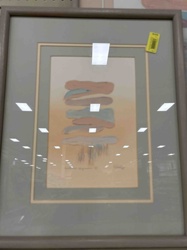
Submitted item photo
Submitted photo · June 27, 2026

User's notes

No additional notes provided.

AI analysis below

AI appraisal

AI analysis & estimate

AI-Generated · Verify before acting

Everything below is generated by AI for informational purposes only. AI can make mistakes — the AI may misidentify items or misattribute them (artist, maker, brand, designer, origin, era). This is not an official valuation and should not be used for insurance, sale, tax, estate, legal, or lending purposes — or any decision requiring a certified appraisal. It is not an authoritative claim about any person, brand, or rights holder — do not share or rely on it as a factual statement about a third party. Always consult qualified professionals before making financial decisions.

Read the full disclaimer

AI Identification

·Not independently authenticated·Verify before acting

Don Manuel Osorio Manrique de Zúñiga (Reproductions after Goya)

Wall Art & Prints

AI Estimated Value

·Not an official valuation·Verify before acting

$45-85

As of June 27, 2026

AI Item Analysis

·AI can make mistakes·Verify before acting
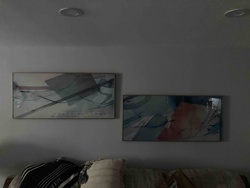
This item is a framed reproduction print of Francisco Goya's famous 18th-century masterpiece 'Don Manuel Osorio Manrique de Zúñiga' (often titled 'The Boy in Red'). The image depicts a young boy dressed in a vibrant red silk jumpsuit with a white lace collar and a silver sash, holding a string attached to a pet magpie. To the left, several cats watch the bird intently, and to the right is a cage filled with finches. The color palette is dominated by the bold red of the boy's outfit against a muted, shadowed background and a dark green matting. This specific piece is housed under glass within a thin, modern gold-toned metal frame, indicative of late 20th-century framing styles. The matting is a deep forest green with a narrow gold-toned inner border that matches the outer frame. Regarding condition, the frame appears intact with no significant denting visible, though there is a noticeable vertical reflection on the glass surface. The print itself seems to have maintained its color saturation well, though the paper may have slight age-related yellowing or foxing that is obscured by the glass. The style reflects 18th-century Spanish Portraiture, though the materials—specifically the metal frame and modern matting—suggest this is a high-quality decorative lithograph or offset print rather than an original worked canvas. There are no visible signatures or edition numbers on the face of the print, suggesting it was produced for a mass-market retail or museum shop context.
AI Appraisal Report

·AI can make mistakes·Verify before acting
I have examined the digital image of this framed reproduction depicting Francisco Goya’s 'Don Manuel Osorio Manrique de Zúñiga.' My assessment indicates this is a high-quality decorative offset lithograph, likely produced in the late 20th century. My conclusion is based on the visible dot structure typical of mechanical printing processes and the use of a thin, gold-toned metal section frame and forest green matting, which were ubiquitous in commercial framing during the 1970s and 80s. The condition appears good, with the pigments retaining high saturation and no evidence of significant fading or moisture damage. However, the use of a metal frame and lack of archival spacing suggest it was not framed to museum standards. Market demand for Goya reproductions remains steady for home decor, but they are not rare. This item is considered a 'decorative object' rather than a 'fine art investment,' as it lacks a signature, edition number, or provenance linking it to a limited run or specific atelier. Limitations: My evaluation is based solely on digital images. A physical inspection would be required to examine the paper’s weight, texture, and watermark, and to confirm the absence of hand-applied 'brushstroke' textures often found on higher-end replicas. To fully authenticate the age and print method, I would need to examine the piece out of the frame using a 30x loupe. Scientific testing of the ink chemistry would only be necessary if the piece were suspected to be a period engraving; however, the framing materials and visual characteristics strongly support a modern decorative designation.

Get your items appraised

Instant estimates of your treasures with AI-powered appraisals

Browse More Appraisals