AI identification & appraisal estimate

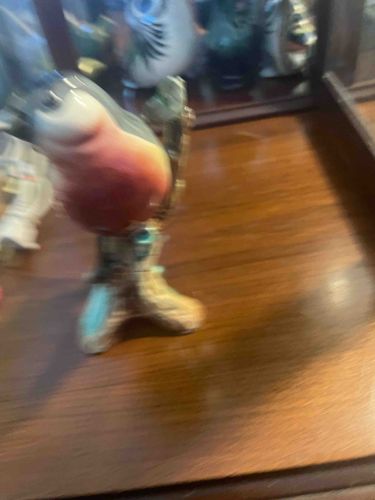
Porcelain Bird Figurine

Submitted photo of Porcelain Bird Figurine
Photo submitted by the user — not generated by AI

User's notes

Porcelain Bird Manufactures Mark on underside of base

These notes were written by the person who submitted this item. Appraiser.AI has not verified them, and the AI's identification and estimate may rely on them.

AI Estimated Value

Not an official valuation

$40-80

AI estimate as of August 18, 2025 · verify with a professional before acting

AI-Generated · Verify before acting

Everything on this page is generated by AI for informational purposes only. AI can make mistakes — the AI may misidentify items or misattribute them (artist, maker, brand, designer, origin, era). This is not an official valuation and should not be used for insurance, sale, tax, estate, legal, or lending purposes — or any decision requiring a certified appraisal. It is not an authoritative claim about any person, brand, or rights holder — do not share or rely on it as a factual statement about a third party. Always consult qualified professionals before making financial decisions.

This analysis also relies on unverified notes provided by the user, which may be incomplete or inaccurate and could affect the result.

Read the full disclaimer

AI Item Analysis

The item is a porcelain figurine depicting a bird, likely a robin or similar species, identifiable by its distinctive reddish-orange breast and greyish-black upper plumage. The bird is perched on what appears to be a stylized branch or naturalistic base, rendered in a brownish-gold and greenish-blue hue, possibly suggesting moss or lichen. The figurine exhibits a glossy, glazed finish typical of porcelain decorative pieces. Its construction suggests it is a molded piece, carefully painted to capture the bird's natural coloring. While the image is somewhat blurry, preventing a clear assessment of minute details, the overall form appears well-proportioned and lifelike for a decorative ceramic. There are no readily apparent visible condition issues such as chips, cracks, or significant wear, though the blurriness makes a definitive assessment impossible. The craftsmanship appears to be of good quality, indicated by the smooth finish and naturalistic color transitions, despite the limitations of the image. The provided context states there is a manufacturer's mark on the underside of the base, which would be crucial for identifying the maker, country of origin, and estimated age. Without seeing the mark, it is difficult to assign a precise style period or age, but such porcelain bird figurines were popular throughout the 20th century, particularly from the mid-century onwards. The size cannot be determined from the image, but it appears to be a tabletop decorative item.
AI Appraisal Report

I have examined the provided image of the porcelain bird figurine. Visually, the piece appears to be a well-crafted decorative item, likely depicting a robin due to its distinct reddish-orange breast and greyish-black upper plumage. The glossy glaze and painted details suggest good quality porcelain. From the image, the condition appears good, with no obvious chips, cracks, or significant wear, though the blurriness prevents a definitive assessment. Authenticity verification is highly limited by the image. The presence of a manufacturer's mark on the base is crucial; without seeing it, I cannot ascertain the maker, country of origin, or precise age. These factors significantly impact market value. Porcelain bird figurines were popular throughout the 20th century, with values varying widely based on the maker (e.g., Boehm, Royal Doulton, specific German or Japanese manufacturers) and rarity of the particular model. Market conditions for general decorative porcelain figurines are currently moderate, with higher demand for pieces from renowned manufacturers or those with exceptional artistry. Rarity is difficult to assess without maker identification. Factors that would significantly impact value include the identity of the manufacturer, the age of the piece, the actual physical condition (absence of hidden damage), and the perceived artistry upon close inspection. For full authentication and a more precise valuation, an in-person examination is essential to inspect the manufacturer's mark, assess the tactile quality of the porcelain, and determine the exact condition. Provenance documentation (purchase receipts, prior appraisal documents) would also be beneficial.

Keep exploring

More decorative art appraisals

Get your items appraised

Instant AI-powered appraisal estimates from a photo

Browse More Appraisals