AI Appraisal Estimate

AI-generated estimates · not official valuations

From the user

What was submitted

Photo and notes provided by the user — not generated by AI

Submitted item photo
Submitted photo · June 6, 2026

User's notes

No additional notes provided.

AI analysis below

AI appraisal

AI analysis & estimate

AI-Generated · Verify before acting

Everything below is generated by AI for informational purposes only. AI can make mistakes — the AI may misidentify items or misattribute them (artist, maker, brand, designer, origin, era). This is not an official valuation and should not be used for insurance, sale, tax, estate, legal, or lending purposes — or any decision requiring a certified appraisal. It is not an authoritative claim about any person, brand, or rights holder — do not share or rely on it as a factual statement about a third party. Always consult qualified professionals before making financial decisions.

Read the full disclaimer

AI Identification

·Not independently authenticated·Verify before acting

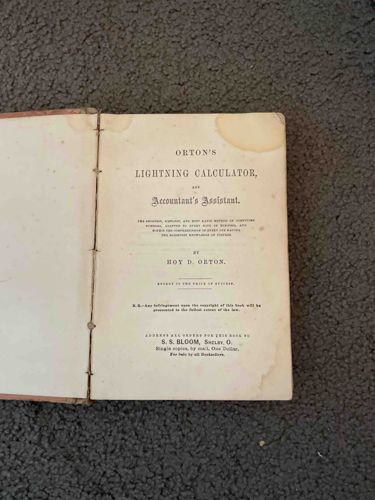
Orton's Lightning Calculator, and Accountant's Assistant by Hoy D. Orton

Antique Books and Ephemera

AI Estimated Value

·Not an official valuation·Verify before acting

$45.00 - $65.00

As of June 6, 2026

AI Item Analysis

·AI can make mistakes·Verify before acting
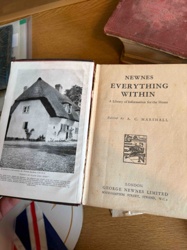
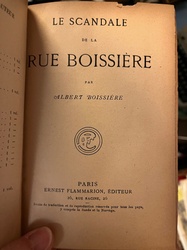
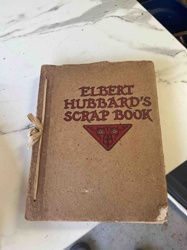
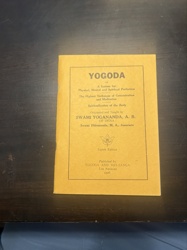
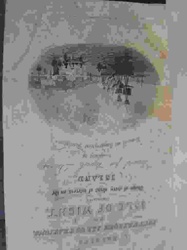
This item is an antique hardbound book titled 'Orton's Lightning Calculator, and Accountant's Assistant', authored by Hoy D. Orton. The title page indicates it was published or distributed by S.S. Bloom in Shelby, Ohio. Judging by the typography and known publication history of this specific work, it likely dates from the late 19th century, approximately 1866 to the 1880s. The physical construction features a hand-stitched binding visible along the internal gutter, showing individual thread knots that suggest a utilitarian yet durable Victorian-era assembly. The paper is an off-white or cream-colored pulp stock typical of the period. Notable condition issues include significant water staining (tidelines) visible along the top and bottom margins of the title page and the inside of the front cover. There is also general foxing and age-toning across the leaves. The spine and outer boards appear to be covered in a reddish-brown cloth or paper, which shows fraying at the edges and corners. The book's content serves as a mathematical shortcut guide for rapid business and accounting calculations, a popular genre for late 19th-century professionals. The typography uses a mix of serif and blackletter-style fonts for the title, emphasizing the authoritative nature of the text.
AI Appraisal Report

·AI can make mistakes·Verify before acting
I have examined the digital images of 'Orton’s Lightning Calculator, and Accountant’s Assistant' by Hoy D. Orton, published by S.S. Bloom. This work was a staple of late 19th-century business education, frequently revised and printed between 1866 and the late 1880s. The typography and hand-stitched binding are consistent with Victorian utilitarian book production, confirming its authenticity as a mass-produced period piece rather than a modern reproduction. The condition is the primary factor limiting its market value. While the binding remains intact, the significant water staining (tide marks) on the title page and interior leaves, along with the fraying of the cloth boards, suggests poor storage conditions. In the field of antiquarian books, condition is paramount; buyers of technical manuals prefer 'fine' or 'near-fine' copies. This specimen would be classified as 'Fair' to 'Good' condition at best. Market demand for 19th-century mathematical guides is steady among niche collectors of 'pedagogical ephemera' or 'business history,' but because this was a widely distributed text, it lacks extreme rarity. Recent auction and retail results for copies in better condition range from $80 to $120; therefore, the current valuation reflects a discount for the visible water damage. Note: This appraisal is based strictly on visual digital evidence. A physical inspection is required to determine the stability of the paper fibers, check for hidden mold within the binding, and verify the completeness of all pages. Full authentication would benefit from provenance documentation or an examination of the embossed branding on the cover, which is difficult to resolve in the provided images.

Get your items appraised

Instant estimates of your treasures with AI-powered appraisals

Browse More Appraisals