AI Appraisal Estimate

AI-generated estimates · not official valuations

From the user

What was submitted

Photo and notes provided by the user — not generated by AI

Submitted item photo
Submitted photo · July 13, 2026

User's notes

No additional notes provided.

AI analysis below

AI appraisal

AI analysis & estimate

AI-Generated · Verify before acting

Everything below is generated by AI for informational purposes only. AI can make mistakes — the AI may misidentify items or misattribute them (artist, maker, brand, designer, origin, era). This is not an official valuation and should not be used for insurance, sale, tax, estate, legal, or lending purposes — or any decision requiring a certified appraisal. It is not an authoritative claim about any person, brand, or rights holder — do not share or rely on it as a factual statement about a third party. Always consult qualified professionals before making financial decisions.

Read the full disclaimer

AI Identification

·Not independently authenticated·Verify before acting

Late-19th to early-20th-century German-style illustrated book cover

Antique Books and Ephemera

AI Estimated Value

·Not an official valuation·Verify before acting

$40 - $120

As of July 13, 2026

AI Item Analysis

·AI can make mistakes·Verify before acting
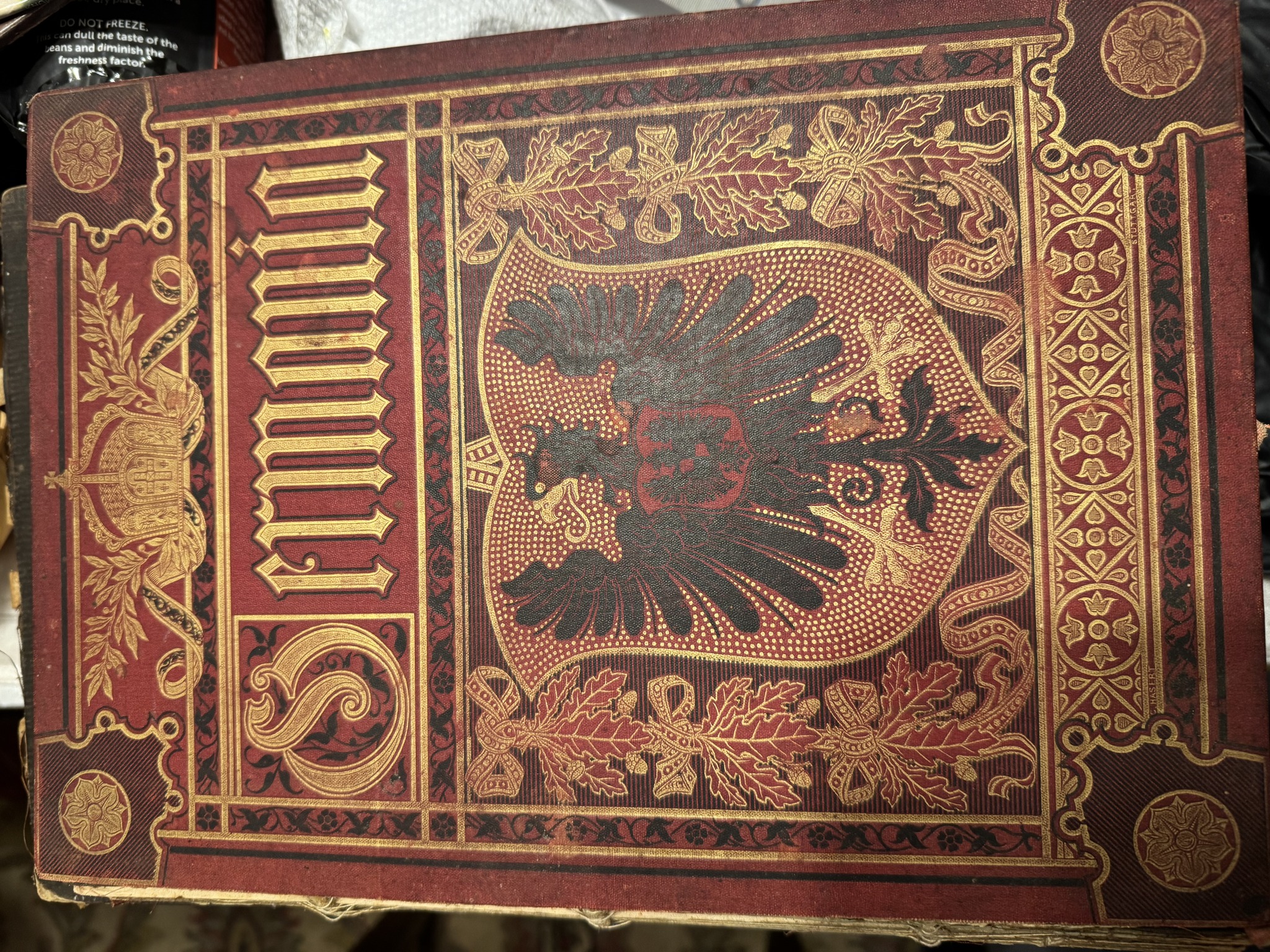
This item appears to be the front cover of a large, decorative hardcover book, featuring ornate gilt and color-printed lithography. The central motif is a shield containing a black double-headed eagle, consistent with the iconography of the German Empire or similar Germanic heraldic traditions. The title is rendered in a prominent, highly stylized vertical Gothic or Fraktur-influenced script that appears to read 'Germania'. Surrounding the central shield are intricate motifs including oak leaves, acorns, and ribbons in gold-tone ink. Along the right vertical border, the word 'STUTTGART' is visible in small capital letters, suggesting the location of the publisher or printer. A small name, which appears to be 'E. HASERT', is also visible in the lower right border, potentially identifying the illustrator or lithographer. The cover is executed in a deep red or maroon fabric or paper-covered board. Visible condition issues include significant wear and fraying along the edges and corners, where the underlying board material is exposed. There is light surface scuffing and minor fading to the decorative gilding, which is consistent with a volume from the late 1800s or early 1900s. The craftsmanship reflects the elaborate 'Prachtband' (splendid binding) style typical of Victorian-era European commemorative or historical publications. This identification is based on visible text and stylistic heraldry, though a physical inspection of the internal pages would be required to verify the specific edition and printing date.

AI Appraisal Report

·AI can make mistakes·Verify before acting
Based on my visual assessment of the provided image, this item appears to be a front cover board from a late-19th to early-20th-century German 'Prachtband' (splendid binding) publication, likely titled 'Germania.' The design features a double-headed eagle and heraldic motifs consistent with German Imperial iconography. The presence of the name 'E. Hasert' and the 'Stuttgart' location suggest a regional origins involving known German lithographic or publishing trades from that era. However, without inspecting the interior pages or the spine, I cannot confirm the specific edition, publisher, or complete date of production. My estimate assumes this is a detached book board rather than a complete volume. A complete, intact book with this level of decorative gilt would typically command a higher market interest. The value is significantly impacted by the visible wear, including frayed corners and exposed board material, which are common for materials of this age but detract from the aesthetic appeal. In the current market, decorative nineteenth-century book components are often sought after for their historical lithography and display potential. This estimate reflects the value if the item is an authentic period piece; should it be a modern reproduction or a later facsimile, the value would likely drop below $20. To provide a more precise valuation, a physical examination is necessary to check for watermarkings, paper type, and binding technique. Establishing a clear provenance or finding a complete matching volume would further substantiate the historical context and market desirability. Professional authentication of the lithographic process would also be required to determine if the gold-tone ink is original to the era.

Get your items appraised

Instant estimates of your treasures with AI-powered appraisals

Browse More Appraisals