AI Appraisal Estimate

AI-generated estimates · not official valuations

From the user

What was submitted

Photo and notes provided by the user — not generated by AI

Submitted item photo
Submitted photo · May 27, 2026

User's notes

No additional notes provided.

AI analysis below

AI appraisal

AI analysis & estimate

AI-Generated · Verify before acting

Everything below is generated by AI for informational purposes only. AI can make mistakes — the AI may misidentify items or misattribute them (artist, maker, brand, designer, origin, era). This is not an official valuation and should not be used for insurance, sale, tax, estate, legal, or lending purposes — or any decision requiring a certified appraisal. It is not an authoritative claim about any person, brand, or rights holder — do not share or rely on it as a factual statement about a third party. Always consult qualified professionals before making financial decisions.

Read the full disclaimer

AI Identification

·Not independently authenticated·Verify before acting

Vintage Silver-Plated Cake/Pastry Fork Set

Antique and Vintage Flatware

AI Estimated Value

·Not an official valuation·Verify before acting

$45.00 - $65.00

As of May 27, 2026

AI Item Analysis

·AI can make mistakes·Verify before acting
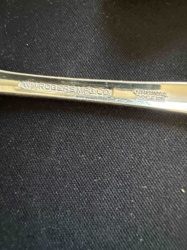
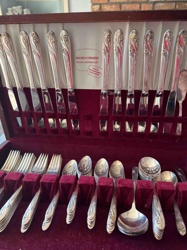
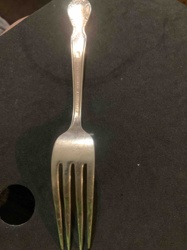
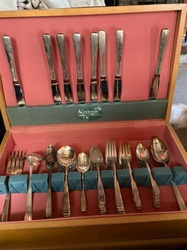
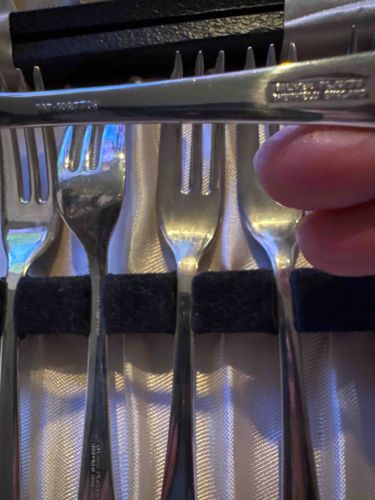
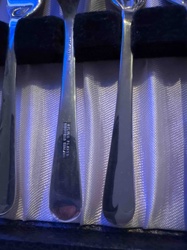
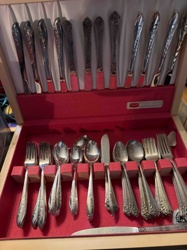
This is a set of vintage dessert or cake forks, characterized by their three-tined design and a notable notch on the outermost tine, which is traditional for cutting through delicate pastries. The pieces are constructed from a base metal, likely nickel or brass, with a silver-plated finish as indicated by the clear stamps on the reverse of the handle. The stamps explicitly read 'SILVER PLATED' and 'MADE IN ENGLAND', along with a design registration number 'RD 813739'. Based on the registration number, these forks likely date to the mid-20th century, specifically the late 1930s or 1940s. The forks feature a sleek, undecorated handle design consistent with the transitioning styles between late Art Deco and early Mid-Century Modernism. The set is presented in a period-correct storage case with a satin-lined interior and dark velvet or felt holding tabs. In terms of condition, the silver plating shows moderate surface scratches, micro-pitting, and some light tarnishing characteristic of age and previous use. No significant plating loss (bleeding) is immediately visible in the image, suggesting the plating was of good quality. The tines appear straight and the structural integrity is sound, making them suitable for continued use or display as a collectible silver-plate set.
AI Appraisal Report

·AI can make mistakes·Verify before acting
I have examined the digital images of this vintage set of six silver-plated pastry forks, marked 'MADE IN ENGLAND' with registration number RD 813739. The design dates to approximately 1937, placing it in the late Art Deco era. The minimalist handle style suggests an early move toward mid-century modernism. Physically, the forks show signs of moderate use, including surface abrasions and minor tarnishing, but the absence of conspicuous base-metal bleed suggests a durable electroplating. The original presentation box adds historical context and increases the item's appeal as a complete gift set. The current market for mid-tier silver-plated flatware is saturated, with high supply and limited demand compared to sterling silver. Values are primarily driven by decorative utility rather than bullion or high-end rarity. Comparable sets from English manufacturers like Barker Brothers or Viners typically realize prices within the $40 to $70 range at auction or through vintage retailers. The primary limitation of this appraisal is the inability to physically test for silver thickness or verify the presence of 'EPNS' (Electro-Plated Nickel Silver) versus a lesser alloy. A physical examination would be required to rule out deeper pitting or structural fatigue not visible in the images. To confirm authenticity and maximize value, one should verify the provenance of the case labels and check for any manufacturer hallmarks that might have been obscured by oxidation. Because silver plate cannot be scientifically dated like organic materials, authentication relies on stylistic markers and the verified registration number.

Get your items appraised

Instant estimates of your treasures with AI-powered appraisals

Browse More Appraisals