AI Appraisal Estimate

AI-generated estimates · not official valuations

From the user

What was submitted

Photo and notes provided by the user — not generated by AI

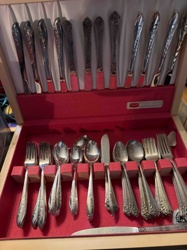
Submitted item photo
Submitted photo · June 1, 2026

User's notes

No additional notes provided.

AI analysis below

AI appraisal

AI analysis & estimate

AI-Generated · Verify before acting

Everything below is generated by AI for informational purposes only. AI can make mistakes — the AI may misidentify items or misattribute them (artist, maker, brand, designer, origin, era). This is not an official valuation and should not be used for insurance, sale, tax, estate, legal, or lending purposes — or any decision requiring a certified appraisal. It is not an authoritative claim about any person, brand, or rights holder — do not share or rely on it as a factual statement about a third party. Always consult qualified professionals before making financial decisions.

Read the full disclaimer

AI Identification

·Not independently authenticated·Verify before acting

Vintage Silver-Plated Table Knives

Antique and Vintage Flatware

AI Estimated Value

·Not an official valuation·Verify before acting

$40-$65

As of June 1, 2026

AI Item Analysis

·AI can make mistakes·Verify before acting
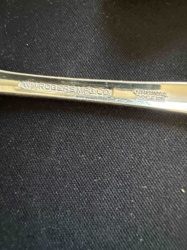
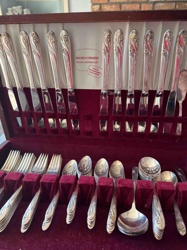
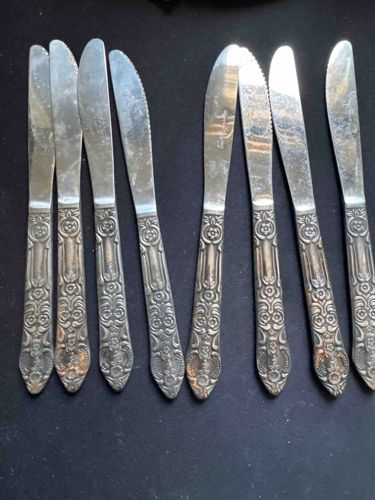
This is a set of eight vintage table knives featuring an ornate, relief-molded handle pattern. Each knife is constructed with a solid handle and a rounded bolster, leading to a paddle-shaped blade. The pattern is characteristic of mid-20th-century silver-plated flatware, showcasing a mixture of floral rosettes, foliate scrolls, and vertical fluting that suggest a Neo-Baroque or Late Victorian revival style. The blades appear to be made of stainless steel, a common material for knife blades because of its durability and ability to hold an edge, while the handles are likely silver-plated base metal. The set shows significant signs of age and use, including heavy tarnishing and oxidation on the handles, which has settled deep into the recessed areas of the design. The blades exhibit surface scratching and water spotting, with some visible clouding across the metallic finish. One knife clearly displays etched branding on the blade, though it is slightly blurred; it appears to be a manufacturer's mark. The serrated edges on some blades suggest these may have been intended as steak or dinner knives. Given the handle design and construction style, these likely date from the 1940s to the 1960s. The overall craftsmanship is representative of mass-produced decorative flatware from the era, designed to provide an elegant aesthetic for formal dining.
AI Appraisal Report

·AI can make mistakes·Verify before acting
I have examined the digital representations of this set of eight vintage table knives. The set features a Neo-Baroque revival pattern typical of mid-20th-century production, likely dating between 1940 and 1960. The construction combines silver-plated handles with stainless steel blades, a standard configuration for durability during this era. My visual assessment identifies significant condition issues: the handles exhibit heavy atmospheric oxidation and tarnish, while the blades show surface scratching, water spotting, and pitting. The presence of a manufacturer’s stamp, though obscured, confirms these were mass-produced for the mid-market consumer. The current market for silver-plated flatware is highly saturated. Unlike sterling silver, which retains value based on its bullion weight, silver-plated items rely entirely on brand desirability and condition. The tarnishing seen here suggests they have not been stored in a climate-controlled environment, which may mask underlying plating loss (wear-through). Similar sets by common manufacturers like International Silver, Oneida, or Reed & Barton frequently sell in this price bracket at estate auctions and online marketplaces. Visual examination alone cannot determine the base metal or the thickness of the silver plating. For a definitive authentication, I would require an in-person inspection to identify the maker's mark and check for 'bleeding' (where the base metal shows through the silver). Professional polishing would also be necessary to determine if the tarnish has permanently etched the metal. Because these are mass-produced items lacking unique provenance or precious metal content, their rarity is low, and their value is primarily functional and decorative.

Get your items appraised

Instant estimates of your treasures with AI-powered appraisals

Browse More Appraisals