AI Appraisal Estimate

AI-generated estimates · not official valuations

From the user

What was submitted

Photo and notes provided by the user — not generated by AI

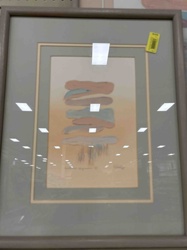
Submitted item photo
Submitted photo · June 18, 2026

User's notes

No additional notes provided.

AI analysis below

AI appraisal

AI analysis & estimate

AI-Generated · Verify before acting

Everything below is generated by AI for informational purposes only. AI can make mistakes — the AI may misidentify items or misattribute them (artist, maker, brand, designer, origin, era). This is not an official valuation and should not be used for insurance, sale, tax, estate, legal, or lending purposes — or any decision requiring a certified appraisal. It is not an authoritative claim about any person, brand, or rights holder — do not share or rely on it as a factual statement about a third party. Always consult qualified professionals before making financial decisions.

Read the full disclaimer

AI Identification

·Not independently authenticated·Verify before acting

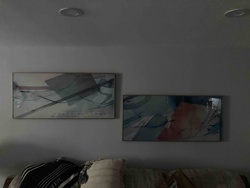
Framed Botanical Print of a Pink Rose in the Style of Pierre-Joseph Redouté

Wall Art & Prints

AI Estimated Value

·Not an official valuation·Verify before acting

$100 - $175

As of June 18, 2026

AI Item Analysis

·AI can make mistakes·Verify before acting
This item is a framed botanical illustration featuring a prominent, multi-petaled pink rose in full bloom, accompanied by two smaller buds on a thorny stem with detailed green and blue-grey foliage. The artwork is rendered in the detailed stipple engraving style famously popularized by Pierre-Joseph Redouté during the late 18th and early 19th centuries, though this specific piece appears to be a modern reproduction. The print is professionally housed in a large, decorative wooden frame with a champagne gold or distressed silver-gilt finish, featuring classic beaded and molded edges. It is mounted behind a multi-layered cream-colored mat with olive green and gold double-inked border lines, suggesting a high-quality custom framing job. The construction uses glass to protect the print, which is presented on a clean, light-colored paper stock. While no artist signature or hallmarks are immediately visible on the face, the overall condition is excellent with no signs of foxing, sunlight fading, or water damage. The aesthetic is characteristic of Romantic-era botanical art, frequently used in traditional or 'shabby chic' interior design for its elegance and soft color palette.
AI Appraisal Report

·AI can make mistakes·Verify before acting
I have conducted a visual examination of this framed botanical print, executed in the manner of Pierre-Joseph Redouté. The piece displays the delicate stipple engraving aesthetic and soft color palette typical of late 18th-century French botanical illustrations. However, based on the pristine clarity of the paper stock and the contemporary construction of the multi-layered matting, I have identified this as a high-quality modern decor reproduction rather than a period original from 'Les Roses.' The condition is excellent, showing no signs of foxing, acidity transfer, or UV-related fading, which suggests it has been well-maintained in a climate-controlled environment. The value is significantly bolstered by the professional custom framing, which features a distressed gilt-finished wood and precise double-inked interior borders. Market demand for high-end botanical reproductions remains steady for traditional interior design, though they lack the rarity and investment potential of 19th-century 'pope-of-flowers' engravings. Comparables for modern reproductions of this scale and framing quality typically sell within the $75 to $200 range at secondary market auctions or specialized decor boutiques. The absence of a visible plate mark or characteristic age-toning further confirms its status as a commercial print. Limitation Disclosure: This appraisal is based strictly on visual digital evidence. A physical inspection would be required to examine the paper’s watermark, verify if the printing is offset lithography or digital, and check for a plate mark under the matting. Full authentication of a period original would require provenance documentation and fiber analysis of the paper to distinguish it from a high-fidelity 20th-century facsimile.

Get your items appraised

Instant estimates of your treasures with AI-powered appraisals

Browse More Appraisals