AI Appraisal Estimate

AI-generated estimates · not official valuations

From the user

What was submitted

Photo and notes provided by the user — not generated by AI

Submitted item photo
Submitted photo · May 25, 2026

User's notes

No additional notes provided.

AI analysis below

AI appraisal

AI analysis & estimate

AI-Generated · Verify before acting

Everything below is generated by AI for informational purposes only. AI can make mistakes — the AI may misidentify items or misattribute them (artist, maker, brand, designer, origin, era). This is not an official valuation and should not be used for insurance, sale, tax, estate, legal, or lending purposes — or any decision requiring a certified appraisal. It is not an authoritative claim about any person, brand, or rights holder — do not share or rely on it as a factual statement about a third party. Always consult qualified professionals before making financial decisions.

Read the full disclaimer

AI Identification

·Not independently authenticated·Verify before acting

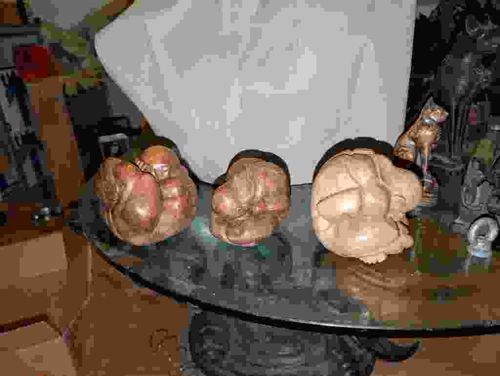
Set of Three Crying Yogi or Weeping Buddha Statues

Cultural Folk Art & Religious Figurines

AI Estimated Value

·Not an official valuation·Verify before acting

$45.00 - $75.00

As of May 25, 2026

AI Item Analysis

·AI can make mistakes·Verify before acting
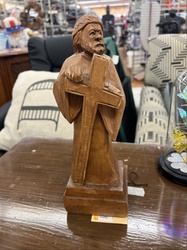
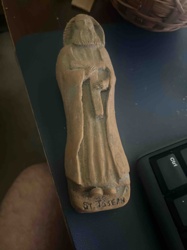
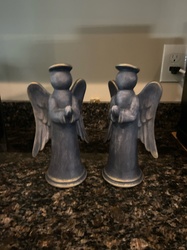
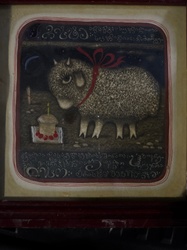
This set consists of three artisanal figurines depicting the 'Crying Yogi' or 'Weeping Buddha,' a recurring motif in Indonesian and Southeast Asian folk art. Each figurine is carved in a spherical, hunched position with the figure's head buried in their hands, symbolizing the taking on of the world's collective sorrow. The statues vary in color and material composition: the far-left figure exhibits a deep, reddish-brown mahogany finish with high-gloss highlights, suggesting a polished hardwood or a resin composite with a lacquer coating. The center figure appears more weathered with a matte, textured finish in an earthy brown tone. The figure on the right is of a lighter, beige or tan wood, potentially representing a natural sandalwood or teak before heavy finishing. In terms of construction, the figurines are compact, likely measuring between 3 to 5 inches in height. The craftsmanship features stylized anatomy with emphasized back muscles and folded limbs. Notable condition issues include visible surface abrasions on the center figure and what appears to be dust accumulation or minor finish wear on the polished surfaces. There are no immediate maker's marks visible in the provided image, but the style is characteristic of late 20th-century Balinese woodcarving. The quality varies across the set, with the leftmost piece showing the highest degree of finish and light reflection, indicating a well-executed decorative item.
AI Appraisal Report

·AI can make mistakes·Verify before acting
I have conducted a visual examination of this set of three 'Crying Yogi' or 'Weeping Buddha' figurines. These pieces are quintessential examples of late 20th-century Balinese folk art, popular as both spiritual icons and tourist export ware. The set displays a variation in material—ranging from polished suar wood or mahogany-tinted resin to lighter, natural-grain wood—which suggests they were likely acquired as a set or curated to show different stages of finishing. The leftmost figure shows a high-gloss lacquer typical of modern commercial production, while the center figure exhibits surface abrasions and a matte texture consistent with moderate handling or environmental exposure. The market for these specific items is currently saturated. While the craftsmanship is competent, particularly in the stylized musculature and anatomical folding, these are mass-produced decorative items rather than unique 'master' carvings. Comparables sold on secondary markets like eBay or Etsy typically range from $15 to $25 per individual unit for this size (approx. 3-5 inches). The condition issues noted on the center figure slightly detract from the set's overall display value. Limitations: My assessment is based solely on the provided image. A physical inspection is required to determine if these are hand-carved from solid wood or cast from a resin-sawdust composite, which significantly dictates value. In-person examination would also check for wood-boring insect damage or structural cracks hidden by the finish. No provenance was provided; documentation of specific Indonesian workshops or age-dating via wood species identification would be necessary for a more definitive valuation.

Get your items appraised

Instant estimates of your treasures with AI-powered appraisals

Browse More Appraisals