AI estimate as of September 14, 2025 · verify with a professional before acting
AI-Generated · Verify before acting
Everything on this page is generated by AI for informational purposes only. AI can make mistakes — the AI may misidentify items or misattribute them (artist, maker, brand, designer, origin, era). This is not an official valuation and should not be used for insurance, sale, tax, estate, legal, or lending purposes — or any decision requiring a certified appraisal. It is not an authoritative claim about any person, brand, or rights holder — do not share or rely on it as a factual statement about a third party. Always consult qualified professionals before making financial decisions.
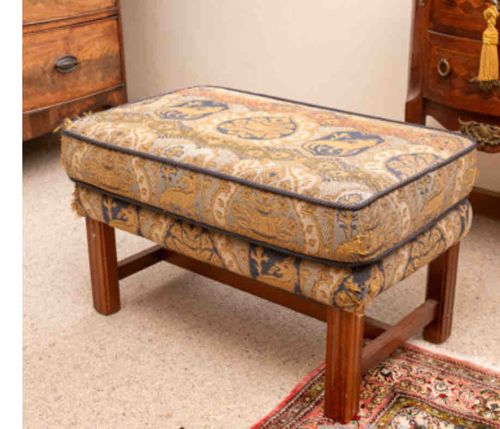
This item is an upholstered ottoman or footstool, rectangular in shape, featuring a two-tiered design. The top cushion is thick and well-padded, with visible piping along its edges, indicating a tailored finish. The upholstery fabric is a complex, multicolored paisley pattern in shades of gold, blue, and gray on a lighter, possibly cream or beige, background. The golden tones appear rich and prominent. The overall design of the fabric suggests a classical or ornate textile style. Below the top cushion, there is a second upholstered tier, slightly thinner than the top, which forms the body of the stool. This lower section is also upholstered in the same intricate paisley fabric. The wooden frame supporting the upholstered sections consists of four block-style legs, which appear to be made of a medium to dark-stained hardwood, possibly mahogany or walnut, given its reddish-brown hue. The legs are connected by stretchers on the longer sides, providing stability to the structure. The wood shows a visible grain and a polished finish. The condition appears to be good overall, with no obvious major tears or stains on the upholstery, although some minor fraying or wear might be present on closer inspection, particularly where the fabric meets the wooden frame. The piping on the top cushion seems intact. Stylistically, the piece leans towards a traditional or transitional aesthetic, possibly dating from the mid-20th century to more contemporary periods, given the upholstery fabric's typical patterns. The craftsmanship appears solid, with well-constructed upholstery and a sturdy wooden base.
AI Appraisal Report
I have examined the image of this upholstered ottoman or footstool. Visually, the piece appears to be in good overall condition. The paisley upholstery fabric, featuring gold, blue, and gray tones on a lighter background, seems well-maintained with no obvious major tears or stains, and the piping on the top cushion is intact. The dark-stained block legs with visible grain and stretchers suggest a solid construction. Based on the style of the fabric and the construction, this piece likely dates from the mid-to-late 20th century or possibly early 21st century. The design leans towards a traditional or transitional aesthetic, which generally holds a moderate market appeal. Comparable upholstered ottomans of this size and style from mass-market or mid-tier manufacturers typically retail in the $150-$350 range, depending on brand, specific condition, and local market demand. This particular piece, while attractive, does not present as a designer or antique item, which would significantly increase its value. Its rectangular, two-tiered design is functional and aesthetically pleasing, contributing to steady, though not exceptional, demand. Factors impacting its value positively are its apparent good condition and classic upholstery pattern. Negatively, it lacks provenance, a recognized maker, or unique design elements that would suggest rarity. An in-person examination would be crucial to confirm the true condition of the upholstery (e.g., minor fraying, fading, or hidden stains), assess the stability of the wooden frame, and determine the quality of internal padding. Without physical inspection, authenticity regarding brand or specific period beyond visual assessment cannot be definitively confirmed.