AI Appraisal Estimate

AI-generated estimates · not official valuations

From the user

What was submitted

Photo and notes provided by the user — not generated by AI

Submitted item photo
Submitted photo · June 6, 2026

User's notes

No additional notes provided.

AI analysis below

AI appraisal

AI analysis & estimate

AI-Generated · Verify before acting

Everything below is generated by AI for informational purposes only. AI can make mistakes — the AI may misidentify items or misattribute them (artist, maker, brand, designer, origin, era). This is not an official valuation and should not be used for insurance, sale, tax, estate, legal, or lending purposes — or any decision requiring a certified appraisal. It is not an authoritative claim about any person, brand, or rights holder — do not share or rely on it as a factual statement about a third party. Always consult qualified professionals before making financial decisions.

Read the full disclaimer

AI Identification

·Not independently authenticated·Verify before acting

Late Victorian Pyrography Desk Clock with Pansy Motif

Antiques / Clocks / Arts & Crafts Decorative Arts

AI Estimated Value

·Not an official valuation·Verify before acting

$125 - $225

As of June 6, 2026

AI Item Analysis

·AI can make mistakes·Verify before acting
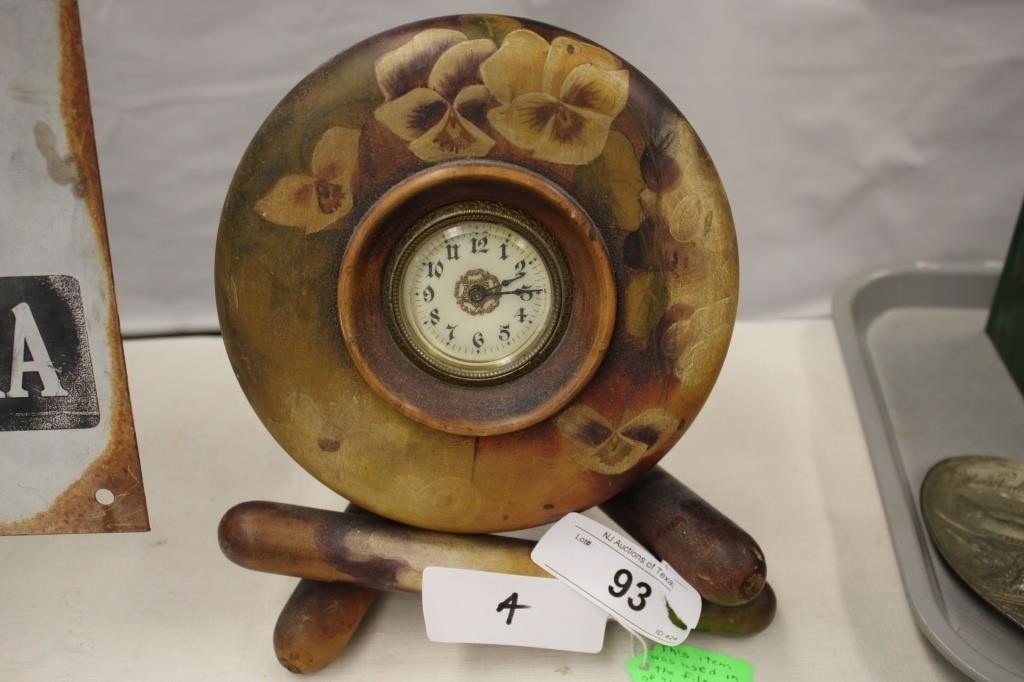
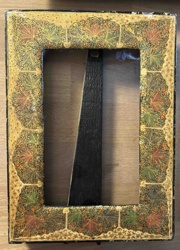
An antique desk clock featuring a distinctive pyrography (poker work) or hand-painted wooden case. The case is composed of a circular, convex wooden disc with a central recessed bezel housing the timepiece. It rests upon a tripod-style base constructed of three interlocking turned-wood legs. The outer wood disc is decorated with a detailed botanical motif of pansies in shades of yellow, purple, and brown, likely executed through a combination of wood burning and staining. The clock face is protected by glass and features a cream-colored dial with Arabic numerals and an inner minute track. The hands are ornate, consistent with late 19th or early 20th-century aesthetics. In terms of condition, there is significant age-related wear, including surface abrasions, scuffing on the perimeter, and a visible patina of dust and grime within the recessed bezel. The wood shows some finish loss and minor cracking consistent with age, likely dating to the 1890-1920 period. The craftsmanship reflects the popular 'cottage industry' wood art of the era. No specific maker's mark is visible on the front, though the mechanical movement is likely a recessed drop-in unit common in decorative table clocks of this style.
AI Appraisal Report

·AI can make mistakes·Verify before acting
I have virtually examined this Late Victorian pyrography desk clock, which displays the hallmark characteristics of the Arts and Crafts 'cottage industry' popular between 1895 and 1915. The pansy motif is executed with a combination of wood-burning and staining typical of the period's hobbyist movements, such as those popularized by the Flemish Art Company. The tripod base and convex disc construction are consistent with authentic folk-art clocks of this era. Regarding condition, the piece shows significant surface abrasions, finish loss, and localized grime, which moderately detract from its aesthetic appeal. The movement appears to be a standard utilitarian drop-in unit; however, without an inspection of the escapement and backplate, its mechanical health and origin remain unknown. The market for pyrography has stabilized, with highest demand for pieces retaining vibrant original pigments and functional movements. Recent sales of similar 'poker work' clocks range within the low-to-mid hundreds. This specific item's value is bolstered by its charming floral subject but limited by its survival state. Importantly, this evaluation is based solely on digital images. A definitive valuation would require an in-person examination to verify the integrity of the wood, identify the clock's maker's marks, and ensure the movement is period-correct rather than a later replacement. This appraisal assumes the wood is not subject to active pest infestation and that the structural joints are stable. Scientific analysis of the stains or formal provenance documentation would be required to attribute this to a specific artisan studio.

Get your items appraised

Instant estimates of your treasures with AI-powered appraisals

Browse More Appraisals