AI estimate as of October 30, 2025 · verify with a professional before acting
AI-Generated · Verify before acting
Everything on this page is generated by AI for informational purposes only. AI can make mistakes — the AI may misidentify items or misattribute them (artist, maker, brand, designer, origin, era). This is not an official valuation and should not be used for insurance, sale, tax, estate, legal, or lending purposes — or any decision requiring a certified appraisal. It is not an authoritative claim about any person, brand, or rights holder — do not share or rely on it as a factual statement about a third party. Always consult qualified professionals before making financial decisions.
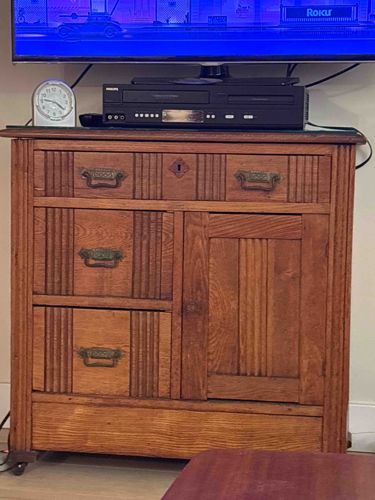
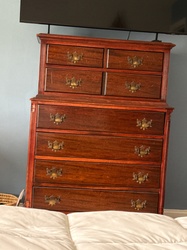
This is an Arts and Crafts style chest, likely crafted from quarter-sawn oak, characterized by its visible grain and warm, medium brown finish. The piece features a complex façade with a combination of drawers and a cabinet door. On the left side, there are three functional drawers, stacked vertically. The top drawer has an ornate, possibly hammered brass or copper, drop-pull handle with an escutcheon. Below it, the second and third drawers feature similar, though slightly simpler, drop-pull hardware. Each drawer front, as well as the stiles separating them, is adorned with vertical reeding or fluting, a common decorative element in the Arts and Crafts movement, emphasizing handcrafted quality. The top drawer also features a keyhole with a decorative brass surround. To the right, there is a single cabinet door, also detailed with vertical reeding for aesthetic continuity. The cabinet door and drawers are framed by stiles and rails that also incorporate vertical reeding. The top surface of the chest appears to be a flat, solid piece of wood, showing some minor wear consistent with use. The overall construction suggests sturdy, utilitarian design, typical of the early 20th century. The piece sits on what appear to be small casters or feet, visible on the lower left, indicating it was designed to be movable. The wood shows a rich patina accumulated over time, with some minor scuffs, dings, and variations in finish visible, suggesting authentic age and use. There are no obvious signs of significant damage or repairs, although a thorough inspection would be required to confirm. The craftsmanship is indicative of the period's commitment to quality materials and honest construction. Its estimated age would be late 19th to early 20th century, likely between 1890 and 1920.
AI Appraisal Report
Based on my visual examination of the provided image, this is a well-preserved Arts and Crafts style chest, likely crafted from quarter-sawn oak, displaying characteristics consistent with the period of 1890-1920. The visible grain, warm medium-brown finish, and design elements like vertical reeding on drawer fronts, stiles, and the cabinet door strongly support its authenticity as an Arts and Crafts piece. The hardware, particularly the ornate drop-pull on the top drawer and the keyhole escutcheon, further aligns with this aesthetic. The overall condition appears to be good to very good, showing expected wear such as minor scuffs, dings, and variations in finish, which contribute to its authentic patina rather than detracting significantly. There are no obvious signs of major damage or repair visible in the image. The presence of casters suggests a functional design for mobility.
In terms of market conditions, Arts and Crafts furniture continues to hold steady demand, particularly pieces in original or well-restored condition. Comparable items of this size and complexity, especially those exhibiting desirable period details and joinery, typically fall within this value range. Demand is generally consistent for functional pieces like chests of drawers. Rarity is moderate; while not unique, well-preserved examples like this are becoming less common. Factors positively impacting value include the quarter-sawn oak construction, the detailed reeding, and the original period hardware. The apparent lack of significant damage also maintains its value.
It is crucial to note the limitations of authenticating solely from images. A definitive appraisal would require in-person examination to assess the structural integrity, confirm wood species, examine joinery techniques, and verify the originality of all hardware and finish. Physical inspection is also needed to identify any hidden repairs or restorations that could affect value. While the visual evidence strongly suggests authenticity, provenance documentation (if available) would further solidify its history and origin.