AI estimate as of November 13, 2025 · verify with a professional before acting
AI-Generated · Verify before acting
Everything on this page is generated by AI for informational purposes only. AI can make mistakes — the AI may misidentify items or misattribute them (artist, maker, brand, designer, origin, era). This is not an official valuation and should not be used for insurance, sale, tax, estate, legal, or lending purposes — or any decision requiring a certified appraisal. It is not an authoritative claim about any person, brand, or rights holder — do not share or rely on it as a factual statement about a third party. Always consult qualified professionals before making financial decisions.
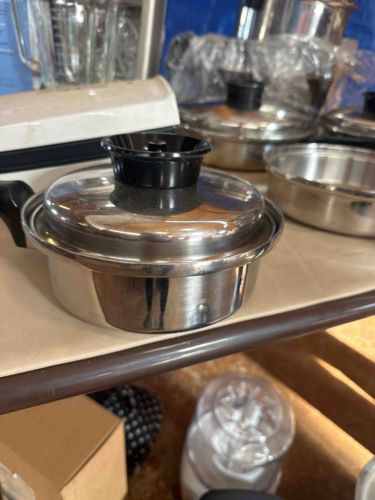
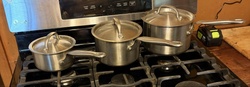
This is a small, round saucepan with a lid, primarily constructed from polished stainless steel. The pot itself has a smooth, reflective exterior, showing some minor surface scuffs and possibly fingerprints consistent with used cookware. The rim of the pot appears slightly rolled or thickened for durability. A short, black handle is visible extending from one side, suggesting it's designed for stovetop use. The accompanying lid is also made of stainless steel with a slightly domed profile. A prominent black knob, likely made of sturdy plastic or bakelite, is centrally located on the lid for easy lifting. The design of the lid and pot suggests a fit that is relatively tight to retain heat and moisture during cooking, a common characteristic of quality cookware. While no specific brand markings or manufacturing details are visible from the image, the overall construction points to a utility-grade piece of kitchen equipment. The condition appears to be good, with no obvious dents, cracks, or significant damage, though a closer inspection would be needed to assess the interior cooking surface. The style is classic and functional, likely dating from the mid-to-late 20th century, and prioritizes practicality over elaborate aesthetics, suggesting it's built for regular use. The visible reflection on the pot's surface indicates a polished finish, enhancing its clean and hygienic appearance.
AI Appraisal Report
I have examined the provided image of a small, polished stainless steel saucepan with a lid. Based on this visual inspection, the item appears to be in good used condition. I observe minor surface scuffs and fingerprints, typical of pre-owned utilitarian cookware. There are no visible dents, cracks, or significant damage to the exterior. The design, with its classic shape and black phenolic-type handles, suggests a mid-to-late 20th-century production, prioritizing functionality over distinct aesthetic flair.
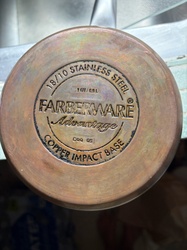
Authenticity, in terms of brand or specific manufacturer, cannot be definitively determined from images alone due to the absence of visible markings. However, its authenticity as a functional stainless steel saucepan is highly probable given its construction. The perceived quality is that of a common, durable kitchen item, not a collectible or high-end designer piece.
The market for used stainless steel saucepans of this common utility grade is generally low, characterized by high supply and moderate demand. Comparables are readily available at thrift stores, online marketplaces, and garage sales for nominal prices. This item does not possess any rarity or unique features that would command a premium. Factors significantly impacting value are its good, usable condition, but also its lack of brand recognition, material scarcity, or artistic merit.
Limitations in authenticity verification are significant. Without physical examination, I cannot assess the interior cooking surface for scratches, pitting, or discoloration, nor can I confirm the material composition definitively. In-person examination would be required to verify interior condition, handle security, actual material (e.g., confirming it's not simply plated steel), and to search for any hidden manufacturer's marks. Provenance documentation (e.g., original purchase receipts, brand certifications) would be necessary for full brand authentication, origin, or historical authentication, though this is rarely available or relevant for items of this type.