AI estimate as of November 11, 2025 · verify with a professional before acting
AI-Generated · Verify before acting
Everything on this page is generated by AI for informational purposes only. AI can make mistakes — the AI may misidentify items or misattribute them (artist, maker, brand, designer, origin, era). This is not an official valuation and should not be used for insurance, sale, tax, estate, legal, or lending purposes — or any decision requiring a certified appraisal. It is not an authoritative claim about any person, brand, or rights holder — do not share or rely on it as a factual statement about a third party. Always consult qualified professionals before making financial decisions.
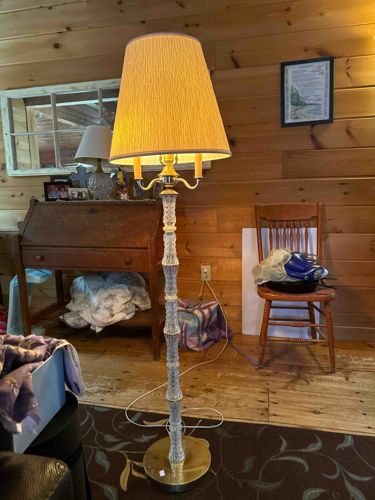
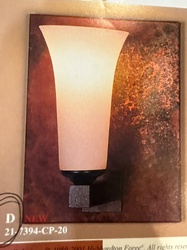
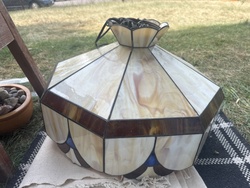
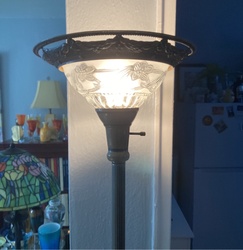
This is a vintage floor lamp featuring a clear, possibly crystal or cut glass, segmented shaft atop a circular brass base, and crowned with a pleated, tapered fabric lampshade. The lamp stands tall, likely around 5 to 6 feet in height, making it a prominent piece. The central column consists of multiple clear, molded segments, each resembling stacked, stylized bamboo or reeded glass sections that refract light. These clear sections are interspersed with smaller, narrower brass-colored bands, adding to its decorative appeal. The base is a polished brass disk, showing some minor wear or tarnishing consistent with age and use, but generally retains a reflective quality. The top portion of the lamp features two light sockets, designed to accommodate standard-size light bulbs, and a decorative brass fixture from which the sockets extend. The lampshade is a substantial, tapered cone shape, made of a pleated, yellowish or cream-colored fabric that diffuses the light warmly. The pleating is uniform and in good condition, and the edges of the shade are finished with a simple trim. The overall style suggests a mid-20th century aesthetic, perhaps 1950s to 1970s, which often incorporated mixed materials like brass and glass in decorative lighting. Visible condition issues appear to be minimal; the brass base shows expected patina, and the electrical cord, which is white, is visible extending from the base. The lamp appears to be fully functional, as it is illuminated in the photograph. The craftsmanship seems solid, indicative of mass-produced decorative lighting from its era, aiming for an elegant yet accessible appeal.
AI Appraisal Report
I have examined the image of this vintage floor lamp with a clear, possibly crystal or cut glass, segmented shaft and brass base. The overall condition appears to be good, with expected patina and minor wear on the brass base, consistent with its likely mid-20th century age (1950s-1970s). The lampshade seems to be in good shape, and the lamp is illuminated, suggesting functionality. Visually, it presents as authentic to its era, a mass-produced decorative piece characteristic of the period. However, authenticity of materials (e.g., actual crystal vs. cut glass) cannot be definitively confirmed from images alone.
Market conditions for vintage decorative lighting of this style are stable. Comparable lamps with mixed materials like brass and glass or acrylic tend to fall into a moderate price range. There isn't significant rarity associated with this specific design, as similar styles were widely produced. Demand is steady among collectors and individuals furnishing retro or eclectic interiors, but it's not a high-demand, highly sought-after item.
Factors impacting value positively include its seemingly good condition and complete state. Negatively, the lack of a prominent designer or manufacturer diminishes its value to specialized collectors. The material composition also plays a role; if the clear segments are indeed crystal, the value would be slightly higher than if they are molded glass.
Limitations in authenticity verification are significant. Without physical inspection, I cannot confirm the actual material of the clear segments, the type of brass alloy, the integrity of the electrical components, or the presence of any manufacturer's marks or labels. In-person examination would be crucial to confirm material composition, assess electrical safety, and verify any identifying marks for a more precise valuation.