AI estimate as of September 22, 2025 · verify with a professional before acting
AI-Generated · Verify before acting
Everything on this page is generated by AI for informational purposes only. AI can make mistakes — the AI may misidentify items or misattribute them (artist, maker, brand, designer, origin, era). This is not an official valuation and should not be used for insurance, sale, tax, estate, legal, or lending purposes — or any decision requiring a certified appraisal. It is not an authoritative claim about any person, brand, or rights holder — do not share or rely on it as a factual statement about a third party. Always consult qualified professionals before making financial decisions.
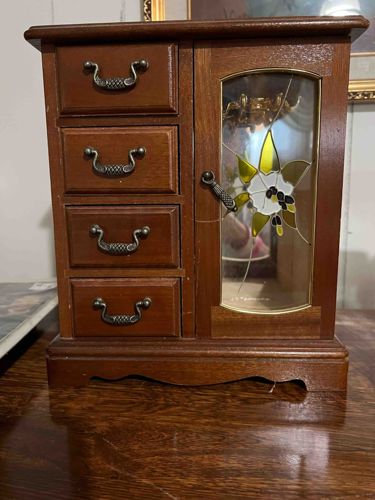
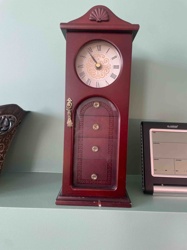
This is a rectangular wooden jewelry box, likely constructed from a hardwood such as oak, cherry, or a stained veneer over composite wood, presenting a warm reddish-brown finish. The box features a classic, somewhat traditional design, comprising two main sections. On the left side, there are four stacked drawers, each fitted with an ornate, antiqued brass-tone or dark metal pull handle. These handles have a curved, arch-like shape with subtle textured details, suggesting an aged or vintage aesthetic. The drawers appear to be of varying depths, with the topmost possibly shallower and succeeding ones progressively deeper, though this is not definitively clear from the image. The right side of the box contains a single cabinet door with an arched top, which features a leaded or faux-leaded stained glass-style insert. The design within the glass depicts a floral motif, with white petals, yellow or amber accents, and black stamen, reminiscent of a poinsettia or similar star-shaped flower. The 'leading' between the glass pieces adds to its decorative appeal. This door also has a matching antiqued metal pull handle, positioned centrally. The entire box rests on a decorative base with a curvilinear, scalloped edge along the front, contributing to its ornamental character. Visible condition issues include minor scuffs and scratches on the wooden surfaces, consistent with age and regular use. There's a notable chip or crack in the wood of the decorative base on the front right, indicating some wear or impact damage. The overall construction appears sturdy, suggesting reasonable craftsmanship for a mass-produced or semi-handmade item of its type. The style points to a late 20th-century or early 21st-century manufacturing period, likely aiming for a traditional or antique-inspired look. The interior of the box is not visible, so details on lining or compartmentalization are unknown. Its medium size makes it suitable for holding various jewelry pieces.
AI Appraisal Report
Based on my visual examination of the provided image, I assess this rectangular wooden jewelry box to be a decorative item, likely manufactured in the late 20th or early 21st century, designed to evoke a traditional or antique aesthetic. The construction appears to be a stained hardwood or veneer over composite wood, given the general finish and the style prevalent in mass-produced items of this type. The leaded or faux-leaded stained glass-style door adds a notable decorative element.
Condition-wise, the box exhibits minor scuffs and scratches consistent with age and regular use. A significant factor impacting value is the noticeable chip or crack in the decorative base on the front right, which detracts slightly from its overall appeal. The ornate antiqued brass-tone pull handles are typical for this style.
In terms of market conditions, similar jewelry boxes of this vintage and style, often found in retail stores or on secondary markets, generally perform modestly. While appealing, they are not rare. Demand is steady for functional and decorative storage pieces, but this particular item does not possess characteristics that would drive high demand or rarity, such as unique craftsmanship, historical significance, or precious materials. Comparables in the online marketplace and antique/vintage shops typically fall within a modest price range, reflecting their decorative utility rather than investment potential. The lack of visibility into the interior limits further assessment regarding lining or compartmentalization, which could slightly influence usability and perceived value.
Limitations: My assessment is based solely on the provided image. For full authentication and a more precise valuation, a physical examination would be necessary to ascertain the exact wood type, construction quality (e.g., joinery), the authenticity of the 'stained glass' (whether it's real leaded glass or a faux application), and to thoroughly inspect all surfaces for hidden damage or repairs not visible in the image. Provenance documentation could provide insights into its manufacturing origin or history, but for an item of this nature, it's rarely available or sought after.