AI estimate as of July 29, 2025 · verify with a professional before acting
AI-Generated · Verify before acting
Everything on this page is generated by AI for informational purposes only. AI can make mistakes — the AI may misidentify items or misattribute them (artist, maker, brand, designer, origin, era). This is not an official valuation and should not be used for insurance, sale, tax, estate, legal, or lending purposes — or any decision requiring a certified appraisal. It is not an authoritative claim about any person, brand, or rights holder — do not share or rely on it as a factual statement about a third party. Always consult qualified professionals before making financial decisions.
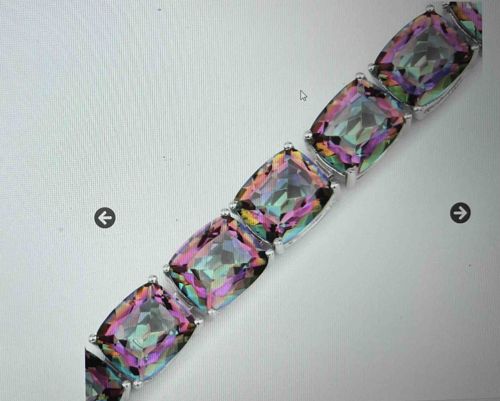
This item is a bracelet featuring a series of rectangular, cushion-cut gemstones set in individual bezels, likely crafted from a white metal such as sterling silver or white gold. The gemstones display a distinctive iridescent play-of-color, exhibiting vibrant hues of pink, purple, green, and blue, characteristic of Mystic Topaz. Each stone is set horizontally along the length of the bracelet, connected by discreet links or hinges that allow for flexibility. The settings appear to be simple bezel or semi-bezel designs, cleanly encasing the perimeter of each stone and secured with what looks like small prongs at the corners, though the resolution limits precise identification of the setting type. The gemstones are uniformly sized and shaped, suggesting a mass-manufactured or commercially produced piece rather than a unique, artisan-crafted item. The surface of the metal appears polished and shows no obvious signs of tarnishing or significant wear. There are no visible maker's marks or identifying stamps in the image, preventing a precise determination of the manufacturer or metal purity. The overall condition appears excellent, with no apparent chips, cracks, or deep scratches on the stones or metal. This style suggests a contemporary design, likely from the late 20th to early 21st century, focusing on the vibrant visual appeal of the treated gemstones. The craftsmanship, while appearing clean and functional, does not suggest high-end, bespoke detailing, but rather a good quality commercial offering.
AI Appraisal Report
I have carefully examined the provided image of this Mystic Topaz bracelet. Based on my visual assessment, the condition of the bracelet appears excellent, with no visible chips, cracks, or significant abrasions on the stones, and the metalwork appears polished and free from significant wear or tarnishing. The gemstones display the characteristic iridescent play-of-color associated with Mystic Topaz, suggesting authenticity of the treatment process for topaz. The uniform size and shape of the stones, coupled with the clean, functional settings, indicate a commercially manufactured piece rather than a bespoke artisan creation. This aligns with contemporary design trends from the late 20th to early 21st century.
Market conditions for treated gemstones like Mystic Topaz are generally stable, driven by their vibrant aesthetic appeal and affordability compared to naturally occurring opals or other iridescent gemstones. Comparables in the market for similar Mystic Topaz bracelets, often set in sterling silver, typically retail in the mid to low hundreds. Demand for such pieces is consistent, particularly among those seeking colorful, eye-catching jewelry. Rarity is low, as Mystic Topaz is created through a common vapor deposition process applied to natural colorless topaz.
Factors significantly impacting value include the metal type (likely sterling silver given the common pairing with Mystic Topaz; if it were white gold, the value would be higher), and the precise carat weight of the stones. The craftsmanship, while good, is not indicative of high-end jewelry. The absence of visible maker's marks or purity stamps, common in commercial jewelry, limits the ability to definitively identify the manufacturer or metal purity.
It is crucial to note the limitations of authenticity verification from images alone. While the stones visually resemble Mystic Topaz, a definitive authentication would require in-person examination to assess the refractive index, specific gravity, and the nature of the surface treatment to confirm it is indeed coated topaz. Furthermore, a physical inspection would allow for identification of any hidden stamps, precise measurement of stone dimensions, and accurate determination of the metal's purity. Provenance documentation, if available, would also add to the confidence in its history and origin.