AI Appraisal Estimate

AI-generated estimates · not official valuations

From the user

What was submitted

Photo and notes provided by the user — not generated by AI

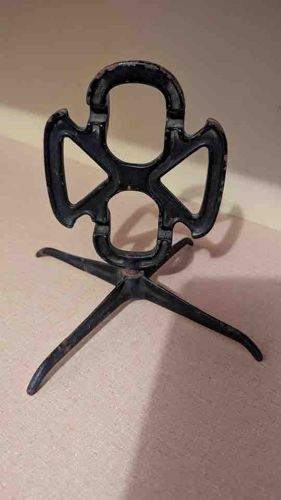
Submitted item photo
Submitted photo · May 28, 2026

User's notes

No additional notes provided.

AI analysis below

AI appraisal

AI analysis & estimate

AI-Generated · Verify before acting

Everything below is generated by AI for informational purposes only. AI can make mistakes — the AI may misidentify items or misattribute them (artist, maker, brand, designer, origin, era). This is not an official valuation and should not be used for insurance, sale, tax, estate, legal, or lending purposes — or any decision requiring a certified appraisal. It is not an authoritative claim about any person, brand, or rights holder — do not share or rely on it as a factual statement about a third party. Always consult qualified professionals before making financial decisions.

Read the full disclaimer

AI Identification

·Not independently authenticated·Verify before acting

Cast Iron Trivet

Cookware

AI Estimated Value

·Not an official valuation·Verify before acting

$30-50

As of May 28, 2026

AI Item Analysis

·AI can make mistakes·Verify before acting
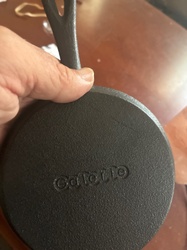
This item is an antique or vintage cast iron trivet. It features a decorative, openwork design composed of symmetrical, interlocking geometric shapes, including a prominent central circular opening and two larger, lobe-like openings on either side, all connected by angular struts. The trivet is supported by four spreading legs, indicative of its function to elevate hot items from a surface. The material appears to be heavy cast iron, finished in a dark, likely original, black coating which shows significant signs of wear, particularly along raised edges and high points, revealing glimpses of the metallic base material and hinting at potential rust or corrosion underneath. The surface texture appears somewhat rough, typical of cast iron, and there are no discernible maker's marks or signatures visible from the provided image. The overall condition suggests prolonged use, contributing to a rich, aged patina. Its construction is solid and robust, characteristic of cast iron items designed for durability and functionality in a kitchen or hearth setting. The style points towards a utilitarian yet decorative piece from the late 19th or early 20th century, common in American or European kitchens of that period. Its heavy-duty build and design indicate it was made to withstand high temperatures and daily practical use.
AI Appraisal Report

·AI can make mistakes·Verify before acting
Based on my visual examination of the image provided, this cast iron trivet appears to be an authentic antique or vintage piece, likely from the late 19th to early 20th century. My assessment of its authenticity is based on the visible signs of age, casting characteristics typical of the period, and the utilitarian yet decorative design. The wear patterns, particularly the significant loss of the original dark coating along edges and high points, reveal the underlying metal and indicate prolonged use, contributing to a desirable aged patina. I observe no signs suggesting it is a modern replica; the rough texture and robust construction are consistent with period cast iron manufacturing. Market conditions for common cast iron trivets are generally moderate. While there's a steady demand, these items are not particularly rare due to their widespread production in their era. Comparables often sell in the range I've estimated, particularly for pieces without distinct maker's marks or highly intricate, unique designs. The primary factor impacting value is its common design and lack of identifiable provenance or unique historical significance. Its condition, while showing expected wear, is good for its age, but the absence of a pristine finish or unique characteristics limits its top-tier value. Limitations in authenticity verification from images alone are significant. I cannot definitively confirm the exact age or ruling out subtle modern reproductions without a physical inspection. An in-person examination would allow me to feel the weight, inspect the casting seams, assess the exact material composition, and search for faint marks not visible in the image. Provenance documentation, such as family heirlooms or sales records, would further solidify its history and authenticity. Scientific testing, like metallurgical analysis, could confirm the iron composition and dating more precisely.

Get your items appraised

Instant estimates of your treasures with AI-powered appraisals

Browse More Appraisals