AI identification & appraisal estimate

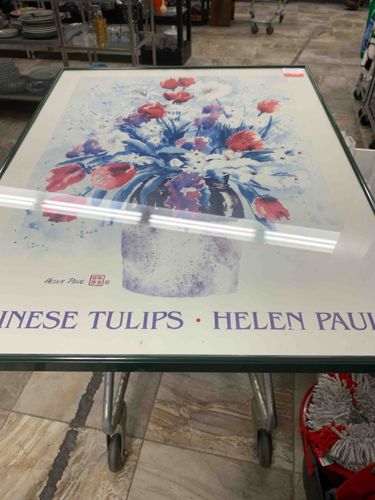
Chinese Tulips by Helen Paul Framed Art Print

Submitted photo of Chinese Tulips by Helen Paul Framed Art Print
Photo submitted by the user — not generated by AI

User's notes

Helen Paul

These notes were written by the person who submitted this item. Appraiser.AI has not verified them, and the AI's identification and estimate may rely on them.

AI Estimated Value

Not an official valuation

$40-80

AI estimate as of August 1, 2025 · verify with a professional before acting

AI-Generated · Verify before acting

Everything on this page is generated by AI for informational purposes only. AI can make mistakes — the AI may misidentify items or misattribute them (artist, maker, brand, designer, origin, era). This is not an official valuation and should not be used for insurance, sale, tax, estate, legal, or lending purposes — or any decision requiring a certified appraisal. It is not an authoritative claim about any person, brand, or rights holder — do not share or rely on it as a factual statement about a third party. Always consult qualified professionals before making financial decisions.

This analysis also relies on unverified notes provided by the user, which may be incomplete or inaccurate and could affect the result.

Read the full disclaimer

AI Item Analysis

This is a framed art print titled "Chinese Tulips" by Helen Paul. The print depicts a vibrant floral arrangement featuring red tulips and what appear to be white or light-colored chrysanthemums, accented with blue foliage or flowers, all housed in a purple-toned vase. The style appears to be watercolor or a similar medium, characterized by soft edges and a somewhat impressionistic quality where colors bleed and blend, creating a splatter or textured background effect. The colors are vivid, with strong reds, blues, and purples contrasting against a lighter background. The print is housed within a dark green, possibly wooden or metal, frame with a flat profile, and is protected by a clear pane of glass or acrylic. The visible reflections on the glass suggest an un-matted composition, with the image extending close to the frame's edge. The artist's signature, "Helen Paul," is visible in the lower left, along with some stylized square markings, possibly indicating a date or edition information, though these are not clearly discernible. The title "CHINESE TULIPS" is printed prominently in purple capital letters at the bottom left, with the artist's full name "HELEN PAUL" in similar text at the bottom right. The overall condition appears to be good, with no obvious signs of damage to the print itself, though the reflective surface makes it difficult to assess perfectly. The frame appears sturdy, with no visible chips or cracks. The print likely dates from the late 20th century, given the aesthetic and the common style of framed prints from that period. The craftsmanship of the print itself is indicative of a mass-produced art reproduction, designed for decorative rather than fine art collecting purposes.

AI Appraisal Report

I have examined the provided image of the "Chinese Tulips" art print by Helen Paul. The print appears to be in good overall condition, with no visible damage to the print itself or the frame, although the reflective glass makes a perfect assessment difficult. The print's aesthetic, signature, and printed title/artist text are consistent with mass-produced decorative art prints common in the late 20th century. Based on visual inspection, authenticity can be confirmed as a commercial print by Helen Paul, rather than an original artwork. However, determining if it is a specific edition or merely a widely distributed reproduction without a physical examination or edition information is not possible. Market conditions for decorative art prints by artists such as Helen Paul are generally stable but with modest demand. These works are typically valued for their aesthetic appeal as home decor rather than as investment pieces. Comparable sales for similar framed floral prints from this era by widely distributed artists typically range in the lower professional market. Rarity is not a significant factor here; these prints were produced in large quantities. The primary factor impacting value is its decorative appeal and condition. Limitations in authentication from images alone include the inability to check for subtle surface damage, frame integrity issues not visible, or the quality of the print medium itself. For a full authentication that goes beyond visual assessment, physical inspection would allow for examination of the print medium, frame construction, and any hidden markings. Provenance documentation, though unlikely for this type of item, would also add to certainty of origin if available.

Keep exploring

More art print appraisals

Get your items appraised

Instant AI-powered appraisal estimates from a photo

Browse More Appraisals