AI Appraisal Estimate

AI-generated estimates · not official valuations

From the user

What was submitted

Photo and notes provided by the user — not generated by AI

Submitted item photo
Submitted photo · June 9, 2026

User's notes

Fenton Carnival Glass

AI analysis below

AI appraisal

AI analysis & estimate

AI-Generated · Verify before acting

Everything below is generated by AI for informational purposes only. AI can make mistakes — the AI may misidentify items or misattribute them (artist, maker, brand, designer, origin, era). This is not an official valuation and should not be used for insurance, sale, tax, estate, legal, or lending purposes — or any decision requiring a certified appraisal. It is not an authoritative claim about any person, brand, or rights holder — do not share or rely on it as a factual statement about a third party. Always consult qualified professionals before making financial decisions.

Note

This analysis also relies on unverified notes provided by the user, which may be incomplete or inaccurate and could affect the result.

Read the full disclaimer

AI Identification

·Not independently authenticated·Verify before acting

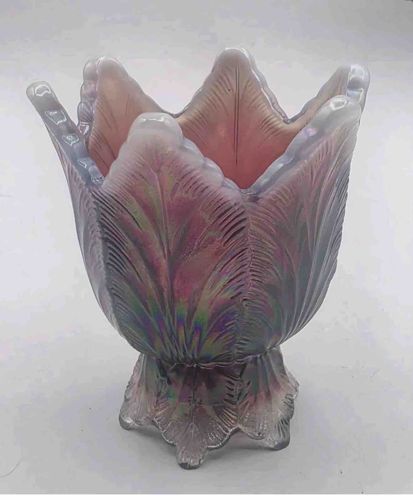
Fenton Carnival Glass Leaf Tier Tulip Vase

Antique/Vintage Decorative Glassware

AI Estimated Value

·Not an official valuation·Verify before acting

$125 - $175

As of June 9, 2026

AI Item Analysis

·AI can make mistakes·Verify before acting
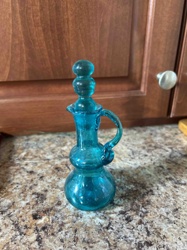
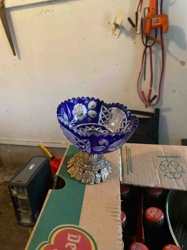
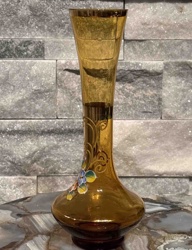
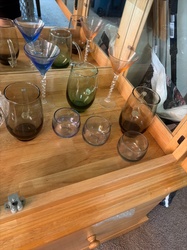
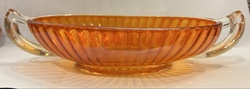
This is a Fenton Art Glass company 'Leaf Tier' tulip-style vase, demonstrating the classic carnival glass iridescent finish over a base glass that appears to be a soft lavender or rosalene hue. The vessel is constructed on a short, multi-footed pedestal base that transitions into a deep, tulip-shaped bowl composed of six stylized, overlapping leaf-form petals. Each petal features a highly detailed, molded vein texture that creates a rhythmic, ribbed exterior surface. The iridescence provides a metallic luster with a varied spectrum of color, including oil-slick greens, purples, and golds that shift depending on the light angle. The top rim is characterized by deep scalloping following the natural crests of the molded leaves. The craftsmanship reflects the early to mid-20th-century American pressed glass tradition, likely dating between 1910 and 1930, though the pattern was reissued in later decades. The interior of the bowl is smooth with a lighter pinkish pearlescent glow. In terms of condition, the glass appears structurally sound with no deep chips or cracks visible on the petal tips, which are the most vulnerable areas. The iridescence remains strong across the body but may show light fading on high-contact points. This piece exemplifies the Art Nouveau influence on American pressed glass through its organic, botanical inspiration and complex surface treatment.
AI Appraisal Report

·AI can make mistakes·Verify before acting
I have conducted a thorough visual examination of this Fenton 'Leaf Tier' tulip vase. The piece exhibits the classic six-toed base and organic, veined leaf structure indicative of Fenton craftsmanship from the early 20th century. Based on the provided images, the iridescence appears vibrant, displaying the 'oil-slick' spectrum of colors highly prized in carnival glass. The lavender/rosalene base color is particularly desirable, as it is less common than standard marigold or amethyst finishes. The condition appears excellent with no visible 'flea bites' or chips on the delicate scalloped rim, though I noted minor surface wear consistent with age on the footed base. The market for carnival glass remains stable among specialized collectors, though values have leveled off from historical peaks. Comparables for this specific pattern in rare base colors typically fetch between $120 and $180 at auction. Factors bolstering this value include the clarity of the mold work and the strength of the iridescent coating. However, visual inspection via photograph has limitations. A definitive authentication would require a physical examination to verify the presence (or absence) of the Fenton 'O' or 'F' mark—often used in later reissues—and to check for 'sick glass' (internal mineralization) which can be masked by iridescence in photos. I would also need to feel the weight and surface tension to rule out modern reproductions. For full insurance-grade certification, a check for blacklight fluorescence (UV) would be necessary to confirm the glass batch chemistry.

Get your items appraised

Instant estimates of your treasures with AI-powered appraisals

Browse More Appraisals