Vintage Baroque Revival Brass Wall Mirror
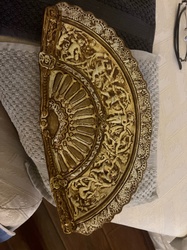
This is an ornate wall mirror featuring a polished brass frame in the Baroque Revival style. The frame is characterized by dramatic, asymmetrical Rococo-inspired curves, C-scrolls, and a prominent foliate cresting at the top. The 'Messing' (brass) material provides a warm, golden luster typical of mid-20th-century decorative hardware. The mirror plate itself follows the complex interior contour of the frame, showing a high level of craftsmanship in the glass cutting process. Physically, the item appears to be of medium scale, likely intended for a hallway or vanity area. The brass shows a varied patina, with some areas gleaming and others displaying minor oxidation or dullness consistent with age. There are no immediate signs of structural damage or cracks in the glass, though subtle surface scratches may be present upon closer inspection. The construction suggests a cast metal process, possibly of Italian or German manufacture from the 1950s to 1970s. The overall quality is indicated by the depth of the relief in the metalwork and the seamless integration of the decorative scrolls and acanthus leaf motifs.
AI-Generated Appraisal Disclaimer
Estimated Value
$450 - $650
Basic Information
Category
Home Decor & Antiques
Appraised On
March 22, 2026
Estimated Value
$450 - $650
Additional Details Provided By Owner
User Provided Information
Messing Spiegel
Item Description
This is an ornate wall mirror featuring a polished brass frame in the Baroque Revival style. The frame is characterized by dramatic, asymmetrical Rococo-inspired curves, C-scrolls, and a prominent foliate cresting at the top. The 'Messing' (brass) material provides a warm, golden luster typical of mid-20th-century decorative hardware. The mirror plate itself follows the complex interior contour of the frame, showing a high level of craftsmanship in the glass cutting process. Physically, the item appears to be of medium scale, likely intended for a hallway or vanity area. The brass shows a varied patina, with some areas gleaming and others displaying minor oxidation or dullness consistent with age. There are no immediate signs of structural damage or cracks in the glass, though subtle surface scratches may be present upon closer inspection. The construction suggests a cast metal process, possibly of Italian or German manufacture from the 1950s to 1970s. The overall quality is indicated by the depth of the relief in the metalwork and the seamless integration of the decorative scrolls and acanthus leaf motifs.
Get Your Items Appraised
Instant estimates of your treasures with AI-powered instant appraisals