AI Appraisal Estimate

AI-generated estimates · not official valuations

From the user

What was submitted

Photo and notes provided by the user — not generated by AI

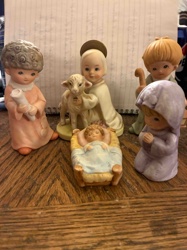
Submitted item photo
Submitted photo · June 4, 2026

User's notes

No additional notes provided.

AI analysis below

AI appraisal

AI analysis & estimate

AI-Generated · Verify before acting

Everything below is generated by AI for informational purposes only. AI can make mistakes — the AI may misidentify items or misattribute them (artist, maker, brand, designer, origin, era). This is not an official valuation and should not be used for insurance, sale, tax, estate, legal, or lending purposes — or any decision requiring a certified appraisal. It is not an authoritative claim about any person, brand, or rights holder — do not share or rely on it as a factual statement about a third party. Always consult qualified professionals before making financial decisions.

Read the full disclaimer

AI Identification

·Not independently authenticated·Verify before acting

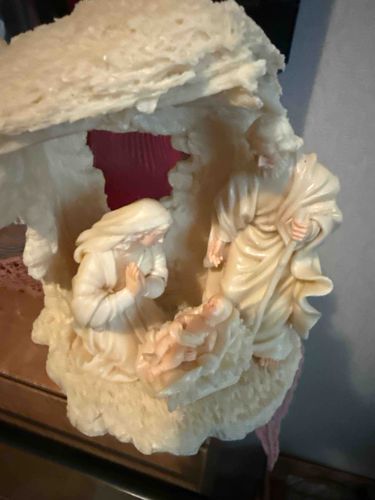
Carved Monochromatic Holy Family Nativity Grotto

Religious Figurines / Holiday Decor

AI Estimated Value

·Not an official valuation·Verify before acting

$15.00 - $35.00

As of June 4, 2026

AI Item Analysis

·AI can make mistakes·Verify before acting
This is a small-to-medium scale monochromatic nativity scene depicting the Holy Family (Mary, Joseph, and the Infant Jesus) housed within a textured grotto or stable structure. The piece appears to be cast from a resin-based compound, likely intended to mimic the appearance of carved alabaster, ivory, or bone, given the creamy off-white coloration and the semi-translucent quality of the material in certain light. The construction features a rough, organic exterior on the 'stable' or cave roof, contrasting with more detailed, smooth-surfaced figurines. Mary is shown kneeling in prayer, while Joseph stands holding a staff, both looking down at the infant in the manger. The carving style exhibits soft, rounded edges typical of decorative religious giftware from the late 20th century. There are no immediately visible maker's marks or signatures on the front, suggesting it may be a mass-produced devotional item. The condition appears fair to good, with some visible dust accumulation in the deep crevices and minor surface abrasions, particularly on the roof. The casting quality shows mid-level detail in the drapery of the clothing and facial silhouettes, though anatomical precision is simplified. This style is consistent with decorative collectibles sold during the 1980s or 1990s as holiday mantel decor.
AI Appraisal Report

·AI can make mistakes·Verify before acting
I have examined the digital representation of this monochromatic nativity grotto. My inspection identifies the material as a cast resin or bonded marble compound, common in contemporary devotional giftware. The item mimics hand-carved stone, but the softening of details and the uniform 'organic' texture of the grotto indicate a molding process rather than manual lapidary work. The condition is fair, noting visible dust and superficial scuffs on the roof, which are common for holiday items stored for long cycles. The market for mass-produced religious decor from the late 20th century is highly saturated. These items were produced in large quantities for retail through gift shops and department stores in the 1980s and 1990s. Unlike authentic hand-carved alabaster or ivory antiques, resin-cast figurines do not appreciate significantly and are valued primarily for their functional use as decorative objects. Comparable sales on secondary markets (eBay, Etsy) for unmarked resin nativities of this size consistently fall within the $15 to $35 range. Limitations: This appraisal is based solely on images and cannot verify weight, density, or chemical composition. A physical inspection would be required to rule out natural stone if the owner believes it to be carved mineral. Scientific testing (such as a 'hot needle' test for resins or UV light exposure) would confirm the synthetic nature of the binding agent. The absence of a maker's mark or provenance documentation further supports a valuation based on the decorative secondary market rather than the fine arts or collectibles market.

Get your items appraised

Instant estimates of your treasures with AI-powered appraisals

Browse More Appraisals