AI estimate as of November 22, 2025 · verify with a professional before acting
AI-Generated · Verify before acting
Everything on this page is generated by AI for informational purposes only. AI can make mistakes — the AI may misidentify items or misattribute them (artist, maker, brand, designer, origin, era). This is not an official valuation and should not be used for insurance, sale, tax, estate, legal, or lending purposes — or any decision requiring a certified appraisal. It is not an authoritative claim about any person, brand, or rights holder — do not share or rely on it as a factual statement about a third party. Always consult qualified professionals before making financial decisions.
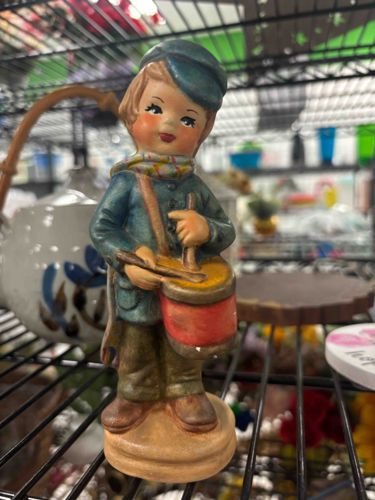
This is a vintage-style ceramic figurine depicting a young boy dressed as a 'Little Drummer Boy.' The figurine measures approximately 5-6 inches in height, standing on a round, light brown base. The boy wears a teal-blue cap and a matching teal-blue long coat with black buttons. Around his neck is a multicolored scarf with diagonal stripes in shades of yellow, green, and reddish-brown. His trousers and shoes are a muted olive green/brown color. He has rosy cheeks, painted black eyelashes, and light reddish-brown hair peeking out from under his cap. He is holding two drumsticks and a red drum with a yellow top rim, which is slung over his right shoulder and under his left arm by a brown strap. The figure exhibits a typical mid-20th century ceramic style, often associated with Christmas or collectible figurines. The craftsmanship appears to be mold-made and hand-painted, evident by the distinct lines and carefully applied colors. There are no immediately visible chips or cracks from the provided images, suggesting overall good condition for its age. The glaze appears consistent, lending a slightly glossy finish. There are no discernible maker's marks or signatures visible from the photograph, which would typically be found on the base. The style suggests it could be a piece from companies like Goebel (Hummels) or similar manufacturers known for children's themed figurines, likely dating from the 1950s to 1970s. The quality of the painting, particularly on the face, is quite fine, suggesting a careful hand-finishing process.
AI Appraisal Report
I have examined the provided image of this 'Little Drummer Boy' ceramic figurine. Based on visual inspection, the item appears to be in very good vintage condition, with no visible chips, cracks, or significant paint loss. The glaze is consistent, suggesting proper care. Authenticity, based solely on the image, points to a mass-produced, hand-finished ceramic collectible from the mid-20th century. The style is consistent with popular Christmas or decorative figurines from the 1950s-1970s.
Market conditions for such items indicate that similar unframed, mass-produced ceramic figurines, even those with good craftsmanship and condition, typically fall into the lower-to-mid range of the collectibles market. While the painting quality, particularly on the face, is fine, suggesting careful hand-finishing, the lack of a visible maker's mark or signature significantly impacts its value. Major manufacturers like Goebel (Hummels) often command higher prices due to brand recognition and provenance, but without identifying marks, this piece is treated as an unmarked collectible.
Demand for generic vintage Christmas or children's figurines is moderate; while there's a niche market of collectors, rarity is not high for unmarked, mold-made pieces. Factors significantly impacting value are the lack of direct attribution to a known, desirable manufacturer and the commonality of the "Little Drummer Boy" theme. Had it been a documented Hummels piece, for example, the value could be substantially higher.
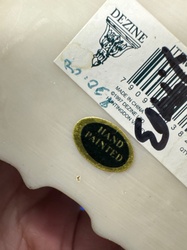
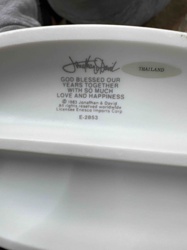
Limitations in authenticity verification from images alone are considerable. I cannot definitively confirm the material composition, exact age, or rule out subtle repairs. For full authentication, an in-person examination would be critical to inspect the base for maker's marks, assess the overall weight and feel, and scrutinize for hairline cracks or glaze inconsistencies not visible in photographs. Provenance documentation, such as original sales receipts or manufacturer's certificates, would also be invaluable, though less common for items of this nature and era.