AI estimate as of August 25, 2025 · verify with a professional before acting
AI-Generated · Verify before acting
Everything on this page is generated by AI for informational purposes only. AI can make mistakes — the AI may misidentify items or misattribute them (artist, maker, brand, designer, origin, era). This is not an official valuation and should not be used for insurance, sale, tax, estate, legal, or lending purposes — or any decision requiring a certified appraisal. It is not an authoritative claim about any person, brand, or rights holder — do not share or rely on it as a factual statement about a third party. Always consult qualified professionals before making financial decisions.
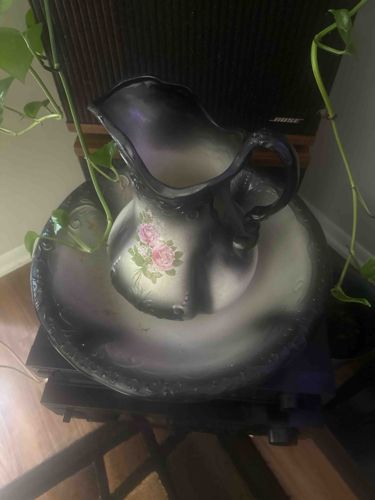
The item is a ceramic or porcelain wash pitcher and basin set, likely from the late 19th or early 20th century, typically used for personal hygiene before indoor plumbing was widespread. The pitcher features a graceful, curvilinear handle and a scalloped or undulating rim, indicative of aesthetic design trends of the period. Its main body is adorned with a delicate hand-painted floral motif, specifically a cluster of pink roses with green foliage, positioned on one side. The base color of the set appears to be a muted, possibly off-white or light gray, with a distinctive dark gray or black band around the rim and upper portion of both the pitcher and the basin. This dark banding also shows what appears to be a raised relief or embossed pattern, adding to its decorative appeal. The basin is circular with a similar dark, possibly embossed, rim matching the pitcher. The interior of the basin and the pitcher seem to be a lighter, possibly off-white or cream color, contrasting with the darker exterior elements. The overall condition appears fair; there's visible wear and some potential staining or discoloration, particularly on the lighter parts of the ceramic and minor chips or abrasions on the dark rim of the basin can be observed. The craftsmanship suggests a commercially produced item, possibly from a notable ceramics manufacturer of that era. The visible patina and general wear are consistent with an antique item that has seen regular use.
AI Appraisal Report
This Antique Ceramic Wash Pitcher and Basin Set, likely late 19th to early 20th century, presents as a charming example of domestic ceramics from that era. The hand-painted floral motif, particularly the pink roses and green foliage, aligns with popular aesthetic trends of the period. The distinctive dark gray/black banding with what appears to be a raised relief pattern is a significant decorative element. While the overall form and decoration are appealing, the condition is fair. I observe visible wear, potential staining or discoloration on the lighter ceramic, and minor chips or abrasions on the dark rim of the basin. These imperfections, consistent with age and use, do impact the desirability and, consequently, the value.
Market conditions for these wash sets are generally steady, but not experiencing a significant boom. Comparable sets in very good to excellent condition often fetch higher prices. Demand for utilitarian antiques like this remains consistent among collectors of period decorative arts and those furnishing historical homes, but it's not considered exceedingly rare. The craftsmanship suggests commercial production, not unique artist provenance, which limits its top-tier value.
The most significant factor impacting value here is the condition; a cleaner, less worn example would command a higher price. The minor chips and overall patina will deter some buyers seeking pristine examples.
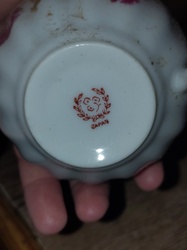
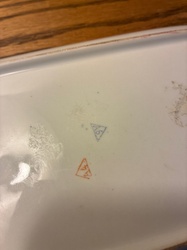
It is crucial to note the limitations of appraising from images alone. Without physical examination, I cannot conclusively determine the specific type of ceramic (e.g., ironstone, porcelain), confirm the hand-painted nature definitively versus transferware, or precisely assess the extent of surface damage like crazing or hairline cracks. In-person examination would allow for a tactile assessment of the relief pattern, a more accurate gauge of discoloration, and a search for maker's marks, which are vital for full authentication and attribution. Provenance documentation, if available, would also add considerable value and verify origin.