AI identification & appraisal estimate

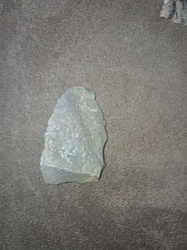
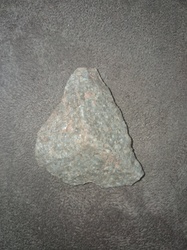
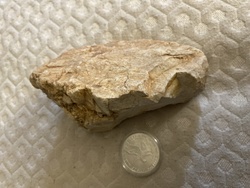
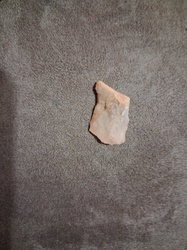
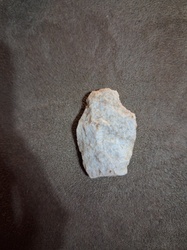
Flaked Stone Artifact

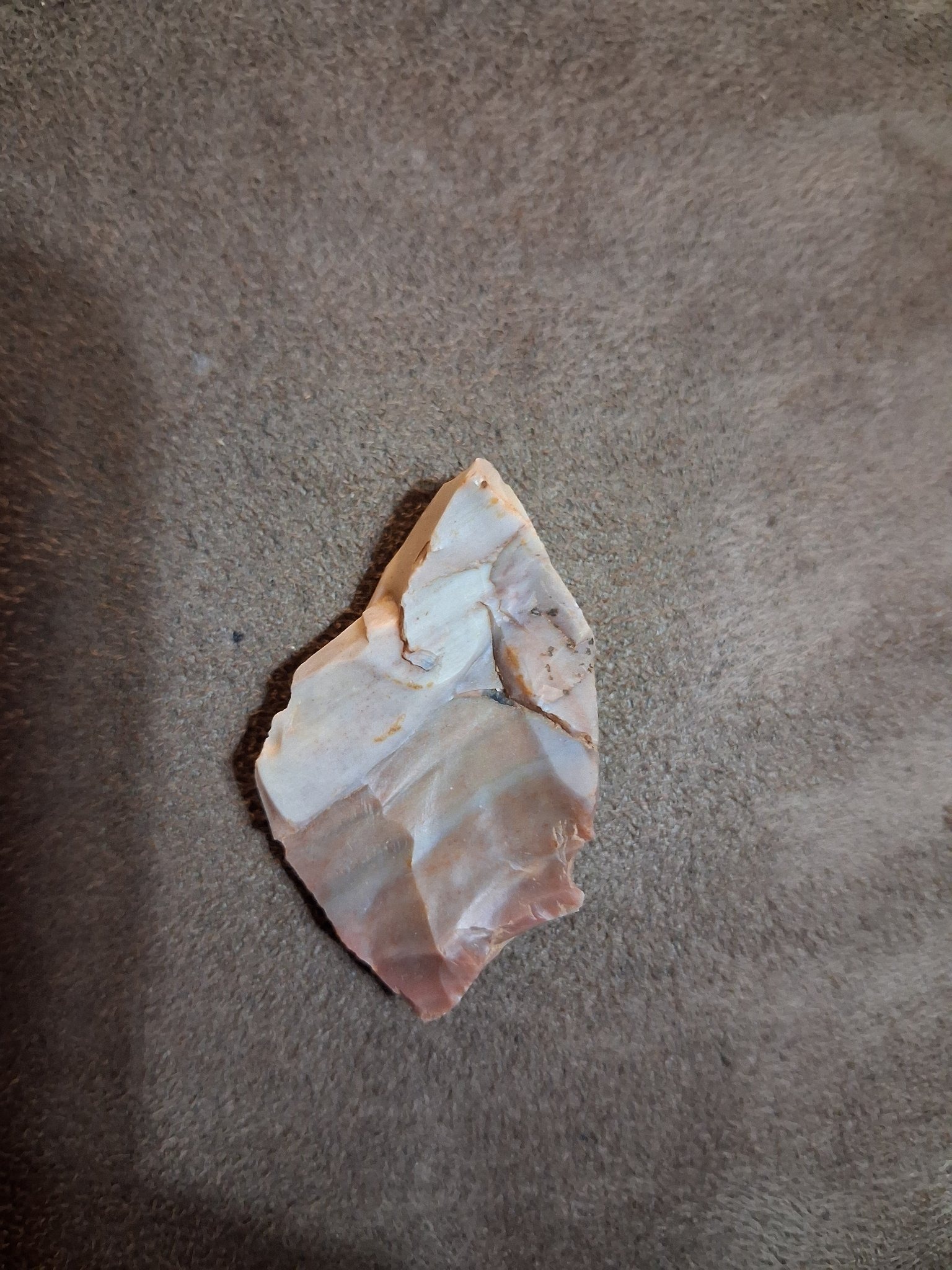
Submitted photo of Flaked Stone Artifact
Photo submitted by the user — not generated by AI

AI Estimated Value

Not an official valuation

$100-300

AI estimate as of September 20, 2026 · verify with a professional before acting

AI-Generated · Verify before acting

Everything on this page is generated by AI for informational purposes only. AI can make mistakes — the AI may misidentify items or misattribute them (artist, maker, brand, designer, origin, era). This is not an official valuation and should not be used for insurance, sale, tax, estate, legal, or lending purposes — or any decision requiring a certified appraisal. It is not an authoritative claim about any person, brand, or rights holder — do not share or rely on it as a factual statement about a third party. Always consult qualified professionals before making financial decisions.

Read the full disclaimer

AI Item Analysis

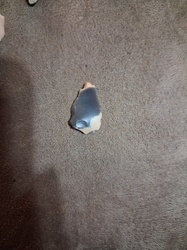
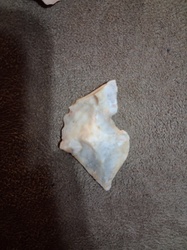
This object is a small, chipped stone implement featuring a roughly triangular or leaf-shaped morphology, appearing consistent with prehistoric lithic reduction debris or a preform. The material exhibits a fine-grained, cryptocrystalline structure with varying shades of pale pink, off-white, and muted grayish-tan, displaying a vitreous to waxy luster typical of high-quality chert or flint. Physical characteristics include prominent conchoidal fracture patterns with visible percussion scars and ripple marks across the dorsal and ventral surfaces, indicating reduction by hard or soft hammer percussion. The edges show secondary retouching or edge damage, though no distinct hafting elements such as notches, stems, or flutes are immediately discernible from this viewing angle. There are no visible maker's marks, signatures, or stamped numbers, as is typical of ancient utilitarian objects. The overall condition appears stable, with natural weathering, minor surface patination, and small spots of adhering matrix, but no obviously modern mechanical modifications or repairs are apparent. Craftsmanship indicators include controlled flaking and thinning, suggesting intentional shaping by a skilled knapper. The object is visually consistent with prehistoric lithic technology, though an exact age, cultural affiliation, or geographic origin cannot be determined from visual inspection alone and remains unverified.
AI Appraisal Report

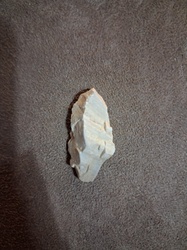
Based on what I can see in the photograph, this object is a small chipped stone implement displaying physical characteristics consistent with prehistoric lithic reduction debris or a preform, including conchoidal fracture patterns and secondary retouching. However, I can't verify from a photo alone whether the artifact is truly ancient, and I would need physical inspection to confirm material composition and wear patterns. Assuming the hypothesis that this is a genuine prehistoric lithic artifact, items of this type generally trade in the $100 to $300 range within the collector market, depending on the quality of craftsmanship, material type, and known context, though such pieces often lack strict provenance which can limit demand. Market conditions for unprovenanced common lithics are generally modest, driven primarily by hobbyist and educational interest rather than high-end fine art demand. If the item were to turn out to be a modern replica, reproduction, or knapping study piece rather than an ancient artifact, the value would drop significantly to a nominal study or decorative value, likely under $20. To confirm authenticity and cultural context, physical examination by a qualified lithic analyst, scientific testing such as use-wear analysis or obsidian hydration where applicable, and detailed provenance documentation would be required.

Keep exploring

More archaeological artifacts appraisals

Get your items appraised

Instant AI-powered appraisal estimates from a photo

Browse More Appraisals