These notes were written by the person who submitted this item. Appraiser.AI has not verified them, and the AI's identification and estimate may rely on them.
AI Estimated Value
Not an official valuation
$10-30
AI estimate as of July 18, 2025 · verify with a professional before acting
AI-Generated · Verify before acting
Everything on this page is generated by AI for informational purposes only. AI can make mistakes — the AI may misidentify items or misattribute them (artist, maker, brand, designer, origin, era). This is not an official valuation and should not be used for insurance, sale, tax, estate, legal, or lending purposes — or any decision requiring a certified appraisal. It is not an authoritative claim about any person, brand, or rights holder — do not share or rely on it as a factual statement about a third party. Always consult qualified professionals before making financial decisions.
This analysis also relies on unverified notes provided by the user, which may be incomplete or inaccurate and could affect the result.
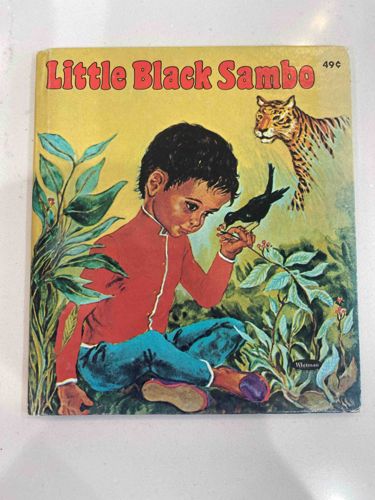
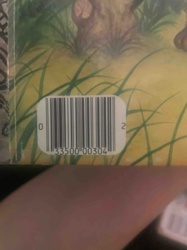
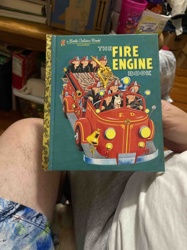
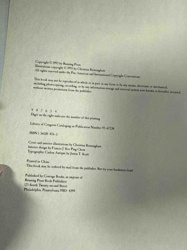
This item is a copy of the children's book "Little Black Sambo", likely a Whitman Publishing edition, as indicated by the 'Whitman' logo present on the cover. The cover art features a young boy, presumably Sambo, with dark skin and black hair, dressed in a red long-sleeved shirt, blue pants, and brightly colored shoes (one purple, one orange/brown), sitting cross-legged amidst lush green foliage. He is looking down intently at a small black bird perched on a leafy branch held in his hand. In the background, to the upper right, a tiger with prominent stripes and orange fur looks towards the boy. The title "Little Black Sambo" is displayed in large, bold red lettering with an orange outline at the top of the cover, and "49¢" is printed in the top right corner, indicating the original price. The overall condition appears used, with some visible wear along the edges and corners, suggesting handling and age. The colors remain vibrant despite the book's age, and there are no immediate signs of significant damage like tears or major creasing, though minor surface wear is present. The style of illustration is characteristic of mid-20th-century children's books. The copyright information confirms a publication date of 1959. This specific edition would be an example of historical children's literature, notable for its controversial history.
AI Appraisal Report
I have examined the provided image and information for this "Little Black Sambo" book, identified as a Whitman Edition from 1959.
**Condition and Authenticity:** Based on the visual evidence, the book appears to be a genuine Whitman Publishing edition, consistent with the stated copyright of MCMLIX (1959) by Western Publishing Co. The '49¢' price and cover art are typical of children's books from this era. The condition, while showing vibrant colors, exhibits visible wear along edges and corners, indicative of a used item. This wear is consistent with its age. I see no immediate signs of major damage like tears or significant creasing, but surface wear is present. Without a physical inspection, I cannot assess internal page condition, binding integrity, presence of inscriptions, or foxing.
**Market Conditions and Demand:** "Little Black Sambo" books, particularly post-1940s editions, generally hold limited value in the mainstream collectible book market due to the controversial and often racist nature of the original story and illustrations. Later editions like this 1959 Whitman version are less sought after by serious collectors compared to much older, rarer, or first editions. Whitman editions were mass-produced and are relatively common.
**Factors Impacting Value:** The primary factors limiting the value are its commonality as a mass-produced Whitman edition, its relatively late publication date (1959 being well after the initial controversy), and the generally good but not 'fine' or 'near-mint' condition. The nostalgic appeal might attract some casual buyers, but serious collectors of controversial literature or early children's books typically seek significantly older, scarcer, or culturally significant editions.
**Limitations:** Without physical examination, I cannot verify the completeness of the book (all pages present), the condition of the spine, or internal flaws. Provenance documentation could, in some cases, enhance value or authenticity claims, though for a mass-produced item like this, it's less critical. Scientific testing is not typically applied to verify authenticity of such books unless forgery is suspected, which is highly unlikely here.