AI identification & appraisal estimate

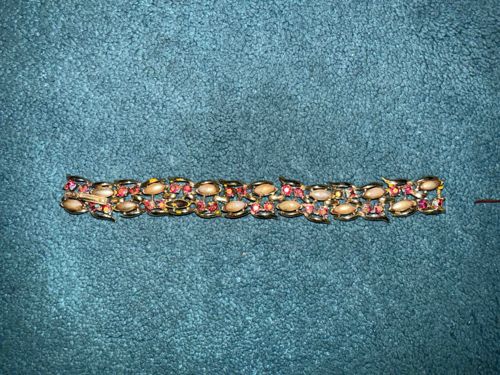
Vintage Gold Tone Link Bracelet with Faux Opals and Pink Rhinestones

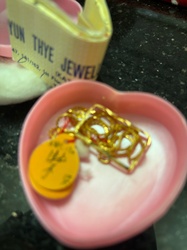
Submitted photo of Vintage Gold Tone Link Bracelet with Faux Opals and Pink Rhinestones
Photo submitted by the user — not generated by AI

AI Estimated Value

Not an official valuation

$40-$70

AI estimate as of November 13, 2025 · verify with a professional before acting

AI-Generated · Verify before acting

Everything on this page is generated by AI for informational purposes only. AI can make mistakes — the AI may misidentify items or misattribute them (artist, maker, brand, designer, origin, era). This is not an official valuation and should not be used for insurance, sale, tax, estate, legal, or lending purposes — or any decision requiring a certified appraisal. It is not an authoritative claim about any person, brand, or rights holder — do not share or rely on it as a factual statement about a third party. Always consult qualified professionals before making financial decisions.

Read the full disclaimer

AI Item Analysis

This is a vintage gold-tone linked bracelet, featuring an alternating pattern of faux opal cabochons and pink rhinestones. The bracelet is constructed with individual oval-shaped links, each approximately 1.5 cm in length, that are interconnected to form a flexible band. The central design element of each link is an elongated oval component, likely a faux opal, exhibiting a milky, iridescent sheen with hues of cream and very light pink. These are bezel-set within the gold-tone metal. Flanking each faux opal are clusters of smaller, round-cut pink rhinestones, which add sparkle and color contrast. The rhinestones appear to be prong-set or pave-set within more ornate, possibly leaf-like or scrolled gold-tone frames. The metal itself has a warm, yellow-gold color, suggesting it is a gold-plated or gold-filled base metal. The overall construction points to costume jewelry. There are no clear visible maker's marks or signatures in the provided image. The clasp mechanism is partially visible in one of the cropped images and appears to be a fold-over or box clasp, indicating a level of functionality consistent with such jewelry. The condition appears to be relatively good for its age, though some minor wear to the gold-tone plating or slight dullness to the rhinestones might be present, typical of vintage items. The design suggests a mid-20th century aesthetic, possibly from the 1950s to 1970s, characterized by the use of colorful stones and ornate metalwork. The craftsmanship, while not high-end fine jewelry, exhibits a decent quality for costume pieces of that era, prioritizing visual appeal and affordability.
AI Appraisal Report

Based on my visual examination of the provided image, this vintage gold-tone linked bracelet features faux opal cabochons and pink rhinestones. The design suggests it is costume jewelry, likely from the mid-20th century (1950s-1970s). The condition appears good for its age, though typical vintage wear such as minor plating loss or rhinestone dullness cannot be fully assessed from images alone. The construction, with bezel-set faux opals and clustered pink rhinestones in ornate frames, is consistent with period costume pieces. No visible maker's marks were identified, which is common for unsigned costume jewelry. Market conditions for vintage costume jewelry are generally modest. Comparable items, often found on platforms like Etsy or eBay, typically range from $25 to $100 depending on design, condition, and perceived quality. The demand for such pieces is steady among collectors and enthusiasts of vintage fashion, but it is not considered rare. The use of faux opals and rhinestones, rather than genuine gemstones and precious metals, is the primary factor limiting its intrinsic value. While the visual assessment indicates authenticity as a vintage costume piece, it is crucial to note the limitations of image-based appraisal. A definitive authenticity verification of materials (e.g., confirming faux opals vs. genuine, type of metal plating) would require in-person examination. Physical inspection would also allow for a more precise assessment of the clasp mechanism, any hidden maker's marks, and the exact degree of wear to the plating and stones. Provenance documentation, though rare for such items, could add value. Without physical inspection, precise material composition or potential repair history cannot be confirmed.

Keep exploring

More jewelry appraisals

Get your items appraised

Instant AI-powered appraisal estimates from a photo

Browse More Appraisals