Hand-Woven Striped Kilim or Serape Runner
Textiles and Rugs

Hand-Woven Striped Kilim or Serape Runner

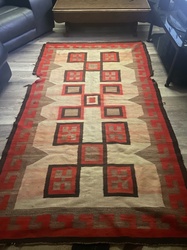
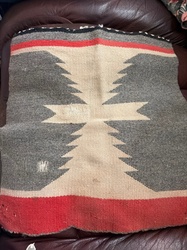
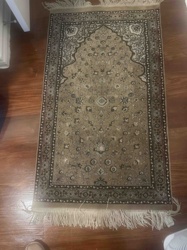
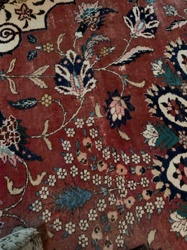
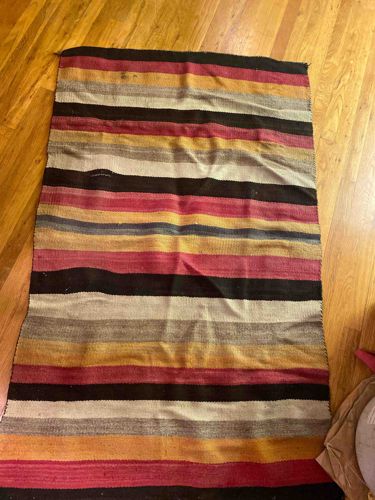
This item is a rectangular, flat-weave textile runner, possibly a Latin American serape or a Southwestern-style kilim. It features a sequence of horizontal stripes in a warm color palette including crimson red, ochre yellow, charcoal black, cream, and dusty mauve. The piece is constructed using a weft-faced plain weave technique, likely with wool or a wool-blend yarn on a cotton or wool warp. The edges appear to be hand-finished with a darker overcast stitch along the lengths, while the ends show slight fraying and the typical remnants of warp fringe. Notable condition issues include visible rippling or 'waving' throughout the body, suggesting it has been stored folded or possesses uneven tension in the weave. There are apparent spot stains or discolorations, particularly visible on the upper cream and yellow bands, and a slight distortion in the rectangular shape at the corners. The color variations within the individual stripes (abrash) suggest the use of hand-dyed yarns. Based on the weave structure and aesthetic, it likely dates to the mid-to-late 20th century. The craftsmanship is indicative of traditional folk-art production rather than high-end industrial manufacturing.
Estimated Value

$150-$250

Basic Information

Category

Textiles and Rugs

Appraised On

January 7, 2026

Estimated Value

$150-$250

Item Description

This item is a rectangular, flat-weave textile runner, possibly a Latin American serape or a Southwestern-style kilim. It features a sequence of horizontal stripes in a warm color palette including crimson red, ochre yellow, charcoal black, cream, and dusty mauve. The piece is constructed using a weft-faced plain weave technique, likely with wool or a wool-blend yarn on a cotton or wool warp. The edges appear to be hand-finished with a darker overcast stitch along the lengths, while the ends show slight fraying and the typical remnants of warp fringe. Notable condition issues include visible rippling or 'waving' throughout the body, suggesting it has been stored folded or possesses uneven tension in the weave. There are apparent spot stains or discolorations, particularly visible on the upper cream and yellow bands, and a slight distortion in the rectangular shape at the corners. The color variations within the individual stripes (abrash) suggest the use of hand-dyed yarns. Based on the weave structure and aesthetic, it likely dates to the mid-to-late 20th century. The craftsmanship is indicative of traditional folk-art production rather than high-end industrial manufacturing.
Get Your Items Appraised

Instant estimates of your treasures with AI-powered instant appraisals

Browse More Appraisals