AI estimate as of August 16, 2025 · verify with a professional before acting
AI-Generated · Verify before acting
Everything on this page is generated by AI for informational purposes only. AI can make mistakes — the AI may misidentify items or misattribute them (artist, maker, brand, designer, origin, era). This is not an official valuation and should not be used for insurance, sale, tax, estate, legal, or lending purposes — or any decision requiring a certified appraisal. It is not an authoritative claim about any person, brand, or rights holder — do not share or rely on it as a factual statement about a third party. Always consult qualified professionals before making financial decisions.
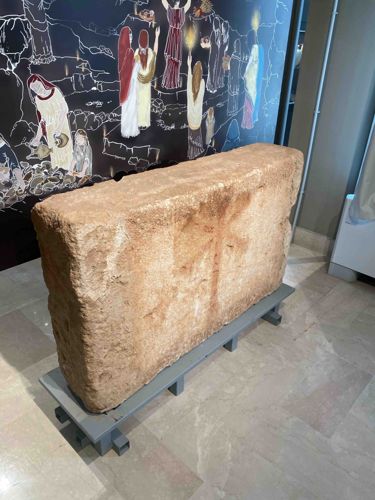
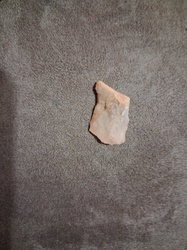
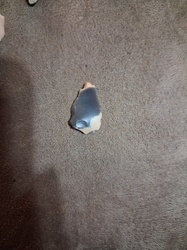
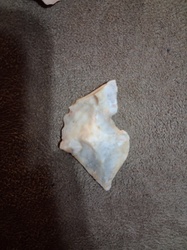
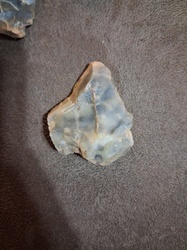
The item is a large, rectangular block of ancient carved stone, likely limestone or sandstone, given its pale, earthy brown and beige hues. It exhibits a rough, unpolished finish, typical of ancient architectural or monumental stonework. The block is substantial in size, appearing to be at least 1.5 to 2 meters in length and over 0.5 meters in height and depth, suggesting significant weight. Its physical characteristics include clearly visible tool marks and irregularities on all exposed surfaces, indicating hand-hewn craftsmanship. These marks also suggest the stone was not intended for a smooth, decorative finish but rather for structural integrity or as a base.
One of its most notable features is the faint, reddish-brown discoloration on one of its broad faces, which appears to be an oxidized stain, possibly from embedded metal or a mineral deposit, or an organic residue over time. While not clearly distinguishable as an intentional marking, its presence is a distinguishing element. There are no clearly discernible carved inscriptions, symbols, or figurative elements visible in the image, suggesting it may have been a plain architectural element, a foundation stone, or part of a larger structure. The edges appear somewhat rounded and worn, consistent with significant age and environmental exposure. There are no obvious signs of recent repairs or severe damage such as large cracks or breaks, but the overall condition reflects considerable weathering and ancient use, contributing to a rich, aged patina. The quality of craftsmanship is robust, prioritizing durability and function over intricate details. Given its context in what appears to be a museum or exhibition space, likely alongside ancient artwork, it is highly probable that this stone block dates back to an ancient civilization, possibly from the classical or pre-classical periods.
AI Appraisal Report
Upon examining the provided image of this ancient stone block, I can offer a preliminary appraisal. The block exhibits a convincing patination, wear, and tool marks consistent with an ancient, hand-hewn architectural element, likely limestone or sandstone. Its large size and robust, functional craftsmanship suggest authenticity as a structural component rather than a decorative one. The faint reddish-brown discoloration is intriguing and adds to its character, suggesting potential organic or mineral interaction over millennia. Condition-wise, it appears stable with no major cracks or repairs, reflecting significant age and weathering.
In terms of market conditions, large un-inscribed ancient architectural elements, while authentic, generally command lower prices than inscribed or sculpturesque pieces. Comparables would include other ancient building blocks from civilizations like Rome, Greece, or Egypt. The demand for such items is primarily from institutional collectors (museums, universities) or private collectors with a focus on archaeological artifacts. Its rarity is moderate; while ancient blocks exist, one of this size and apparent good preservation is less common. The lack of specific iconography or clear origin limits its market to those appreciating raw antiquity and historical context.
Factors significantly impacting value are its large size, apparent age, and good structural integrity despite weathering. However, the absence of inscriptions, definitive identification of origin, and intricate artistry are limiting factors. My appraisal is based *solely* on the visual information provided. For full authentication and a more precise valuation, a physical examination is crucial to assess the stone's type, density, and microscopic tool marks. Provenance documentation – ideally tracing it back to an archaeological find or historic collection – would be paramount. Scientific dating methods (e.g., luminescence dating of trapped sediment or material dating techniques if applicable) would also significantly enhance authenticity verification and value.