AI identification & appraisal estimate

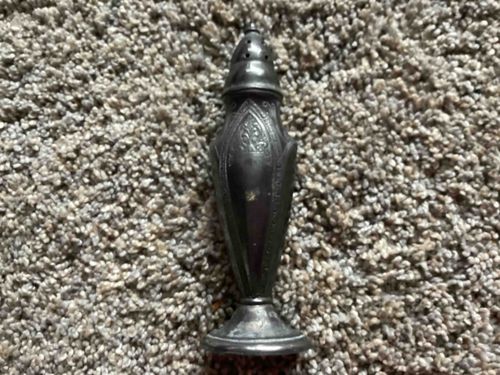
Salt Shaker

Submitted photo of Salt Shaker
Photo submitted by the user — not generated by AI

User's notes

By Poole

These notes were written by the person who submitted this item. Appraiser.AI has not verified them, and the AI's identification and estimate may rely on them.

AI Estimated Value

Not an official valuation

$15-30

AI estimate as of June 12, 2025 · verify with a professional before acting

AI-Generated · Verify before acting

Everything on this page is generated by AI for informational purposes only. AI can make mistakes — the AI may misidentify items or misattribute them (artist, maker, brand, designer, origin, era). This is not an official valuation and should not be used for insurance, sale, tax, estate, legal, or lending purposes — or any decision requiring a certified appraisal. It is not an authoritative claim about any person, brand, or rights holder — do not share or rely on it as a factual statement about a third party. Always consult qualified professionals before making financial decisions.

This analysis also relies on unverified notes provided by the user, which may be incomplete or inaccurate and could affect the result.

Read the full disclaimer

AI Item Analysis

A single, silver-colored salt shaker, likely constructed from a base metal such as pewter or silverplate. The item is shown standing upright against a textured background, which appears to be carpet. The shaker has a classic, almost trumpet-like shape, widening from the narrow foot to the main body and then tapering to the top. The foot is round and slightly flared. The body of the shaker is decorated with raised relief patterns on two visible sides, which appear to be stylized floral or leaf motifs within an elongated, pointed frame. The surface of the metal shows significant tarnish, suggesting age and possibly a silver content or finish that has oxidized over time. Close inspection reveals some minor surface scratches and what appears to be overall wear consistent with regular use and age. The top of the shaker is domed with a series of small holes for dispensing salt. The top appears to be a separate component attached to the main body. There are no immediately visible maker's marks or stamps in the provided image, which would be crucial for definitive identification and dating. The style of decoration suggests it could be from the early to mid-20th century, potentially Art Deco or a later revival. The craftsmanship appears to be of good quality for a production piece, with well-defined decorative elements. However, the condition, particularly the heavy tarnish and surface wear, are notable features that would impact its presentation and potentially its value as a collectible.

AI Appraisal Report

After examining the provided image of the single salt shaker attributed to Poole, I can offer an appraisal based on the visual evidence. The shaker appears to be constructed from a silver-colored metal, exhibiting significant tarnish which aligns with either silverplate or a similar alloy that oxidizes. The decorative raised relief patterns are consistent with a style potentially from the early to mid-20th century. The overall condition shows notable surface wear and scratches, in addition to the heavy tarnish, which impacts its aesthetic appeal and value. Authentication of this piece as a genuine Poole item is significantly limited by image examination alone. While the *style* may be consistent with some periods of Poole's production, definitive verification would require locating a maker's mark or stamp, which is not visible. An in-person examination would be necessary to thoroughly inspect for marks, assess the metal composition more accurately (e.g., testing for silver content if suspected), and get a true sense of the weight and craftsmanship beyond what can be discerned from a photo. Provenance documentation linking this specific shaker to Poole would also be highly valuable. Market demand for individual production-era silverplate shakers, even from known manufacturers like Poole, is generally modest unless they are part of a complete set, particularly rare, or in exceptional condition. The condition issues present on this shaker would likely depress its value compared to a pristine example. Comparables for single, tarnished, potentially silverplate shakers in this style typically fall into a lower price range. Without positive identification of a Poole mark and given the condition, this item's value is primarily decorative or as a replacement piece if it matches an existing set, rather than as a highly collectible item.

Keep exploring

More kitchenware appraisals

Get your items appraised

Instant AI-powered appraisal estimates from a photo

Browse More Appraisals