AI estimate as of August 24, 2025 · verify with a professional before acting
AI-Generated · Verify before acting
Everything on this page is generated by AI for informational purposes only. AI can make mistakes — the AI may misidentify items or misattribute them (artist, maker, brand, designer, origin, era). This is not an official valuation and should not be used for insurance, sale, tax, estate, legal, or lending purposes — or any decision requiring a certified appraisal. It is not an authoritative claim about any person, brand, or rights holder — do not share or rely on it as a factual statement about a third party. Always consult qualified professionals before making financial decisions.
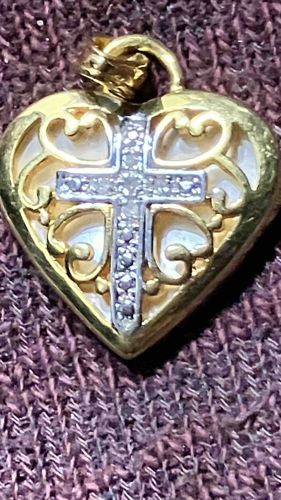
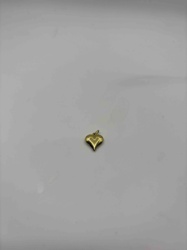
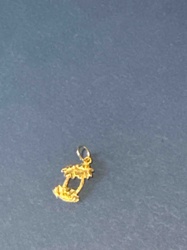
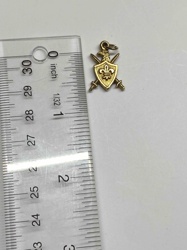
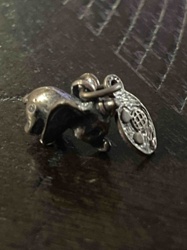
This item is a decorative heart-shaped pendant, likely intended to be worn as a charm on a necklace or bracelet. It is predominantly gold-toned, suggesting it is made of gold or gold-plated metal. The heart features an openwork, filigree-like design around its perimeter, with graceful scrollwork adding to its aesthetic appeal. The approximate size appears to be suitable for a small pendant, perhaps 1 to 1.5 inches in height. Centered within the heart is a distinct cross motif, rendered in a contrasting silver-toned metal, possibly silver or white gold. This cross is embellished with multiple small, round, brilliant-cut stones, which appear to be diamonds or diamond simulants given their sparkle and arrangement. These stones are pave-set or bead-set into the cross, adding considerable brilliance to the piece. The overall condition appears good, with no obvious signs of significant damage like breaks or large scratches. There might be some minor surface wear consistent with age and use, visible as slight dulling of the metal or minor abrasions on the stones, but they retain their luster. The top of the heart has a small, circular bail, also gold-toned, for attachment to a chain. The craftsmanship seems detailed, especially in the filigree and the stone setting, indicating a piece of moderate to good quality. Judging by the style, with its combination of heart, cross, and ornate metalwork, it likely dates from the late 20th century to early 21st century. The religious iconography combined with the heart shape suggests themes of faith, love, or devotion inherent in its design. There are no discernible maker's marks or stamps visible in the provided image.
AI Appraisal Report
Upon visual examination of this Gold-Toned Heart Pendant with Diamond-Accented Cross, it presents as a charming decorative piece. The heart's gold tone suggests it is likely gold-plated base metal or lower karat gold, given the absence of hallmarks and common manufacturing practices for this style. The openwork filigree appears well-executed, contributing to its aesthetic appeal. The contrasting silver-toned cross, adorned with small, brilliant-cut stones, is a focal point. While these stones exhibit sparkle, their identification as genuine diamonds or simulants (like cubic zirconia or white sapphire) cannot be definitively confirmed without gemological testing. Their small size and typical setting (pave or bead) often make visual differentiation challenging.
Condition appears good, with expected minor surface wear consistent with a piece from the late 20th to early 21st century. I observe no major damage, breaks, or missing stones. The craftsmanship seems of moderate quality, suitable for mass-market jewelry.
Market conditions for this type of Christian-themed, fashion/costume jewelry are generally stable but not indicative of high value. Comparables would include similar gold-toned or plated pendants with accent stones, typically found in department stores or online retailers. Demand exists, particularly around religious holidays or for personal sentimental value, but it is not a rare item.
Factors significantly impacting value include the actual metal content (Is it solid gold, gold-filled, or plated?), and the authenticity and quality of the stones. If the stones are genuine diamonds and the metal is solid gold, the value would significantly increase. However, based solely on the image and typical item characteristics, it is more likely a gold-plated or low-karat gold item with diamond simulants.
Limitations in authenticity verification are significant. Without physical inspection, I cannot confirm metal purity, stone authenticity (diamond vs. simulant), or definitively locate internal hallmarks. In-person examination would involve testing the metal for gold content (acid test or XRF analysis), gemological assessment of the stones (refractive index, specific gravity, hardness, magnification), and thorough searching for maker's marks or purity stamps. Provenance documentation, if available, could also shed light on its history and materials.