AI identification & appraisal estimate

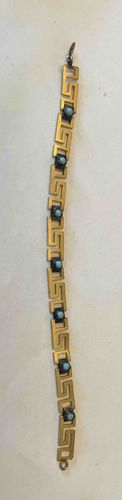
Greek Key Bracelet with Blue Cabochons

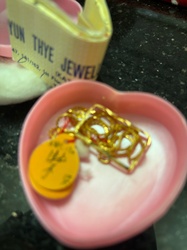
Submitted photo of Greek Key Bracelet with Blue Cabochons
Photo submitted by the user — not generated by AI

AI Estimated Value

Not an official valuation

$40-70

AI estimate as of July 19, 2025 · verify with a professional before acting

AI-Generated · Verify before acting

Everything on this page is generated by AI for informational purposes only. AI can make mistakes — the AI may misidentify items or misattribute them (artist, maker, brand, designer, origin, era). This is not an official valuation and should not be used for insurance, sale, tax, estate, legal, or lending purposes — or any decision requiring a certified appraisal. It is not an authoritative claim about any person, brand, or rights holder — do not share or rely on it as a factual statement about a third party. Always consult qualified professionals before making financial decisions.

Read the full disclaimer

AI Item Analysis

This is a vintage articulated bracelet featuring a repeating Greek key (or meander) pattern in a gold-toned metal, likely brass or gold-plated base metal given its apparent age and style. The bracelet consists of multiple rectangular links, each formed into the distinctive interlocking angular motif. Scattered throughout the length of the bracelet, embedded within some of the Greek key links, are small, round, cabochon-cut stones of a light blue or turquoise color, possibly true turquoise, reconstituted turquoise, or a composite material. These stones appear to be set within dark, possibly oxidized or enameled, bezels or settings, which provide a striking contrast and highlight the blue of the stones. There are a total of seven visible stones evenly spaced along the bracelet's length. The metal exhibits a warm, mellow gold patina consistent with age, suggesting it has not been recently polished. Visible condition issues include some darkening or tarnish on the metal surface, particularly near the settings of the stones, and a general antique appearance indicating wear consistent with its age. The clasp appears to be a simple hook-and-loop or spring ring type, though details are difficult to discern from the image. One end of the bracelet shows a small jump ring, while the other end shows a hook-like component which is possibly a spring ring clasp or part of a toggle clasp that has detached. The links appear to be hinged, allowing the bracelet to articulate and conform to the wrist. No specific maker's marks or signatures are visible in the provided image. The design evokes a classical or Hellenistic influence, suggesting a style period anywhere from the mid-20th century onwards, often seen in costume jewelry or pieces inspired by ancient motifs. The craftsmanship appears to be commercial grade, with a focus on design aesthetic.
AI Appraisal Report

Upon visual examination of the provided image, I assess this vintage Greek Key bracelet to be in fair to good condition, consistent with its likely age as a piece of costume jewelry. There is clear evidence of surface wear and tarnish on the gold-toned metal, which speaks to its vintage nature rather than a flaw, though heavy tarnish near stone settings is noted. The cabochons appear secure, exhibiting a pleasant light blue hue, likely turquoise or a similar material. Authenticity of the materials (metal composition, stone type) cannot be definitively confirmed without in-person examination and testing. Given the absence of hallmarks or maker's marks, and the commercial-grade craftsmanship, this piece appears to be a mass-produced vintage costume item rather than fine jewelry. Market conditions for vintage costume jewelry, particularly pieces with classical motifs, are generally stable, driven by aesthetic appeal rather than intrinsic material value. Comparables typically include similar gold-toned articulated bracelets from the mid-20th century featuring decorative elements or faux gemstones. Demand is moderate, appealing to collectors of vintage fashion accessories or individuals seeking unique, visually striking pieces. Rarity is low; while each piece is unique in its wear, the design itself is not rare. Factors impacting value significantly include the absence of precious metals or genuine high-value gemstones, and the lack of a known designer or manufacturer. Its primary value lies in its decorative appeal, age, and historical design. Limitations in authenticity verification are significant based solely on images. Full authentication of metal composition (gold-plated vs. brass, etc.) and stone identification (natural turquoise vs. reconstituted or composite) would require XRF analysis and gemological testing. Provenance documentation would also be beneficial to establish a more precise age or historical context.

Keep exploring

More jewelry appraisals

Get your items appraised

Instant AI-powered appraisal estimates from a photo

Browse More Appraisals