AI estimate as of October 26, 2025 · verify with a professional before acting
AI-Generated · Verify before acting
Everything on this page is generated by AI for informational purposes only. AI can make mistakes — the AI may misidentify items or misattribute them (artist, maker, brand, designer, origin, era). This is not an official valuation and should not be used for insurance, sale, tax, estate, legal, or lending purposes — or any decision requiring a certified appraisal. It is not an authoritative claim about any person, brand, or rights holder — do not share or rely on it as a factual statement about a third party. Always consult qualified professionals before making financial decisions.
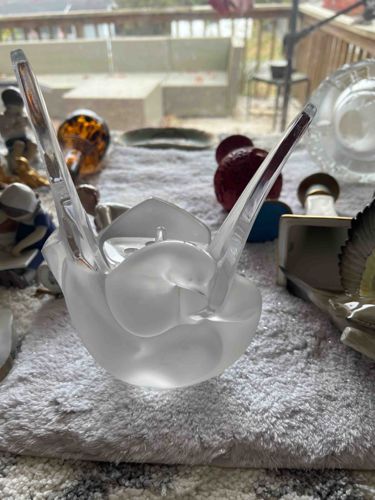
This item is a decorative sculpture crafted from glass, depicting what appears to be two birds, possibly swans, intertwined or interacting. The sculpture combines two distinct finishes of glass: opaque frosted glass and clear, polished glass. The main body of the sculpture, forming the lower and central mass, is made of frosted glass, giving it a soft, diffuse appearance that obscures internal details. This frosted section is sculpted into organic, flowing forms that suggest the bodies and perhaps the base of the birds. Emerging from this frosted base are two elongated, upward-reaching elements made of clear, transparent glass. These elements are slender and tapered, likely representing the necks and heads of the birds. The contrast between the matte finish of the frosted glass and the glossy clarity of the clear glass creates a visually interesting dynamic. The sculpture is monochromatic, relying solely on the variations in transparency and texture of the glass for its aesthetic impact. There are no visible color additives or surface treatments beyond the glass finishes. The craftsmanship appears to be of good quality, with smooth transitions between the frosted and clear sections, indicating careful molding or carving. No obvious chips, cracks, or repairs are discernible from the image, suggesting it is in good overall condition. The style is modern or contemporary, emphasizing form and material over elaborate detail. There are no visible maker's marks or signatures in the provided view. The estimated age is likely mid-to-late 20th century to present day.
AI Appraisal Report
I have virtually examined this decorative glass sculpture, depicting intertwined birds or swans, through the provided image. My assessment of its condition, based solely on visual inspection, is very good. I see no obvious chips, cracks, or repairs. The transitions between the frosted and clear glass elements appear smooth, suggesting competent craftsmanship. The monochromatic nature, relying on contrasting glass finishes, aligns with a modern or contemporary aesthetic.
In terms of market conditions, this type of decorative glass sculpture typically appeals to buyers looking for accent pieces rather than collectible art. Comparable items often found in online marketplaces, antique malls, or home decor stores generally fall into the mid-range for decorative glass. Demand for such pieces is steady but not high-volume, and rarity is not a significant factor unless attributed to a renowned artist or studio, which is not indicated here. The primary value drivers are aesthetic appeal, condition, and quality of execution. Without a signature or specific provenance, it's considered a mass-produced or studio piece with decorative rather than investment value.
Factors significantly impacting value upwards would include identification of a known glass artist or studio (e.g., Lalique, Steuben, or contemporary art glass artists), which is not possible from the image alone. Provenance documenting origin, date, and artist would also substantially increase value. Conversely, any hidden damage, such as internal fractures or chips not visible in the photograph, would decrease its worth.
It is crucial to note the limitations of authenticity verification from images alone. While the visible condition is very good, I cannot definitively confirm its structural integrity, material composition beyond 'glass,' or rule out minor unnoticed flaws. Full authentication would require in-person examination to check for maker's marks, assess the true quality of the glass and finish, and conduct 'ring' tests for soundness. Scientific testing for glass composition or age dating would be necessary for more rigorous authentication beyond typical decorative valuations, though this is rarely performed for items in this price range.