AI Appraisal Estimate

AI-generated estimates · not official valuations

From the user

What was submitted

Photo and notes provided by the user — not generated by AI

Submitted item photo
Submitted photo · May 28, 2026

User's notes

No additional notes provided.

AI analysis below

AI appraisal

AI analysis & estimate

AI-Generated · Verify before acting

Everything below is generated by AI for informational purposes only. AI can make mistakes — the AI may misidentify items or misattribute them (artist, maker, brand, designer, origin, era). This is not an official valuation and should not be used for insurance, sale, tax, estate, legal, or lending purposes — or any decision requiring a certified appraisal. It is not an authoritative claim about any person, brand, or rights holder — do not share or rely on it as a factual statement about a third party. Always consult qualified professionals before making financial decisions.

Read the full disclaimer

AI Identification

·Not independently authenticated·Verify before acting

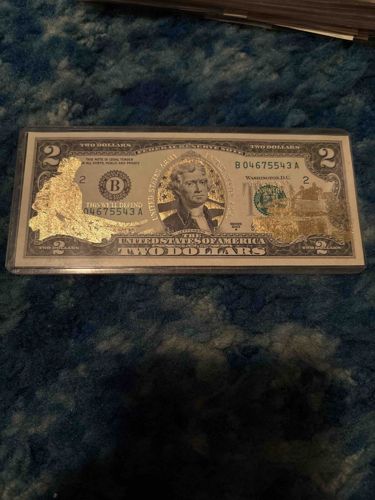
Gold-Plated United States Two Dollar Bill

Currency/Collectibles

AI Estimated Value

·Not an official valuation·Verify before acting

$5-15

As of May 28, 2026

AI Item Analysis

·AI can make mistakes·Verify before acting
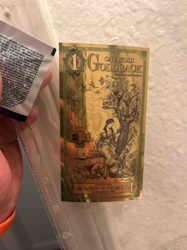
This item is a United States Two Dollar bill (USD), notably enhanced with a metallic, gold-colored overlay. The overlay appears to cover significant portions of the bill's design, including the background behind the portrait of Thomas Jefferson and extending into the left and right margins, obscuring parts of the numeric '2' and other textual elements. The bill's original green and black ink printing is visible underneath and around the gold application. Physical characteristics indicate a standard banknote size, though it is encased in what appears to be a clear, rigid plastic sleeve or holder, suggesting it is intended for display or collection rather than circulation. The gold material exhibits a somewhat irregular, almost textured or 'flaked' appearance in certain areas, particularly on the left side, which may be a characteristic of the application process rather than damage. There are no visible condition issues such as tears, creases, or major wear on the bill itself, likely due to its protective casing. The serial number B04675543A is clearly discernible. The style suggests it's a modern Two Dollar bill that has been artistically modified or produced as a commemorative item. The quality of the original banknote is standard U.S. currency, while the quality of the gold application appears consistent with mass-produced novelty or collectible items. This item is unique due to the aftermarket gold application, transforming a standard banknote into a more decorative or collectible piece.

AI Appraisal Report

·AI can make mistakes·Verify before acting
Based on my visual examination of the provided image, this Gold-Plated United States Two Dollar Bill appears to be a genuine U.S. banknote that has undergone an aftermarket gold-coloring process. The bill itself seems to be in uncirculated condition, likely preserved by its protective plastic casing. The gold application, while extensive, displays characteristics consistent with mass-produced novelty items, rather than a precious metal plating. The irregular texture in areas suggests a metallic foil or paint rather than a purer, finely applied gold leaf.The market for such items is primarily in the novelty and commemorative collectibles segment. These are often purchased as gifts or decorative pieces rather than serious numismatic investments. Comparables typically include other gold-enhanced or colorized currency notes, which generally command a modest premium over their face value. While the original two-dollar bill itself is legal tender, its gold enhancement does not significantly increase its numismatic value in the eyes of serious collectors, as it is an alteration.Demand for these items is driven more by their aesthetic appeal or gifting potential than by rarity. Millions of two-dollar bills are in circulation, and many undergo similar aesthetic modifications. The “gold-plating” does not make the original banknote rare.Factors significantly impacting value include the actual material used for the "gold" application (which I cannot definitively assess from an image), the quality of the application, and the overall condition. The protective casing is a plus for preservation.For full authentication of the gold material, a physical inspection would be paramount. This would involve metallurgical testing to determine if it's actual gold, a gold alloy, or simply a gold-colored coating. Provenance documentation, such as receipts from where it was purchased or modified, would also be beneficial to confirm its origin and modification process. Without physical examination, I can confirm the authenticity of the underlying banknote based on visual cues, but not the composition of the gold application.

Get your items appraised

Instant estimates of your treasures with AI-powered appraisals

Browse More Appraisals