AI Appraisal Estimate

AI-generated estimates · not official valuations

From the user

What was submitted

Photo and notes provided by the user — not generated by AI

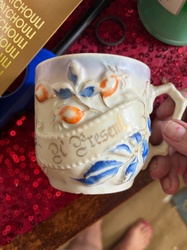
Submitted item photo
Submitted photo · July 3, 2026

User's notes

hand painted made in France

AI analysis below

AI appraisal

AI analysis & estimate

AI-Generated · Verify before acting

Everything below is generated by AI for informational purposes only. AI can make mistakes — the AI may misidentify items or misattribute them (artist, maker, brand, designer, origin, era). This is not an official valuation and should not be used for insurance, sale, tax, estate, legal, or lending purposes — or any decision requiring a certified appraisal. It is not an authoritative claim about any person, brand, or rights holder — do not share or rely on it as a factual statement about a third party. Always consult qualified professionals before making financial decisions.

Note

This analysis also relies on unverified notes provided by the user, which may be incomplete or inaccurate and could affect the result.

Read the full disclaimer

AI Identification

·Not independently authenticated·Verify before acting

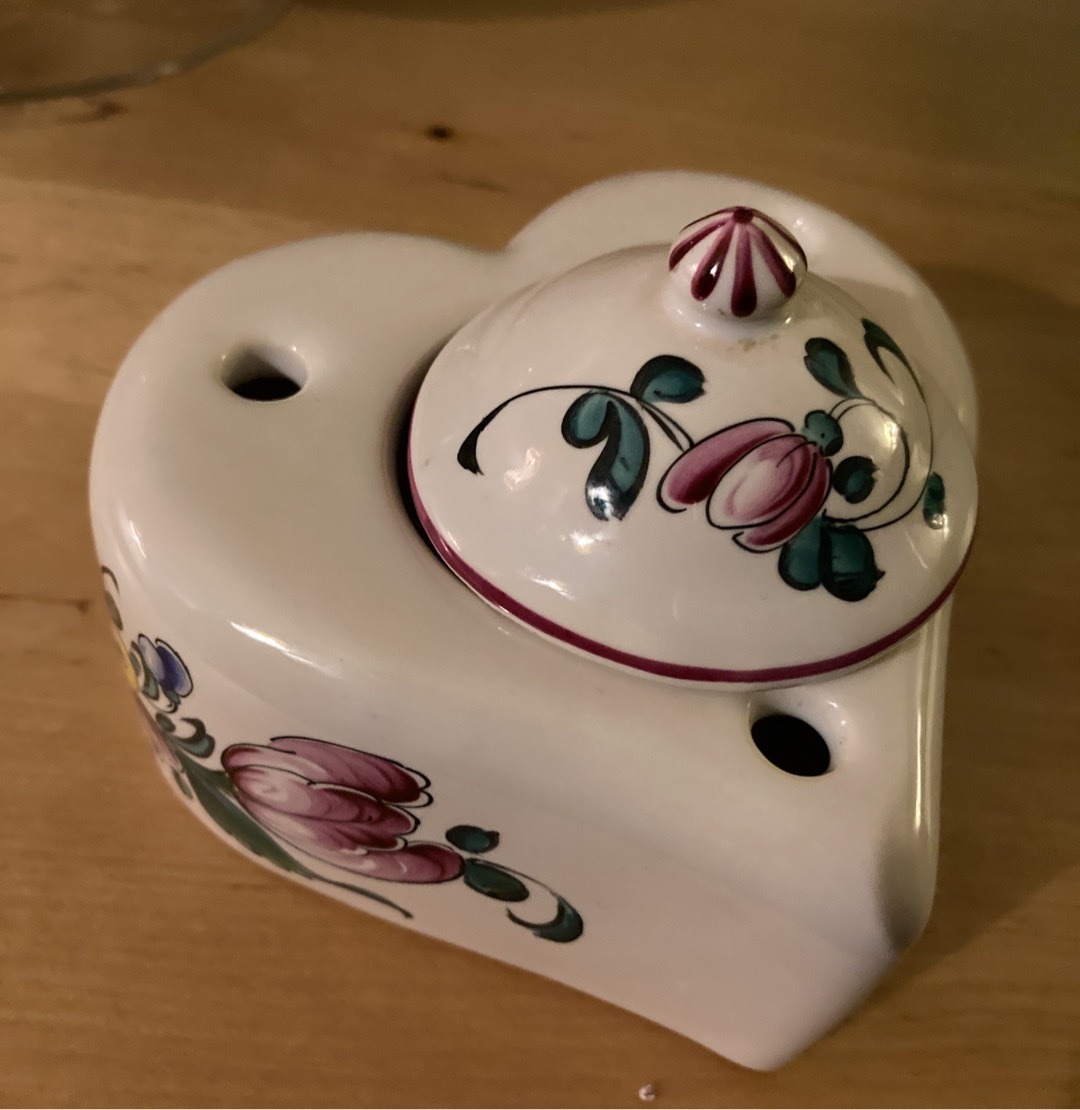
Heart-shaped ceramic inkwell in the Quimper style

Ceramics and Pottery

AI Estimated Value

·Not an official valuation·Verify before acting

$45.00 - $85.00

As of July 3, 2026

AI Item Analysis

·AI can make mistakes·Verify before acting
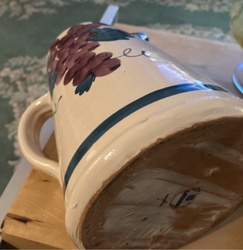
This object appears to be a heart-shaped ceramic inkwell with a matching lid, displaying characteristics consistent with faience pottery. The piece is glazed in a creamy white and decorated with hand-painted floral motifs including pink/magenta tulips and green foliage, framed by a dark magenta border on the lid. The main body features two lateral holes, likely intended as pen rests. The user notes this item is 'hand painted made in France', though no manufacturer marks or signatures are visible in the provided photograph to verify its origin. The decorative approach, particularly the floral brushwork and color palette, is stylistically consistent with French regional pottery from areas like Quimper, though this attribution remains a hypothesis without inspection of a backstamp. The condition appears fair to good, with some visible grime or aged residue around the lid's finial and rim, and minor surface imperfections consistent with artisanal production. The glazed finish shows high reflectivity, typical of tin-glazed earthenware or similar glazed ceramics produced in the mid-to-late 20th century.
AI Appraisal Report

·AI can make mistakes·Verify before acting
Based on my visual analysis of the provided image, this heart-shaped ceramic inkwell exhibits characteristics associated with French regional faience. The owner identifies this item as being 'hand painted made in France.' While the floral motifs—specifically the stylized tulips and magenta borders—suggest a Quimper-style aesthetic, I cannot verify the manufacturer or origin from a photograph alone, especially as no backstamps or signatures are visible. The glazed surface demonstrates high reflectivity consistent with mid-to-late 20th-century tin-glazed earthenware, and the visible grime suggests some age, though the exact era remains a hypothesis. My estimate of $45 to $85 assumes the user's claim of French origin is correct. This range reflects the general market for decorative European-style regional pottery, which remains popular among collectors of 'country French' decor. However, items with confirmed attributions to prestigious factories like Henriot Quimper often command higher prices, while unattributed pieces or those mass-produced 'in the style of' typically sell for $20 to $30. A physical inspection by an expert is necessary to examine the clay body and any potential marks hidden on the underside of the lid or base. Documentation regarding provenance would also be required to support the attribution. Should this piece be determined to be a modern reproduction or a non-French imitation, the value would likely decrease to the lower end of the ceramic market. Currently, demand for specific faience shapes like inkwells is stable, though condition issues such as the noted surface residue can temper interest among discerning collectors.

Get your items appraised

Instant estimates of your treasures with AI-powered appraisals

Browse More Appraisals