AI Appraisal Estimate

AI-generated estimates · not official valuations

From the user

What was submitted

Photo and notes provided by the user — not generated by AI

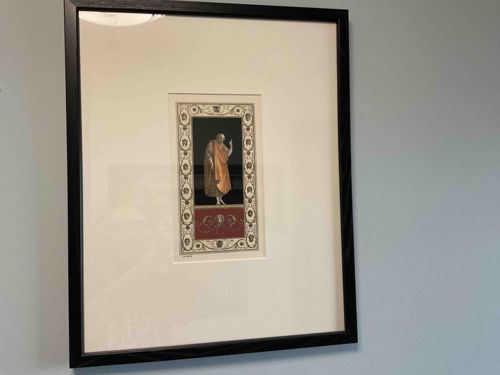
Submitted item photo
Submitted photo · July 2, 2026

User's notes

No additional notes provided.

AI analysis below

AI appraisal

AI analysis & estimate

AI-Generated · Verify before acting

Everything below is generated by AI for informational purposes only. AI can make mistakes — the AI may misidentify items or misattribute them (artist, maker, brand, designer, origin, era). This is not an official valuation and should not be used for insurance, sale, tax, estate, legal, or lending purposes — or any decision requiring a certified appraisal. It is not an authoritative claim about any person, brand, or rights holder — do not share or rely on it as a factual statement about a third party. Always consult qualified professionals before making financial decisions.

Read the full disclaimer

AI Identification

·Not independently authenticated·Verify before acting

Neoclassical Pompeian-Style Figural Print

Wall Art & Decorative Prints

AI Estimated Value

·Not an official valuation·Verify before acting

$450 - $700

As of July 2, 2026

AI Item Analysis

·AI can make mistakes·Verify before acting
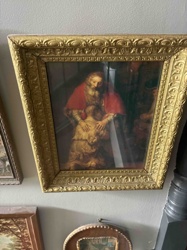
This item is a framed Neoclassical print, likely an engraving or lithograph, depicting a standing male figure in classical Roman-style attire, including an orange-hued toga over a darker garment. The center figure is set against a solid black background, reminiscent of the 'style of Pompeii' mural paintings found in the 18th and 19th centuries. Below the main figure is a decorative red frieze containing three classical profile heads. The entire composition is encased within an intricate border consisting of oval medallions featuring various faces, connected by delicate foliate scrolls and swags. This ornamental style suggests a late 18th to mid-19th century origin, perhaps inspired by the archaeological discoveries at Herculaneum and Pompeii that influenced artists like Piranesi or collectors like Sir William Hamilton. The artwork is presented in a modern white conservation mat and a minimalist black wooden frame with a slight satin finish. While the print appears to be in good condition with no visible foxing, water damage, or significant fading, a small marking—potentially a plate number or artist's signature—is visible in the lower left corner of the white margin. The print's precision indicates high-quality craftsmanship, likely part of a folio or historical publication documenting ancient art for a European Grand Tour audience.
AI Appraisal Report

·AI can make mistakes·Verify before acting
I have examined the digital representation of this Neoclassical Pompeian-style print. The work is a high-quality hand-colored engraving, likely from a late 18th or early 19th-century publication such as 'Le Antichità di Ercolano Esposte'. The aesthetic reflects the Grand Tour era's fascination with Roman archaeology. The coloring remains vibrant, particularly the characteristic 'Pompeian red' and 'burnt orange' pigments, and the black ground appears consistent with historical gouache application. The condition is excellent, showing no significant foxing or acidic mat burn, though the modern framing suggests it has been stabilized for preservation. Market demand for classical prints remains steady among interior designers and collectors of architectural history. Comparable sales of individual plates from the 'Antichità di Ercolano' series typically range from $300 to $900 depending on the complexity of the subject and the quality of the color. The presence of a plate mark in the lower margin adds to its desirability as an authentic folio page rather than a later reproduction. However, a definitive valuation is limited by the visual nature of this inspection. From images alone, I cannot verify the paper's watermark, which is essential for distinguishing an original 18th-century strike from a mid-19th-century reissue or a high-quality photo-mechanical facsimile. To confirm authenticity, an in-person examination is required to check the paper's texture (laid vs. wove), the presence of a 'plate mark' indentation from the copper plate, and the behavior of the ink under magnification. Documentation regarding the specific publication volume or provenance from a known collection would further solidify its market value.

Get your items appraised

Instant estimates of your treasures with AI-powered appraisals

Browse More Appraisals