AI estimate as of June 18, 2025 · verify with a professional before acting
AI-Generated · Verify before acting
Everything on this page is generated by AI for informational purposes only. AI can make mistakes — the AI may misidentify items or misattribute them (artist, maker, brand, designer, origin, era). This is not an official valuation and should not be used for insurance, sale, tax, estate, legal, or lending purposes — or any decision requiring a certified appraisal. It is not an authoritative claim about any person, brand, or rights holder — do not share or rely on it as a factual statement about a third party. Always consult qualified professionals before making financial decisions.
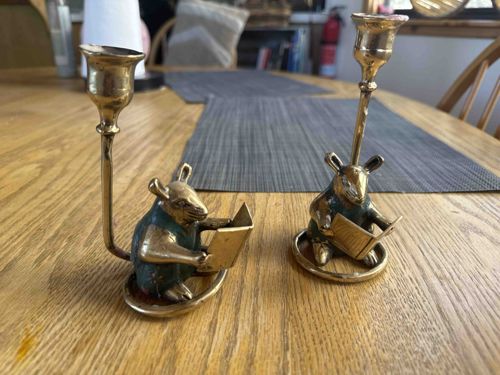
This is a pair of whimsical figural brass candlesticks shaped like mice reading books. Each candlestick features a mouse seated upright on a circular base, depicted intently reading an open book. A vertical arm extends from behind the mouse’s back, curving upwards and terminating in a flared bobeche designed to hold a standard taper candle. The brass has a golden color with areas of darker patina, particularly in the recessed areas and on the mice's clothing, which appears to have some areas of green or dark blue color remaining, suggesting it may have originally been painted or patinated differently. The surface shows signs of age and wear, including some surface scratches and minor tarnishing consistent with use and age. The craftsmanship appears simple but charming, capturing the character of the reading mice. There are no visible maker's marks or signatures in the provided image. The style is likely from the mid to late 20th century, offering a playful take on traditional candlestick forms. Despite the signs of wear, they appear structurally sound.
AI Appraisal Report
Based on my visual examination of the provided image of the Pair of Brass Mouse Reading Candlesticks, I find them to be charming examples of figural brassware, likely dating from the mid to late 20th century. The craftsmanship is straightforward, showing a focus on character rather than intricate detail. The brass exhibits a golden color with a good amount of natural patina, heavier in the recessed areas, which adds to their aged appearance. The subtle hints of green/dark blue coloration on the clothing suggest they may have had a different finish originally, which has largely worn off. Condition-wise, they show expected signs of age and use, including surface wear, minor scratches, and some tarnishing, but appear structurally intact. These are consistent with typical use over several decades. There are no visible maker's marks in the image, limiting the ability to attribute them to a specific foundry or artist solely based on the photo.
In terms of market conditions, whimsical figural brass items, particularly those depicting animals or literary themes, tend to have a steady niche following among collectors of decorative brassware and novelty items. Comparables for similar brass candlesticks, even without specific maker attribution, typically fall within a modest range depending on size, detail, and condition. While not excessively rare, this specific design of reading mice is not overly common, adding a slight edge in appeal to those who appreciate the subject matter.
The primary factors impacting value here are the condition (which is fair, showing wear but no significant damage), the charming if simple design, and the lack of a discernible maker's mark. Demand is moderate, driven more by collectors interested in the aesthetic than high-end art collectors.
It is important to note the limitations of this appraisal being conducted solely from an image. I cannot definitively verify the composition of the metal (though it appears to be brass) or rule out repairs or damage not visible in the photo without a physical inspection. In-person examination would allow for a more thorough assessment of surface integrity, weight, and any hidden marks. Provenance documentation, if available, would also significantly enhance the value and authenticity verification, detailing the item's history.