AI Appraisal Estimate

AI-generated estimates · not official valuations

From the user

What was submitted

Photo and notes provided by the user — not generated by AI

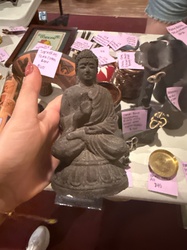
Submitted item photo
Submitted photo · May 30, 2026

User's notes

No additional notes provided.

AI analysis below

AI appraisal

AI analysis & estimate

AI-Generated · Verify before acting

Everything below is generated by AI for informational purposes only. AI can make mistakes — the AI may misidentify items or misattribute them (artist, maker, brand, designer, origin, era). This is not an official valuation and should not be used for insurance, sale, tax, estate, legal, or lending purposes — or any decision requiring a certified appraisal. It is not an authoritative claim about any person, brand, or rights holder — do not share or rely on it as a factual statement about a third party. Always consult qualified professionals before making financial decisions.

Read the full disclaimer

AI Identification

·Not independently authenticated·Verify before acting

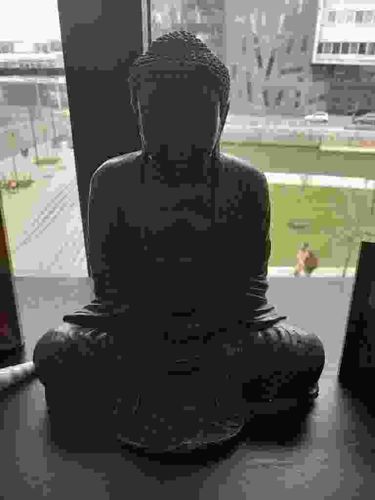
Seated Buddha Statue in Dhyana Mudra

Religious Art & Statuary

AI Estimated Value

·Not an official valuation·Verify before acting

$150 - $300

As of May 30, 2026

AI Item Analysis

·AI can make mistakes·Verify before acting
This is a sculptural representation of a seated Buddha, likely Shakyamuni, depicted in the Dhyana Mudra (meditation gesture) with hands folded in the lap. The figure is shown in a full lotus position (padmasana). Based on its silhouette and surfacing, the piece appears to be made of a cast material such as bronze, resin, or dark-toned stone like basalt or volcanic rock. It features a traditional ushnisha (topknot) and tightly curled hair. The figure is draped in a monastic robe that covers both shoulders, with visible rhythmic pleating across the arms and legs. Given the uniform dark finish and the soft rendering of the facial features visible despite the backlighting, this is likely a contemporary or mid-20th-century decorative export piece inspired by Southeast Asian (possibly Thai or Indonesian Borobudur style) or East Asian Buddhist art. The surface appears to have a matte, slightly textured patina with some minor accumulation of dust in the recessed folds of the drapery. There are no obvious signs of major structural damage, missing limbs, or significant oxidation, suggesting it has been kept in a stable indoor environment. The craftsmanship shows a standardized commercial quality rather than the intricate detailing found in antique ritual bronzes, making it a common but aesthetically pleasing decorative object for interior spaces.
AI Appraisal Report

·AI can make mistakes·Verify before acting
I have conducted a visual analysis of the seated Buddha statue in Dhyana Mudra. The piece exhibits characteristics consistent with a 20th-century decorative production, likely intended for the export or home decor market. The uniform matte patina and the soft, somewhat generalized modeling of the facial features and hair curls suggest a cast process using a resin or bonded-stone composite rather than a traditional lost-wax bronze casting. The condition appears excellent with no visible structural fissures or significant wear, though minor dust accumulation is present in the drapery folds. The market for contemporary Buddhist statuary is currently saturated with high-quality reproductions. This piece lacks the specific iconographic intricacies or signs of ritual use—such as authentic verdigris, remnants of gilding, or base-plate sealing—associated with antique Thai or Indonesian temple Bronzes. Comparable items of this size and commercial quality typically realize prices in the $150 to $300 range at boutique retail or decorative auctions. Its value lies primarily in its aesthetic appeal as a meditative focal point rather than historical rarity. Please note that this appraisal is based solely on digital imagery. A definitive material identification would require a physical 'scratch test' or weight-density analysis to differentiate between cast resin, cold-cast metal, or hand-carved stone. Furthermore, the absence of provenance documentation limits the ability to assign a specific regional origin or workshop. To elevate this valuation, physical inspection would be necessary to rule out a true volcanic stone origin, which would slightly increase the valuation for collectors of Indonesian art.

Get your items appraised

Instant estimates of your treasures with AI-powered appraisals

Browse More Appraisals