AI estimate as of October 2, 2025 · verify with a professional before acting
AI-Generated · Verify before acting
Everything on this page is generated by AI for informational purposes only. AI can make mistakes — the AI may misidentify items or misattribute them (artist, maker, brand, designer, origin, era). This is not an official valuation and should not be used for insurance, sale, tax, estate, legal, or lending purposes — or any decision requiring a certified appraisal. It is not an authoritative claim about any person, brand, or rights holder — do not share or rely on it as a factual statement about a third party. Always consult qualified professionals before making financial decisions.
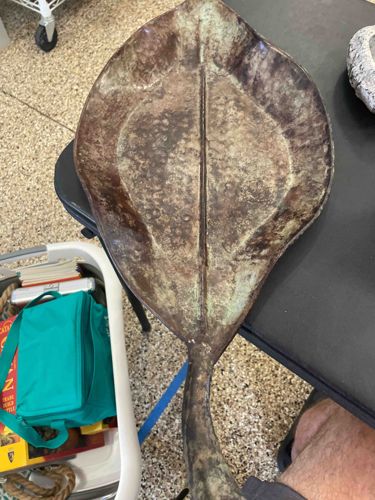
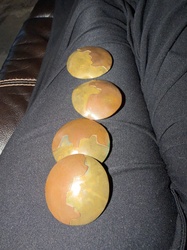
The item appears to be a large, leaf-shaped object, possibly a decorative dish, tray, or a component of a larger sculpture, crafted from a metallic material, most likely bronze or copper due to its observable patina. Its primary colors are a rich, variegated brown with significant areas of greenish-blue oxidation, indicative of an aged or artificially patinated surface. The form is highly organic, mimicking the natural curvature and veining of a large leaf, with a prominent central 'vein' running down its length, dividing the surface into two symmetrical, undulating lobes. These lobes have raised edges, suggesting it could function as a shallow catch-all dish or tray. The surface texture is uneven and coarse, possibly cast or hammered, with numerous small depressions and irregularities adding to its rustic and aged aesthetic. A narrow, elongated stem-like extension, roughly curved, protrudes from the base, giving the impression of a petiole. There are no discernible maker's marks, signatures, or stamps visible in the provided image. The overall style suggests an antique, vintage, or artisanal craftsman period, possibly mid-20th century or earlier, given the substantial patina. Given its size relative to the surrounding objects, it appears to be a substantial piece, not just a small trinket. The condition shows considerable wear consistent with age and oxidation, which contributes to its character rather than detracting from it, suggesting a natural aging process or intentional distressing. The craftsmanship appears to be artful, aiming for a naturalistic yet stylized representation of a leaf.
AI Appraisal Report
Based on my visual examination of the provided image, this metal leaf-shaped dish or sculpture appears to be a decorative object, likely crafted from bronze or copper. The naturalistic form, prominent veining, and rich variegated brown and greenish-blue patina suggest a vintage or artisanal origin, possibly mid-20th century. The condition, characterized by uneven texture, minor depressions, and significant oxidation, contributes to its rustic aesthetic and is consistent with age rather than damage.
Authenticity, as a vintage decorative item rather than a fine art piece, is high for its intended purpose. However, without a physical inspection, I cannot verify the exact metal composition or manufacturing methods (e.g., sand-casting versus hammering) which could influence value. There are no visible maker's marks, limiting specific attribution. In-person examination would allow for closer inspection of craftsmanship, weight, and a more precise determination of age.
Demand for such decorative metallic objects is moderate, often appealing to collectors of naturalistic or mid-century modern-inspired decor. Rarity is difficult to assess without specific maker information; similar, unsigned pieces appear periodically on the secondary market. Comparables for unsigned cast or formed metal decorative trays or sculptures of this size typically range from $100 to $400, depending on the material, condition, and artistic execution. The substantial size and unique organic form enhance its appeal. Factors impacting value include the appealing patina and the robust, artful craftsmanship. A physical examination could confirm material quality and reveal any hidden details influencing value further. Provenance documentation would significantly enhance value, if available.